If you’re short on depth but can still load the machine from the front, consider a shallow front-loading model. If width is the issue, a top-loading machine could work, but you’ll need to keep the space above it clear. A compact freestanding machine may fit into a lower alcove, while a mini washing machine is a handy option for small loads when a standard appliance cannot be installed. Before choosing, also check the connections, drainage and floor stability.
Which format is right for you?
The dimension you’re short of matters more than a machine simply being labelled ‘compact’. A narrow alcove, limited depth or a space without connections will each call for a different solution.
If depth is restricting the walkway
You have around 60 cm of width, but the machine mustn’t stick out too far into the kitchen or bathroom. Measure a shallow front-loading model with the door open: a reduced depth won’t free up the space needed in front of the machine.
If the alcove is particularly narrow
You can reach the top of the machine, but there isn’t room for a standard-width front-loader. A top-loading machine could suit this space: the French National Consumer Institute describes top-load models that are 40 to 45 cm wide. You’ll still need to check their depth and make sure the lid can open.
If no standard space will work
You’re considering a machine for occasional use because there’s no room for a standard installation. UFC-Que Choisir suggests a mini washing machine as one option in this situation. First, check how you’ll connect it to the water supply, drain it and keep it stable, then consider whether it can handle your smaller loads.
What should you check before choosing?
First compare formats against the dimension that’s actually causing a problem. Then check that the capacity and installation requirements suit your usual laundry loads.
Shallow front-loader
Consider if: depth is limited, but there’s enough width and room to open the door.
Bear in mind: the machine may not be any narrower, and you’ll need to leave space in front of the door.
Top-loading washing machine
Consider if: the alcove is narrow and you can load the laundry from above.
Bear in mind: the lid needs room to open, so this format won’t work beneath a fixed worktop.
Compact freestanding machine
Consider if: a lower or narrower alcove can still accommodate a plumbed-in automatic washing machine.
Bear in mind: a smaller capacity may mean doing laundry more often and could make it harder to wash bulky items.
Mini washing machine for occasional use
Consider if: you can’t install a standard or compact freestanding washing machine, and your loads are small.
Bear in mind: UFC-Que Choisir notes that capacity is limited and, depending on the model, the spin may be weak or the machine may only wash in cold water.
| Factor |
What to check |
Who it matters to |
| Dimensions and access |
Measure the alcove’s width, depth and height, then check the space needed for the hoses and to open the door or lid. |
In a tight space, I need to be able to install the machine and load the laundry without blocking the way; around 26% of consumers would prioritise its footprint and access. |
| Installation |
Check the water supply, drainage, electrical supply and whether the appliance can stand level on a stable floor. |
Without a dedicated space already set up, I want to know whether the machine will work in the room I’ve chosen; installation requirements would be a priority for around 26% of consumers. |
| Capacity |
Compare the capacity with the loads of dry laundry you actually wash, including sheets and other bulky items. |
If I wash household linen too, a small drum could make laundry harder to manage; almost 21% of consumers would prioritise a capacity suited to their loads. |
| Spin and noise |
Check the energy label for the stated spin performance and noise level, then look at the details for the programme you plan to use. |
In a studio flat where the machine is close to the living area and laundry dries indoors, I’m most concerned about how damp the laundry is and how noisy the machine is; around 16% of consumers would put this comfort first. |
| Occasional use |
For a mini machine, check its capacity, drainage, spin performance, water heating and which fabrics it can handle. |
If I can’t install a standard appliance, I’m looking to wash small loads while planning another solution for bulky items; this would be a priority for almost 11% of consumers. |
Mistakes to avoid
-
Assuming ‘slim’ means ‘narrow’
A shallow front-loader may still be close to the width of a standard front-loading machine. So it won’t necessarily solve the problem of a narrow alcove, even if the door opens without difficulty.
Measure each dimension separately and check there’s room to load the machine. If width is the issue, consider a top-loader only if the space above it will remain clear.
-
Choosing the smallest drum without thinking about your laundry
A machine that fits in the room may mean running extra cycles, or it may not fit bulky items. ADEME recommends choosing a capacity that meets your needs rather than basing your decision on the machine’s external size alone.
Work out the size of your usual loads and plan how you’ll wash sheets or blankets if you choose a mini machine for occasional use.
-
Overlooking the floor and drainage
Having a free space doesn’t guarantee that the machine can be installed and used properly. Bosch Électroménager France advises adjusting the feet to level the machine; Electrolux France recommends a hard, stable floor.
Follow the model’s instructions to remove the transit bolts, adjust the feet and position the drain hose without trapping it.
-
Expecting a mini machine to do everything a large drum can
UFC-Que Choisir describes mini washing machines as appliances for occasional use. Their limited capacity makes it harder to wash bulky items, while spin performance and water heating vary by model.
Check these features and which fabrics the machine can handle before relying on it as your only way to do laundry.
Brands to know
These examples show different formats, but don’t indicate availability or the specifications of every model from each brand.
Candy
Candy France offers both a shallow front-loader and a compact freestanding machine for different space constraints.
- According to Candy France, the ProWash 300 GD 27S7-S front-loader measures 595 × 467 × 850 mm and has a capacity of 7 kg; the Mini ProWash 700 CW50-BP12307GU1-S measures 510 × 488 × 700 mm and has a capacity of 5 kg.
- These dimensions don’t remove the need to allow space for the door to open and for the connections. The two capacities may not suit the same laundry loads.
Whirlpool
The TW6522FRESHCAREFR top-loader is one option when the width of the alcove is the main constraint.
- Whirlpool France lists this model as 40 cm wide, with a capacity of 6.5 kg.
- Check that you can access the lid, that there’s enough depth once installed and that the capacity suits your laundry loads.
Electrolux
The PerfectCare 700 YW7T3713DA is another example of a top-loader for a narrow alcove.
- Electrolux France gives the dimensions of this specific model as 890 × 400 × 600 mm, with a capacity of 7 kg.
- These specifications don’t represent the entire range. Check there’s enough clearance above the machine and that its position is stable.
Washing machines to consider on Joybuy
These models mainly cover top-loading machines for narrow alcoves and front-loaders for spaces where there’s room in front of the machine. Compare their capacities with your laundry loads and measure the space, including the connections. This selection doesn’t replace looking at a compact freestanding or mini washing machine if none of these formats will work.
 Image unavailable
Haier T Series 7 THASN276TM6-S, 7 kg top-loading washing machine
Worth considering for a narrow alcove if the lid can open freely and 7 kg suits your laundry loads.
Top-loading; stated spin speed of 1,200 rpm; energy rating A. Check the space needed behind the machine for the connections.
View on Joybuy
 Image unavailable
Hisense WF5I8043BWF, 8 kg front-loading washing machine
Consider this if depth is your main constraint, but you have enough width and space in front of the door.
Stated capacity of 8 kg and spin speed of 1,400 rpm. Measure the depth with the hoses in place, as well as the space needed to open the door.
View on Joybuy
 Image unavailable
Candy TCA464TM4-S ProWash 500, 6 kg top-loading washing machine
Compare it with other top-loaders if you’re short on width, have clear space above the machine and find that 6 kg is enough for your laundry loads.
Stated spin speed of 1,400 rpm; energy rating B. Check the depth once installed and allow enough room to open the lid.
View on Joybuy
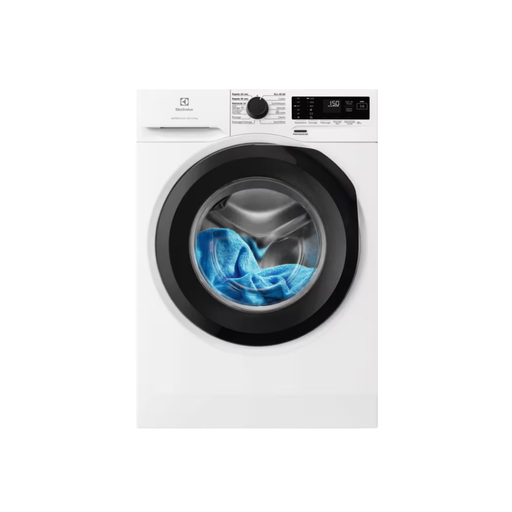 Image unavailable
Electrolux EWF1410N2, 10 kg front-loading washing machine
Only consider this if your room can accommodate a large-capacity front-loader without obstructing the walkway or the door.
Stated capacity of 10 kg. This model won’t solve a significant space constraint on its own: compare its installed depth with your room’s measurements.
View on Joybuy
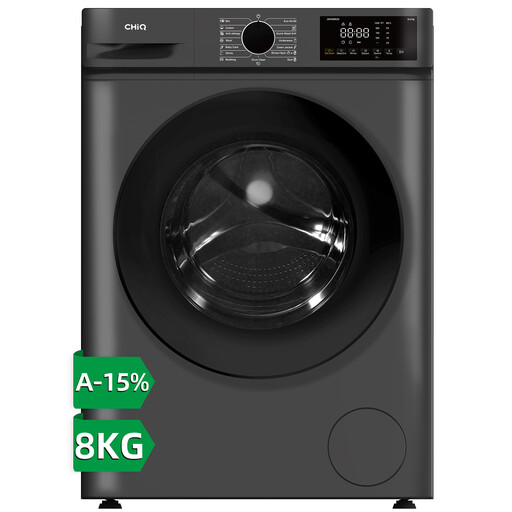 Image unavailable
CHiQ JW85883G, 8 kg front-loading washing machine
Consider this if you’re looking for a front-loader for a shallow space and can leave enough room in front of the door.
Stated capacity of 8 kg and spin speed of 1,400 rpm. Before choosing it for a specific alcove, confirm the full external dimensions and its depth with the hoses in place.
View on Joybuy
Frequently asked questions
Can you install a washing machine in a small bathroom?
It depends on the available space and the room’s electrical installation, not just the machine’s dimensions. Before choosing a model for this location, ask a qualified professional to check the electrical safety zones and circuit.
What should you check if your home has no dedicated space for a washing machine?
Make sure the proposed location can be served by a suitable water supply, drain and electrical connection. Then check the model’s instructions for clearance requirements and how to level it on a stable floor; don’t rely on the appliance’s dimensions alone.
Can a mini washing machine be your main washing machine?
It may be enough if your loads are small and you have another way to wash bulky items. UFC-Que Choisir describes mini washing machines for occasional use with a capacity of 2 to 3 kg, and notes that the spin may be weak or that some models only wash in cold water.
What should you look for if you dry laundry in your studio flat?
Compare the stated spin efficiency and noise levels of the models that genuinely fit in your room. ADEME advises taking spin performance into account when laundry needs to dry indoors. Also check the details for the programme you’ll use, rather than judging the results by the maximum spin speed alone.


