What should you check before choosing ?
Start with the amount of laundry you actually wash, rule out any models that can’t be installed properly, then compare the specifications of the remaining options.
| Criteria | What to check | Your needs |
|---|
| Capacity |
Compare the kg capacity for dry laundry with your usual loads and how often you wash larger loads. ADEME says that 7 kg is usually enough ; Que Choisir notes that the wrong capacity can mean more cycles or unnecessary energy use. |
I often wash small loads, so I don’t want to choose a large drum just for the occasional bulky wash. |
| Size |
Measure the width, height and depth of the space, then allow room for the door or lid to open. For a top-loader, make sure the space above it is accessible ; for a front-loader, check which way the door opens. |
The washing machine needs to fit in the room without blocking a piece of furniture or the walkway when I load it. |
| Spin-cycle noise |
Compare the dB(A) rating and noise class for the specific model on its label; don’t judge noise by rpm alone. According to Electrolux Support, poorly positioned pipes can also cause vibrations. |
I live in a flat, so I want to be able to check the spin-cycle noise before buying and avoid vibration from contact during installation. |
| Energy use and durability |
Check the water, energy, spin and noise figures on the energy label, as ADEME recommends. For a machine sold in France, also compare its durability index : the French Ministry for Ecological Transition says this replaced the repairability index for washing machines on 8 April 2025. |
I want to compare models based on their usage information and durability, not just their energy rating. |
Which branded models can you use as a guide ?
These features apply to the models named, not to every product from each brand.
Bosch
Bosch Électroménager France lists the Bosch WAN24209FR as a 9 kg front-loader with a spin speed of 1 200 tr/min.
- Its capacity makes this model worth considering if you regularly wash large loads.
- Electromenager-Compare lists left-hand hinges and a 171° door opening : check there’s enough clearance in front of the machine.
Electrolux
The Electrolux EW6T3365BCZ is a 6 kg top-loader. According to Electrolux France, its SensiCare system adjusts the cycle duration to the weight of the load.
- Loading from above may suit a space where an opening front door would get in the way.
- Electromenager-Compare lists a spin-cycle noise level of 79 dB for this model : compare this figure if noise is a priority.
Miele
Miele France lists the WED385 WCS as having a 9 kg capacity and a spin-cycle noise level of 72 dB.
- These figures let you compare its capacity and stated noise level with your household’s needs.
- Check its dimensions, including with the door open, before choosing this front-loader for a shallow space.
Which washing machines should you consider on Joybuy ?
These options include 8 kg and 9 kg front-loaders, and a 7 kg top-loader. Match their capacities to your usual loads, then check the door clearance and label information for the model you’re interested in.
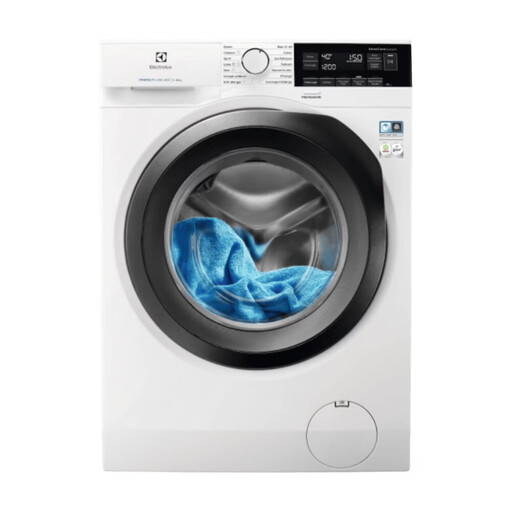 Image unavailable
Electrolux EW6F3811RC, 8 kg front-loader
Worth considering if your usual loads suit an 8 kg capacity and you have enough clearance in front of a front-loader. The model name specifies 1 400 tr/min and a C energy rating ; check which way the door opens and review the label details before choosing.
View on Joybuy
 Image unavailable
Haier T Series 7 THASN276TM6-S, 7 kg top-loader
A top-loader is worth considering if an opening front door would get in the way. This model is listed as having a 7 kg capacity, a spin speed of 1 200 tr/min and an A energy rating ; measure the available space above the lid and compare its spin-cycle noise level.
View on Joybuy
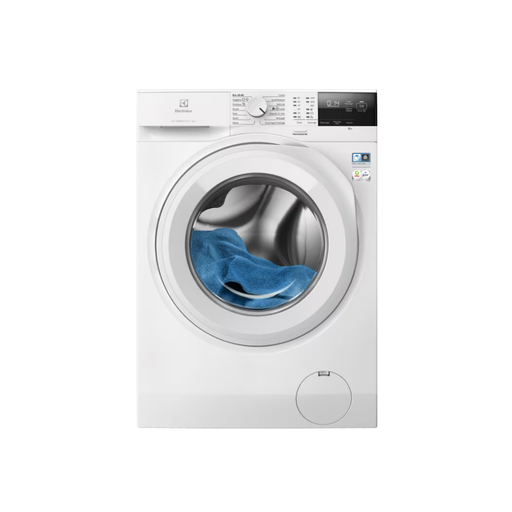 Image unavailable
Electrolux EW6FI4805AW SensiCare, 8 kg front-loader
An 8 kg capacity may suit a range of household loads if it matches how often you do the washing. The model name specifies 1 400 tr/min and SensiCare ; check the clearance needed for the door and the water, energy and noise figures on its product label.
View on Joybuy
 Image unavailable
Electrolux EW7FI259160V SteamCare SmartSelect, 9 kg front-loader
Consider the 9 kg capacity if you regularly wash large loads, rather than only occasionally. The model name specifies 1 600 tr/min ; compare its stated spin-cycle noise level and measure the space needed to open the door.
View on Joybuy
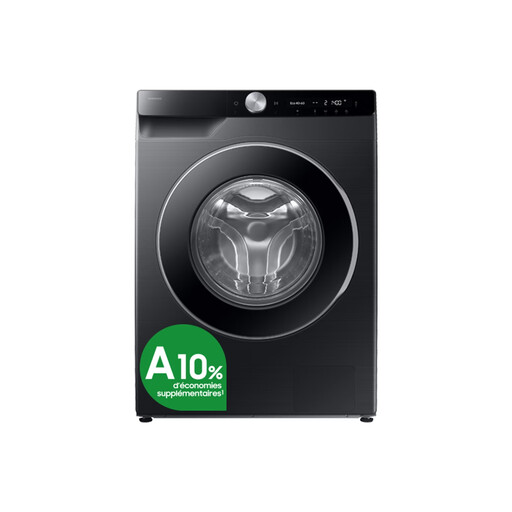 Image unavailable
Samsung WW90DG6U85LBU3 AI Wash 6000 Series, 9 kg
Consider the 9 kg capacity in relation to the loads you wash regularly; don’t assume a larger drum will use less energy. This black model is listed with an A energy rating ; check the depth needed with the door open and the figures on its energy label.
View on Joybuy
Frequently asked questions
Is a 7 kg washing machine big enough for a household ?
Often, yes: ADEME says a 7 kg washing machine is usually enough. Still, check your actual loads : if you regularly fill the drum with laundry for several people and household linens, compare larger capacities too.
What should you measure when choosing between a front-loader and a top-loader ?
Measure the space and the room needed to load the machine. For a front-loader, check which way the door opens and allow enough clearance in front of it ; for a top-loader, make sure the lid can open and the top remains accessible.
How should you account for noise in a flat ?
Compare the spin-cycle noise level listed for each model, and make sure the machine is installed properly. Electrolux Support explains that poorly positioned pipes, or pipes touching the machine, can cause vibrations ; follow the installation instructions in the manual.
Which energy-label figures should you compare ?
ADEME recommends comparing the water, energy, spin and noise figures. Use them to weigh up the models you’re considering, bearing in mind that the figures shown are based on the label’s standard test conditions.
Which index should you check for the durability of a washing machine in France ?
Check the durability index for the model sold in France. According to the French Ministry for Ecological Transition, it has replaced the repairability index for washing machines since 8 April 2025.


