Occupants who combine their laundry
You’re looking for a capacity that suits your usual shared loads, without choosing a large drum that’s often only partly full. ADEME recommends matching capacity to your needs.


For shared laundry, first choose a capacity that suits the loads you’ll actually be washing together, and a size that fits the space available. ADEME recommends matching capacity to your needs. Then compare the figures on the energy label, including water and electricity use, noise and spin efficiency. A delay-start function can help you organise laundry slots, but it won’t make the spin cycle quieter.
You’re looking for a capacity that suits your usual shared loads, without choosing a large drum that’s often only partly full. ADEME recommends matching capacity to your needs.
You need to compare width, depth and the space required to open the door or lid when choosing between a front-loading and top-loading machine. UFC-Que Choisir describes top-loaders as narrower, although dimensions vary between models.
You share a laundry schedule or live close to other living spaces, so spin-cycle noise and when the cycle ends may matter just as much as the controls. The European Commission says the label provides information about noise emissions. UFC-Que Choisir also highlights spin-cycle noise as a concern for users.
Start with your shared loads and the space available, then check the usage figures and scheduling features. Consumers may have several concerns, but each row below focuses on a different priority.
| What matters to you | What to check before buying | Who it matters most to |
|---|---|---|
| Suitable capacity | Estimate the weight and frequency of your shared loads, then compare them with the rated capacity in kg. | If the combined loads vary, I want to avoid a drum that’s too small or often only partly full. Around 28 % of consumers prioritise a suitable capacity. |
| Space and opening clearance | Measure the width, depth, available height, access route and clearance needed to open the door or lid. | When space is limited, I want to know whether the machine can be installed and used without blocking walkways. This is a priority for around 22 % of consumers. |
| Spin-cycle noise | Compare the dB rating and noise class stated for the spin cycle, and make sure the machine has a stable position. | If the machine is near a living space or neighbours, I want to minimise disturbance during the spin cycle. Around 22 % of consumers put noise first. |
| Water, electricity and spin efficiency | Compare kWh per 100 cycles, litres per cycle and the spin efficiency class for the reference programme. | For regular laundry, I want to compare the stated consumption figures and find out how much water remains in the clothes. Around 17 % of consumers prioritise these figures. |
| Planning laundry slots | Check whether the model offers a delay-start or delay-end function, as well as the duration of your chosen programme. | When several people use the machine, I want to plan when the cycle starts and when the machine will be free. Around 11 % of consumers prioritise scheduling. |
ADEME recommends choosing a capacity that suits your needs and avoiding cycles with a drum that isn’t full enough. A large drum isn’t automatically the best choice if your loads are often small.
Make a note of your usual shared loads and how often you wash them before comparing capacities.
A narrow width doesn’t guarantee that the depth, connections or clearance needed to open the lid will suit your home.
Measure the space, access routes and available height, then check the model’s dimensions and instruction manual.
A delay-start function postpones the cycle, but it doesn’t make the spin cycle quieter. The noise may still disturb occupants, even if you’ve scheduled the start time.
Compare the stated noise emissions and agree on time slots that take the spin cycle and unloading into account.
The rated spin speed doesn’t tell you everything about spin efficiency or washing performance. UFC-Que Choisir assesses spin efficiency, washing, rinsing, programme duration and noise, among other factors.
Check the spin efficiency class and any other figures available for the model, distinguishing between stated values and test results.
Worth considering if you’re looking for a mid-capacity front-loading washing machine: the WAN2827FFR is an 8 kg model.
Worth considering when width is a constraint, but make sure there’s enough clearance above the lid.
Worth considering if you regularly combine large loads and want a scheduling feature.
Worth considering only if your usual loads justify a high capacity.
These front-loading models let you compare several capacities for shared laundry. Check the figures on the energy label and the dimensions of each model before choosing.
 Image unavailable
Consider this model if an 8 kg capacity suits your usual shared loads.
Capacity: 8 kg. Spin speed stated in the product name: 1 400 rpm.
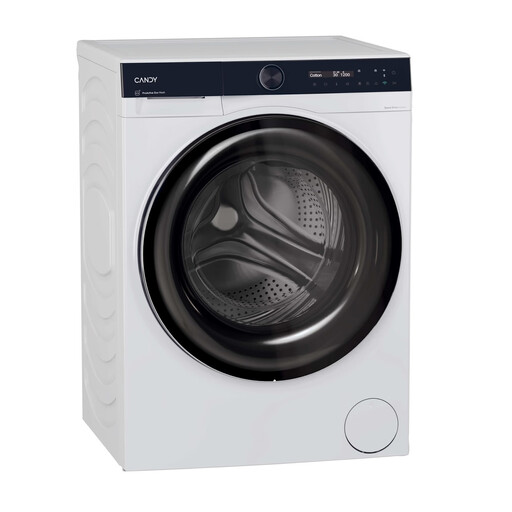 Image unavailable
Worth considering if you regularly combine large loads and this capacity suits your needs.
Capacity: 12 kg. Spin speed stated in the product name: 1 400 rpm. Energy efficiency class stated: A.
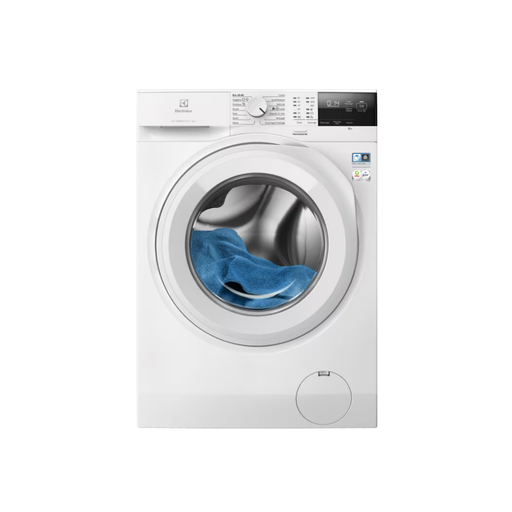 Image unavailable
Consider this model if an 8 kg capacity suits your regular loads. Check the usage figures for this model before comparing it with others.
Capacity: 8 kg. Spin speed stated in the product name: 1 400 rpm.
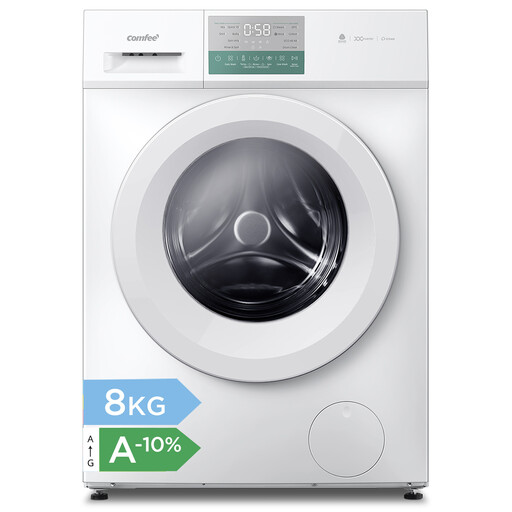 Image unavailable
Worth considering if an 8 kg capacity suits the loads you usually combine.
Capacity: 8 kg. Class stated in the product name: A-10 %.
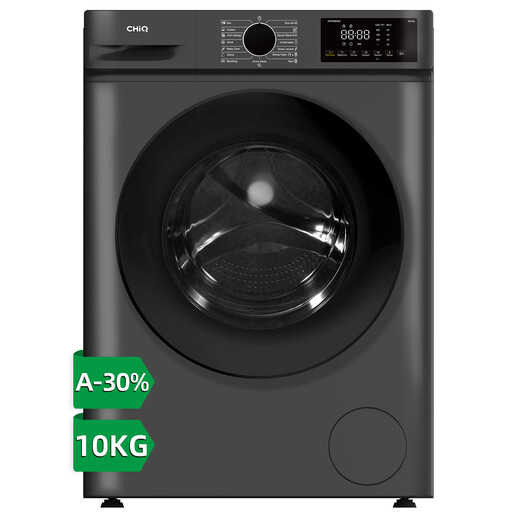 Image unavailable
Consider this model if your shared loads justify a 10 kg capacity and a front-loader suits the space available.
Capacity: 10 kg. Stated spin speed: 1 400 rpm. The product name lists 16 programmes and an A-30 % class.
It may be enough if it suits the loads you combine. ADEME says that 7 kg is sufficient most of the time, while recommending that you match capacity to your needs. It isn’t a universal threshold for a shared home.
Measure the space and the clearance needed for the door or lid to open, then check access routes and connections. Bosch recommends removing the transit bolts and adjusting the feet when installing its appliances; also follow the instructions for the model you choose.
No. Delay-start doesn’t reduce noise or automatically make a particular time suitable. Service Public explains that abnormal noise caused by behaviour can constitute a disturbance to neighbours, day or night. Agree on suitable times with other occupants and take spin-cycle noise into account.
Compare the kWh per 100 cycles and litres per cycle stated for the reference programme, as well as the spin efficiency class. The Ministry of the Economy says that the durability index has applied to front-loading and top-loading washing machines since 8 April 2025. It also explains that the legal guarantee of conformity applies to new, second-hand and refurbished goods sold by a business to an individual.
When choosing a machine, check its spin efficiency class rather than relying only on the maximum spin speed. If a Bosch appliance moves or spins poorly, the manufacturer recommends checking that it’s level, that the transit bolts have been removed and that the laundry is evenly distributed. For other models, follow their own instructions.