When you combine laundry loads, choose a machine based on the actual weight of the dry washing and the fabrics you wash together, rather than the number of people in your household or the largest capacity advertised. ADEME and UFC-Que Choisir point out that the permitted load can vary by programme, so also compare the energy label information, spin noise and space needed to open the door. A large-capacity front-loader, a narrower top-loader or a load-sensing function may suit different needs, but you should still check each model’s limits.
Who is this guide for?
Households that combine large loads
You regularly collect bedding, towels and clothes before putting on a wash. ADEME and UFC-Que Choisir point out that the load a programme can actually handle matters just as much as the maximum capacity advertised.
Housemates with varying laundry loads
You share the washing machine but don’t always wash the same fabrics together. Compare the programmes and standard consumption figures: ADEME notes that a half-load can use as much electricity as a fuller load.
Households concerned about spin noise
You often use the washing machine while other people are at home. UFC-Que Choisir highlights the importance of spin noise, while Electrolux Assistance also recommends checking that the appliance is level when you install it.
What to compare when combining laundry loads
Front-loading washing machine
Worth considering: if you often combine large loads and have room for the door to open.
Bear in mind: a larger capacity won’t automatically be more efficient if the drum is rarely full.
Top-loading washing machine
Worth considering: if you have limited width and your combined laundry fits within the machine’s capacity.
Bear in mind: UFC-Que Choisir generally puts these models at 40 to 46 cm wide and between 5 and 8 kg; you’ll need to keep the top clear so you can open the lid.
Eco programme and load sensing
Worth considering: if the size of your laundry loads varies and you want to compare standard cycles or settings adjusted by the machine.
Bear in mind: the energy label is based on the Eco 40-60 programme, and load-sensing functions vary between models and the cycles they apply to.
For French households, ADEME recommends matching capacity to your needs and running the washing machine with a suitably full load. Its general 7 kg guideline isn’t a rule for every shared household.
The percentages below refer to consumers in France choosing a washing machine for combined laundry loads.
| What matters |
What to check before buying |
Who cares most about it |
| Usable capacity |
Estimate the usual weight of your combined dry washing and check the permitted loads for the programmes you use. |
If we wait until we’ve gathered bedding, towels and clothes, we want a capacity that suits those loads without choosing a drum that’s too large for what we usually wash. Around 29 % of consumers prioritise usable capacity. |
| Electricity and water |
Compare kWh per 100 cycles and litres per cycle on the Eco 40-60 programme. |
When we run several washes each week, we want to compare water and electricity on a like-for-like basis, without confusing these figures with the consumption of every actual cycle. Around 23 % of consumers put these figures first. |
| Noise and spin performance |
Check the noise emissions and spin-drying class on the label, then look at the available spin speeds and installation instructions. |
If other people are at home during the spin cycle, we want noise levels and settings that work for shared living. For around 18 % of consumers, noise and spin performance are the priority. |
| Programmes for different fabrics |
Check the maximum loads for the cycles you use and find out which settings the sensors actually adjust. |
When our laundry loads contain different fabrics, we want to choose a suitable programme rather than treating every wash as the same load. Around 18 % of consumers prioritise the programmes and their load limits. |
| Space and access |
Measure the available space and clearance needed in front of a door or above a lid. |
If space is tight, we want to be able to install and open the machine without getting in the way of everyday life at home. Around 12 % of consumers prioritise the machine’s dimensions and loading type. |
Mistakes to avoid before choosing
-
Choosing the biggest drum just because several people live together
The weight of your combined laundry and the limits of each programme matter more than the number of people in your household. A capacity you rarely use can mean running cycles with a small load.
Estimate the weight of your usual laundry loads and check the permitted loads for fabrics you wash separately.
-
Assuming the energy label figures apply to every wash
The standard consumption figures are based on the Eco 40-60 programme; they don’t automatically describe other cycles or every load size.
Compare machines using the same labelling basis, then check the programmes you’ll actually use.
-
Assuming automatic load sensing guarantees lower consumption
Sensors don’t necessarily affect every programme or every aspect of consumption. ADEME says that a half-load can use as much electricity.
Check the manual to find out what the function adjusts, and choose a capacity that suits your usual laundry loads.
-
Comparing spin speed alone
The number of revolutions per minute doesn’t tell you everything about spin performance or noise. A machine that isn’t level can also vibrate.
Compare the spin-drying class and stated noise level, then follow the model’s installation instructions.
Brands to consider, depending on the model
Bosch
The Série 4 WAN2827FFR is an example of a front-loading washing machine rated at 8 kg.
- Bosch’s product details give a maximum spin speed of 1 400 rpm and dimensions of 845 × 598 × 590 mm.
- Bosch says the maximum spin speed may be reduced if the load is unbalanced. These specifications apply to this model, not the whole range.
Electrolux
The PerfectCare 600 EW6T4376BZ is an example of a top-loading model rated at 7 kg and 400 mm wide.
- According to Electrolux, SensiCare adjusts the cycle duration to the weight of the load. The product details state 45 kWh per 100 cycles and 45 litres per cycle.
- These figures and this function apply to the model shown; adjusting the cycle duration doesn’t prove that a half-load uses proportionally less electricity.
LG
The F94R31WHSA is an example of a front-loading model rated at 9 kg, with AI Direct Drive and ezDispense automatic dosing.
- According to LG, AI Direct Drive applies to three cycles listed in its product details: Cotton, Mixed Fabrics and Easy Care.
- LG’s promotional tests relate to its own models and test conditions; they don’t measure the results of laundry in a shared household.
Whirlpool
The TDLR7251FR is another example of a top-loading model rated at 7 kg and 40 cm wide.
- Whirlpool’s product details state a maximum spin speed of 1 200 rpm and a noise level of 78 dB.
- The product details also distinguish the speed of the Eco programme at rated capacity. Compare noise and consumption on the same basis, and don’t assume these specifications apply to the whole brand.
Washing machines to consider on Joybuy
For combined laundry loads, this selection brings together washing machines rated between 8 and 12 kg, with cycle information or programmes to compare depending on the model. Check the load limits for the programmes you use.
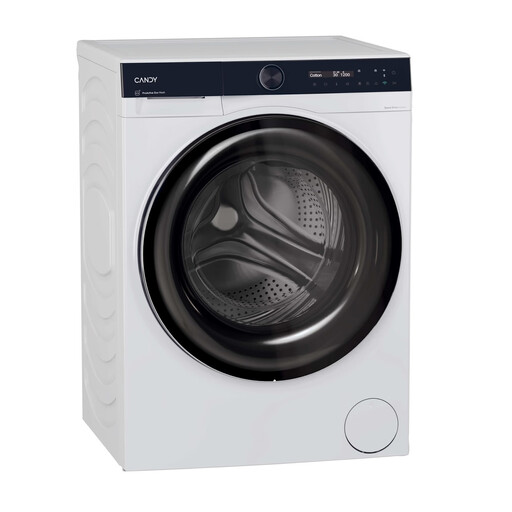 Image unavailable
Candy ProWash 700 BS 412B8-S, 12 kg
Its stated capacity of 12 kg makes it worth considering for combined loads; check the permitted load for each programme.
The description states 44 kWh per 100 cycles and 45 litres per cycle on Eco 40-60, as well as a spin speed of 1 400 rpm and 72 dB. It lists 16 programmes.
View on Joybuy
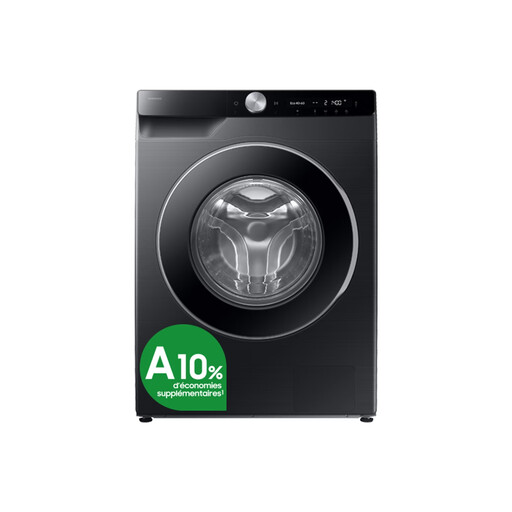 Image unavailable
Samsung WW90DG6U85LBU3, 9 kg
Compare its stated capacity of 9 kg with the weight of your laundry loads and the permitted load for each cycle.
The description states 44 kWh per 100 cycles and 50 litres per cycle on Eco 40-60, 1 400 rpm, 72 dB and 15 programmes. According to the description, AI Wash adjusts the wash settings.
View on Joybuy
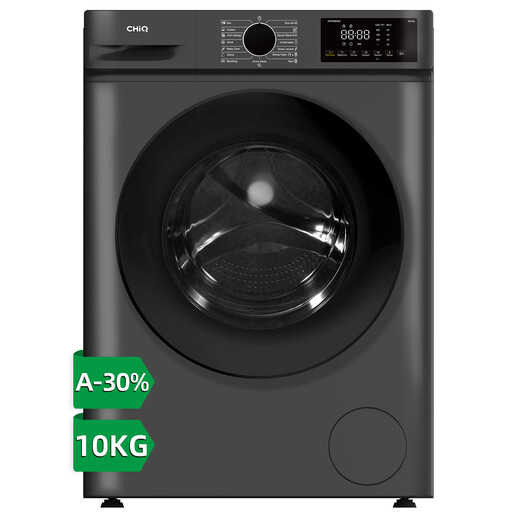 Image unavailable
CHiQ JW105883G, 10 kg
Its stated capacity of 10 kg can be compared with the amount of dry laundry you regularly combine, taking each programme’s limits into account.
The product name lists 16 programmes, a steam function, an A-30 % energy rating and a spin speed of 1 400 rpm.
View on Joybuy
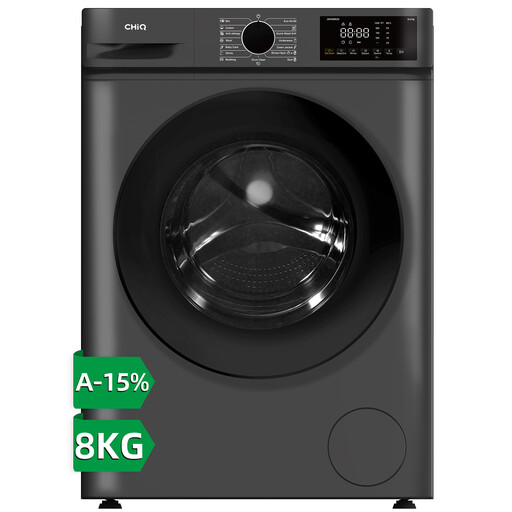 Image unavailable
CHiQ JW85883G, 8 kg
Its stated capacity of 8 kg gives you a useful point of comparison with the weight of your combined loads and the limits of the cycles you use.
The product name lists 16 programmes, a steam function, an A-15 % energy rating and a spin speed of 1 400 rpm.
View on Joybuy
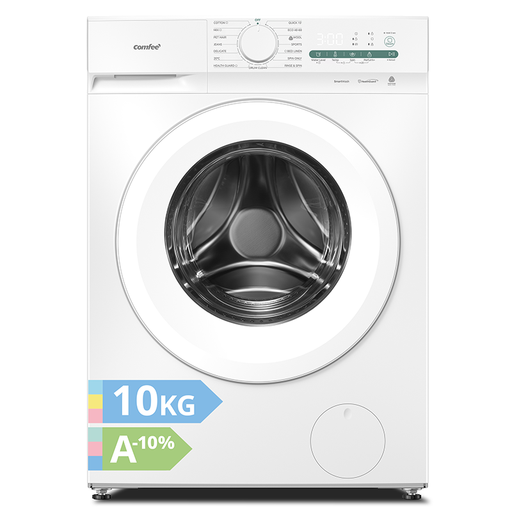 Image unavailable
Comfee CF10EWP05W-HR, 10 kg
Compare its stated capacity of 10 kg with the dry laundry you combine in each cycle and the permitted loads for different programmes.
The product name lists 16 programmes, a steam function and an option to add laundry during the cycle.
View on Joybuy
Frequently asked questions
Does the stated capacity apply to every programme?
No. The stated capacity refers to the amount of dry laundry allowed in the reference programme, while other programmes may allow less. Check the model’s manual to help you plan how to combine your laundry loads.
What does the energy label on a current washing machine measure?
It helps you compare the energy rating, energy use per 100 cycles, water use per cycle, spin performance and noise. The European Commission states that the Eco 40-60 programme is the regulatory reference; these figures don’t automatically describe every cycle or load.
Does a load-sensing function guarantee lower consumption for a half-load?
No. The effect depends on the model, programme and settings involved, and ADEME says that a half-load can use as much electricity. Check the manual to see what the function adjusts before factoring it into your decision.
Why does the machine vibrate heavily during the spin cycle after installation?
The machine may vibrate if it isn’t level or if the transit bolts haven’t been removed. Electrolux Assistance also recommends checking that the hoses are secure and the laundry is evenly distributed; consult the manual for your model.
What warranty applies to a washing machine bought in France from a professional seller?
For a private individual buying from a professional seller, the statutory legal guarantee of conformity is mandatory and covers new, second-hand and refurbished goods. The French Ministry of the Economy reiterates this in its information updated on 9 September 2026; a commercial extended warranty doesn’t replace this statutory guarantee.


