For shared laundry, choose a capacity based on the actual weight of the dry laundry you’ll be washing together and the programmes you use. Then compare energy, water and noise figures on a like-for-like basis. A front-loading machine may suit larger loads if you have enough space; a top-loader is mainly useful when width is limited. A washer-dryer makes sense when you need drying in the same appliance, but bear in mind that its drying capacity is lower than its washing capacity.
Who is this choice for?
Households with laundry baskets that are often full
If you’re combining several people’s laundry, estimate its weight and check the permitted load for the programmes you use. ADEME and UFC-Que Choisir point out that the maximum load varies by programme.
Housemates with different schedules
If the machine is near living areas or gets used at different times, spin noise, cycle duration and the stated energy and water consumption can all affect how you organise your laundry. The European Commission explains the consumption and noise figures shown on energy labels; UFC-Que Choisir also lists spin noise as a factor to consider in everyday use.
Households with limited space
The available width, clearance needed to open the door or lid, and whether you need drying in the same appliance can all influence your choice of format. UFC-Que Choisir distinguishes between front-loading machines, top-loaders and washer-dryers.
What to compare
Start by estimating the loads you’ll actually wash together and the programmes you use. Then choose a format that suits your available space and decide whether you need to dry clothes in the same appliance.
| Criterion |
What to check before buying |
Who should pay particular attention? |
| Capacity to suit combined loads |
Estimate the weight of dry laundry in each load and check the maximum load for the programmes you actually use. |
If several people regularly combine their laundry, the drum should be able to handle those loads without being underfilled every time. Around 29% of consumers prioritise a capacity that suits their usual loads. |
| Consumption for frequently used cycles |
Compare kWh per 100 cycles and litres per cycle for the same reference programme. For a washer-dryer, compare wash-only and complete wash-and-dry cycles separately. |
If you do laundry often, you may want to compare water and electricity consumption using the same programme. Around 23% of consumers put cycle consumption first. |
| Spin noise |
Compare the noise level in dB and the spin-noise class, then consider where the machine will be installed. |
If your laundry schedule varies and the machine is near living areas, spin noise could influence your choice. Around 18% of consumers prioritise keeping their home peaceful. |
| Durability and after-sales service |
Check the durability index for the specific model and the terms of each warranty. |
If the machine will be used regularly, you may want to look at its durability information and the terms for getting support. Around 18% of consumers make these factors their top priority. |
| Format and integrated drying |
Measure the space and the clearance needed to open the machine; if you need integrated drying, check the washing and drying capacities separately. |
If limited width or drying in a single appliance determines what you can install, these constraints will be your top priority. Around 12% of consumers prioritise the format or integrated drying. |
Mistakes to avoid
-
Choosing the largest drum based only on the number of people in your household
How you sort your laundry and the load limits for each programme matter too. A larger drum doesn’t guarantee it will be full for your usual washes.
Estimate the weight of the dry laundry you combine and check the limits for the programmes you use most often.
A drum that’s too small may mean extra cycles; one you rarely fill may often be underloaded.
-
Comparing a washer-dryer and a washing machine using just one consumption figure
A wash-only cycle and a complete wash-and-dry cycle perform different functions. The drying load may also be smaller than the washing load, as UFC-Que Choisir points out.
Compare appliances using the same programme, and look at the figures for a complete cycle separately if you plan to use the dryer.
Using the drying function can make cycles longer and use more water and energy.
-
Confusing the durability index with the statutory and commercial warranties
The index provides information about a model’s durability; a commercial warranty may have its own scope and terms. It is separate from the statutory warranty.
Check the details of the index that applies to the model you’re considering, and read the terms of each warranty separately before comparing offers.
Brands to consider, depending on the format you need
Bosch
The Serie 4 WAN2827FFR front-loader is one 8 kg model to consider.
- Bosch lists a capacity of 8 kg and dimensions of 845 × 598 × 590 mm for this model.
- The motor’s commercial warranty is subject to conditions; on its own, it doesn’t tell you about the noise or durability of every model in the range.
Electrolux
The PerfectCare 600 EW6T5127BG top-loader is worth considering if width is a key factor.
- Electrolux lists a 7 kg capacity, a width of 400 mm, 52 kWh/100 cycles and 45 l/cycle for this model.
- The brand describes SensiCare as adjusting cycle duration to the load; this is not an independent measure of the savings achieved.
LG
The 9 kg F94N14SLS front-loader is worth considering if the loads you actually combine justify that capacity.
- The French product information gives this model an energy rating of A.
- The Rapid 30 programme is limited to a 2 kg load, so the nominal 9 kg capacity does not apply to every programme.
Samsung
The WD90DG6B85BKU3 washer-dryer is worth considering if a two-in-one appliance would make managing your laundry easier.
- The French product information lists a 9 kg washing capacity and a 6 kg drying capacity.
- Consider washing and drying capacities separately to work out how much laundry you can dry in one cycle.
Whirlpool
The 7 kg TDLR7251FR top-loader is an option if a top-opening machine suits your space.
- Whirlpool lists a capacity of 7 kg and a spin speed of 1 200 tr/min for this model.
- The claim that sensors adjust the settings to suit the load comes from the manufacturer; it is not an independent comparison with other brands.
Washing machines on Joybuy
This selection includes front-loading machines, a top-loader and an integrated washer-dryer, so you can compare capacity, format and drying needs.
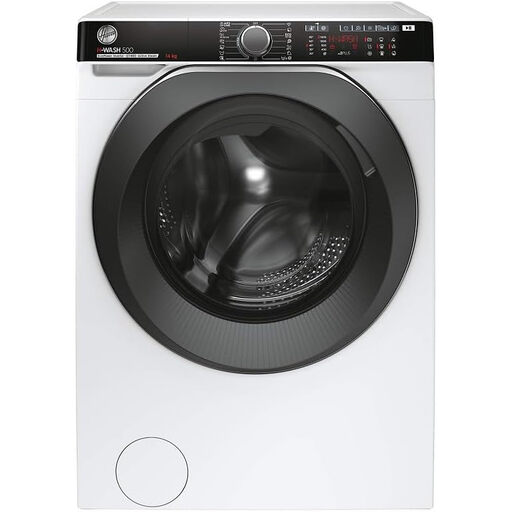 Image unavailable
HOOVER HWPD 414AMBC/1-S, 14 kg front-loading washing machine
Its stated 14 kg capacity may be worth considering if you regularly combine several people’s laundry.
Class B; 16 programmes; maximum spin speed of 1 400 tr/min.
View on Joybuy
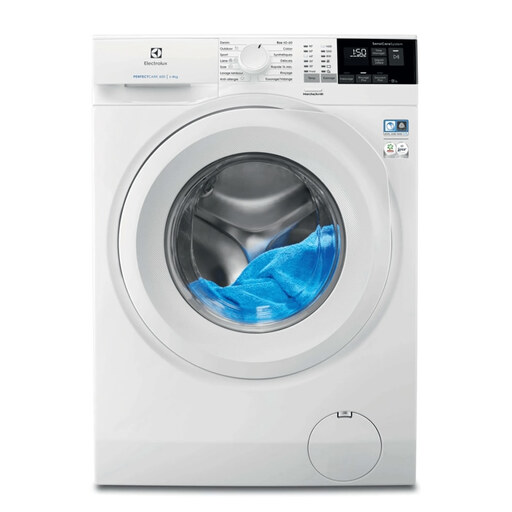 Image unavailable
Electrolux EW6F4109RA, 9 kg front-loading washing machine
Its stated 9 kg capacity may suit your household if it matches the loads you regularly combine.
Class A; maximum spin speed of 1 400 tr/min; 14 programmes; the description mentions an option to adjust cycle duration.
View on Joybuy
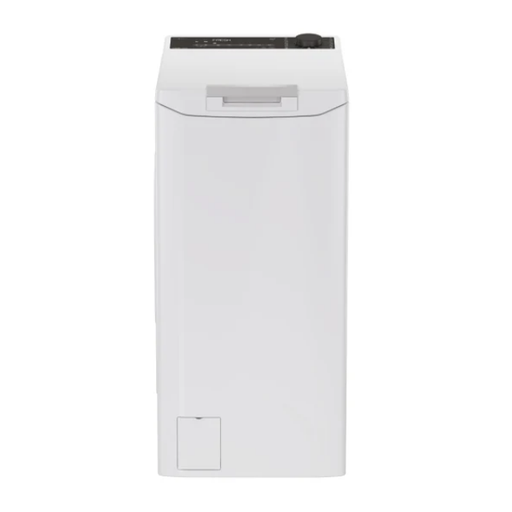 Image unavailable
Haier T Series 7 THASN276TM6-S, 7 kg top-loading washing machine
Top-loading may be worth considering if you have limited clearance in front of the machine and its capacity suits your usual loads.
Class A; 1 200 tr/min; 40 kWh/100 cycles; 42 l/cycle; 77 dB(A) during the spin cycle; stated width of 405 mm.
View on Joybuy
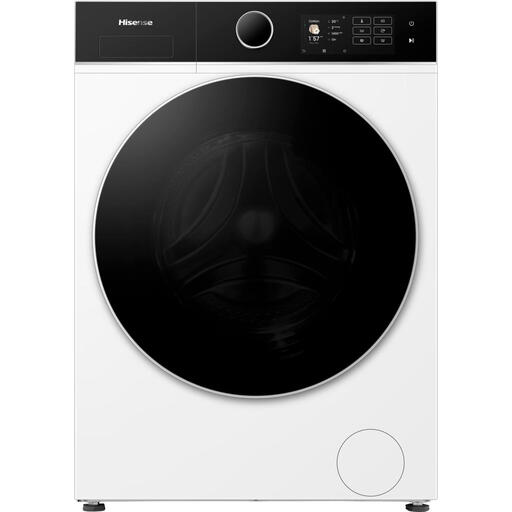 Image unavailable
Hisense WF5I8043BWF, 8 kg front-loading washing machine
Its stated 8 kg capacity can be compared with the loads you combine and the space available for a front-loader.
Class A; maximum spin speed of 1 400 tr/min; 33 kWh/100 cycles; 38 l/cycle; 72 dB(A) during the spin cycle; stated depth of 470 mm.
View on Joybuy
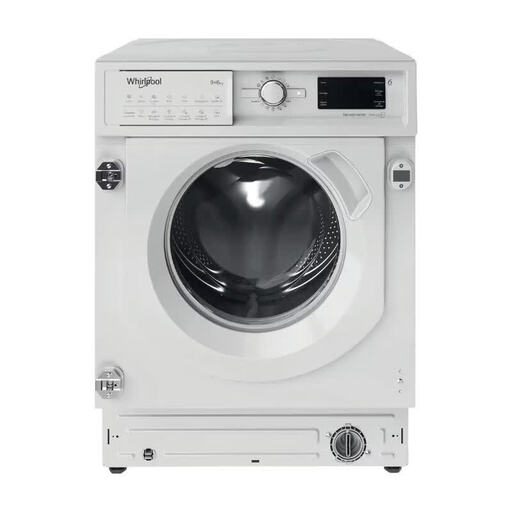 Image unavailable
Whirlpool BI WDWG FreshCare+, integrated washer-dryer
Worth considering if you need drying in the same appliance and an integrated installation suits your space.
Washing capacity of 9 kg and drying capacity of 6 kg; maximum spin speed of 1 400 tr/min.
The drying capacity is lower than the washing capacity, so allow for separate loads depending on the function you’re using.
View on Joybuy
Frequently asked questions
Is a 7 kg washing machine big enough for several people?
Not necessarily. ADEME gives 7 kg as a general guide, not a rule for every household. Estimate the weight of the dry laundry you combine and check the programme limits, which may be lower than the machine’s stated capacity.
How can I compare washing machine consumption and noise?
Compare kWh per 100 cycles, litres per cycle and noise for the same programme or reference function, using the label information provided by the European Commission. For a washer-dryer, distinguish between a wash-only cycle and a complete cycle; actual use will depend on the programmes and loads you choose.
What should I check if the machine vibrates or disturbs people in the household?
Follow the model’s instructions and check its installation, that it is level and that there is enough space before you buy. Bosch recommends removing the transit bolts and adjusting the feet to level the appliance.
How should I interpret the durability index in France?
Since 8 April 2025, the durability index has replaced the repairability index for the applicable front-loading and top-loading washing machines, according to the French Ministry of the Economy. The score out of 10 combines repairability and reliability criteria; check the details for the model you choose. Don’t assume the same rule applies to a washer-dryer without checking the relevant provisions.
Which warranty applies if a washing machine bought from a trader is faulty or not as described?
In France, you can claim under the statutory guarantee of conformity from the professional seller. According to the DGCCRF, you have two years from delivery to bring a claim. A commercial warranty, for example on a motor, has its own terms and does not replace the statutory warranty.


