When replacing your washing machine, first choose a type that fits the space and is easy to load. A front-loader may fit under a worktop, while a top-loader can work in a narrower space, provided its lid can open freely. Only consider a washer-dryer if you also need to dry your laundry. Then compare the usable capacity, the stated energy and water consumption, spin noise, programme duration and ease of maintenance.
Who is this guide for?
Households with limited space or access
If your new appliance needs to replace the old one without changing the room, check its width, the way it opens and the space needed to load the laundry. Top-loading and under-worktop installations have different requirements.
Households with frequent or large loads of laundry
Choose a capacity that suits your usual loads of dry laundry and the programmes you use. A drum that’s too small can mean more cycles, while a large drum that’s rarely full won’t necessarily offer an advantage. ADEME recommends basing your choice on your household’s actual needs.
Households mindful of noise and maintenance
If spin cycles disturb people in nearby rooms or you need to fit your washing around a particular time slot, check the noise level and cycle duration. It’s also worth checking how easy it is to access and clean the filter: these were among the sources of dissatisfaction reported by respondents to the UFC-Que Choisir survey.
What should you check before buying?
Front-loading washing machine
Consider it if: there’s room to open the door and you’re considering installing the machine under a worktop.
Bear in mind: you load it from the front, so check there’s enough clearance in front of the machine and allow for its full installed depth.
Top-loading washing machine
Consider it if: space is limited widthways or you prefer to load laundry from the top.
Bear in mind: you’ll need enough room to open the lid fully; unlike a front-loader, this type can’t be installed under a worktop.
Washer-dryer
Consider it if: you need a tumble-drying function and can’t install two appliances.
Bear in mind: check the drying capacity and the duration of a complete wash-and-dry cycle separately from the washing capacity.
| Factor |
What to check |
Who it matters to |
| Type and loading |
Measure the space, delivery access and the room needed to open the door or lid. |
When space is tight, I want to be able to install the machine and load the laundry without difficulty. Around 20% of consumers prioritise this. |
| Capacity and consumption |
Match the capacity to your usual dry laundry loads; compare electricity use per 100 cycles and water use per cycle on the energy label. |
If my loads are often full or, conversely, small, I’m looking for a capacity that suits my routine. This is a priority for around 25% of consumers. |
| Noise and duration |
Check the spin noise and the duration of the reference programme; look at quick programmes separately. |
If the machine is near a room in use, I want the spin noise and wash time to fit my routine. Around 20% of consumers prioritise this. |
| Durability and maintenance |
Check the durability index for the specific model and consult its manual to find out how to access the filter. |
If maintaining my old washing machine was difficult, I want to know how to access the filter and look after its replacement. This is the main concern for around 25% of consumers. |
| Built-in drying |
Confirm that you need a drying function, then compare the drying capacity and the duration of a complete cycle. |
If I don’t have room for two appliances, I also need to be able to dry my laundry in the machine that washes it. Around 10% of consumers prioritise this. |
Mistakes to avoid when replacing your machine
-
Assuming a bigger drum will use less energy
A capacity that doesn’t suit your needs can mean more washes, or leave a large drum regularly underfilled. UFC-Que Choisir recommends thinking about the loads you actually wash rather than focusing only on the maximum capacity.
Think about your usual dry laundry loads, including bulky items, then compare the consumption figures on the energy labels of the models you’re considering.
-
Measuring the space but not the opening clearance
A washing machine may fit into its space but leave too little room to open the door or raise the lid.
Before choosing between a front-loader and a top-loader, measure the delivery access too, and allow enough clearance to load the machine.
-
Relying only on claims of quick or quiet washing
Spin noise and wash duration were among the aspects rated less favourably by some respondents to the UFC-Que Choisir survey. A quick programme doesn’t tell you how long the reference programme takes.
Compare the stated spin noise and reference programme duration, then check the manual for the cycles you plan to use.
-
Confusing the durability index with a warranty
The durability index provides information about reliability and repairability criteria; it doesn’t define your rights if a product is faulty or the cover provided by a commercial warranty.
Check the index and its criteria, then read the terms of any commercial warranty separately. For eligible purchases from a professional seller in France, the legal guarantee of conformity is a separate provision.
Brands to consider for the type you want
The ranges presented by manufacturers can help you identify a suitable type. Your final choice depends on the specifications of the particular model and how it will be installed in your home.
Bosch
Bosch Électroménager France’s range includes front-loading, integrated and compact washing machines.
- Several types to consider for your chosen space.
- For the model you choose, check its dimensions, noise level, cycle duration and maintenance information rather than assuming that features advertised across the range apply to every model.
Miele
Miele France offers front-loading, top-loading and washer-dryer models. The last type is relevant when replacing your machine only if you also need to dry your laundry.
- Different types to compare, depending on the space available and how you prefer to load your machine.
- For a washer-dryer, check its drying capacity and the duration of a complete cycle in particular; don’t assume these are the same as its washing capacity.
Electrolux
Electrolux France offers top-loading and front-loading washing machines. Start by choosing between the two based on the space and access you need for loading.
- Having both types to choose from lets you consider different installation options.
- Check the exact width, opening clearance, noise level and filter access in the product details and manual for the model you choose.
Front-loading and top-loading washing machines on Joybuy
These front-loading and top-loading models let you compare two ways to replace a washing machine for everyday laundry. Start with the space available and your preferred loading style, then check the specifications and manual for the model you’re interested in. This selection doesn’t include washer-dryers.
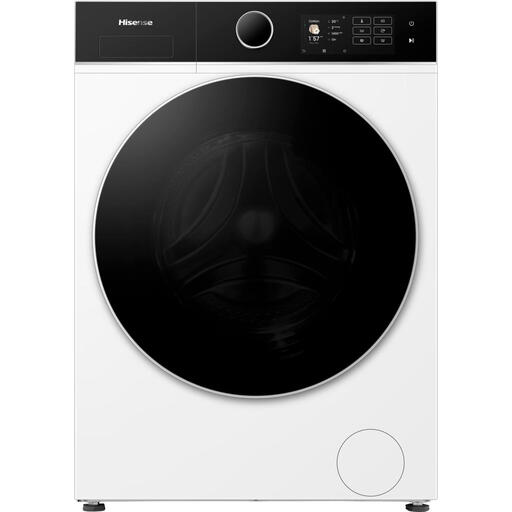 Image unavailable
Hisense WF5I8043BWF, 8 kg front-loading washing machine
Worth considering if you want to stick with a front-loader and your usual loads suit an 8 kg capacity.
The model name indicates a spin speed of 1,400 rpm. Before choosing, check the installed dimensions, door clearance, spin noise and filter access.
View on Joybuy
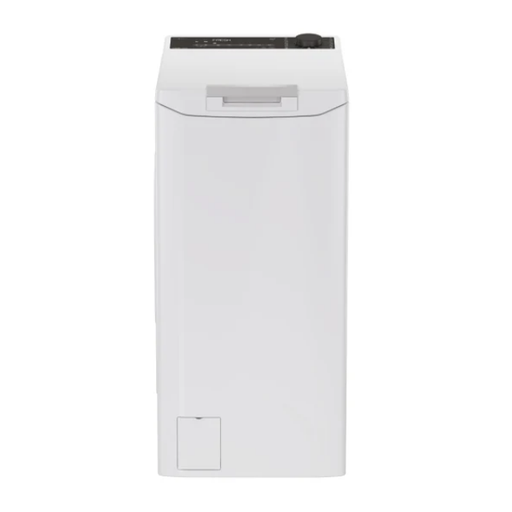 Image unavailable
Haier T Series 7 THASN276TM6-S, 7 kg top-loading washing machine
Worth considering if you prefer to load from the top and a 7 kg capacity suits your laundry loads.
The model name indicates an A energy rating and a spin speed of 1,200 rpm. Measure the available width and the space needed to raise the lid; also check the manual for details on filter access.
View on Joybuy
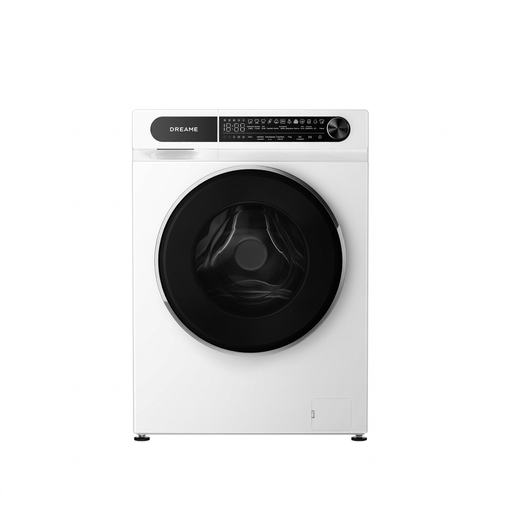 Image unavailable
Dreame DRWASHS8KG Washing Machine S, 8 kg
Worth considering if you’re looking for a front-loading washing machine with a stated capacity of 8 kg.
Before choosing this model, check the door clearance, the duration of the programme you’ll use, filter access and the durability index displayed for this model in France.
View on Joybuy
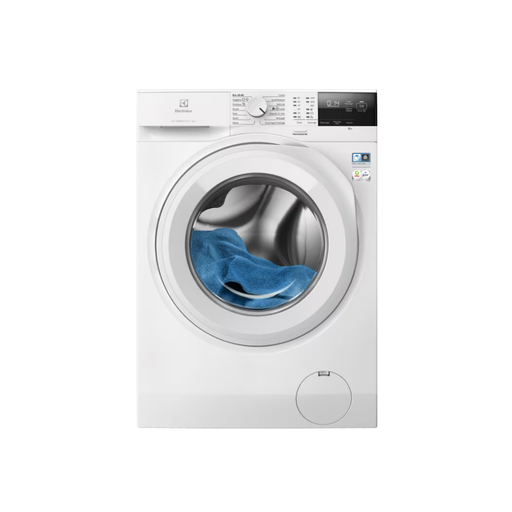 Image unavailable
Electrolux EW6FI4805AW, 8 kg front-loading washing machine
Worth considering if your space can accommodate a front-loader and you regularly wash loads suited to an 8 kg capacity.
The model name indicates a spin speed of 1,400 rpm. Check there’s enough room in front of the door, and look up the noise level, reference programme duration and filter access for the exact model.
View on Joybuy
 Image unavailable
Candy TCA464TM4-S ProWash 500, 6 kg top-loading washing machine
Worth considering if you prefer to load from the top and 6 kg is enough for your usual loads.
The model name indicates a B energy rating and a spin speed of 1,400 rpm. Check the lid clearance, spin noise and the duration of the cycles you’ll use.
View on Joybuy
Frequently asked questions
Which rating should you look for on a new washing machine sold in France?
According to the French Ministry for Ecological Transition, the durability index replaced the repairability index for the washing machines concerned from 8 April 2025. This score out of 10 takes reliability and repairability criteria into account. Check the breakdown too if maintenance or spare parts are important to your decision.
How can you check filter access before ordering?
Consult the manual for the exact model to find the filter and see how much space you’ll need to open it. Filter access and maintenance were among the sources of dissatisfaction highlighted in the UFC-Que Choisir survey, so don’t assume that a new appliance will be easy to maintain.
Does an 8 kg capacity apply to every programme?
No. The permitted load depends on the programme and the fabrics. Check the manual for the limits of the cycles you use, particularly for delicate fabrics, rather than choosing based only on the maximum capacity shown.
Does a commercial warranty replace the legal guarantee in France?
No. For goods sold by a business to a consumer in France, the legal guarantee of conformity is mandatory. The DGCCRF states that claims must be made within two years of delivery. A commercial warranty is separate: read its terms to see what it adds, and don’t confuse it with your legal rights if the goods don’t conform to the contract.


