Households doing regular laundry
For everyday washing, 7 kg is usually enough, according to ADEME. However, adjust the capacity to the actual size of your loads and the way you sort your laundry.


Start by checking the available space and the size of the loads you actually wash. A front-loading machine works well when there is enough width and room to open the door, while a top-loading model is mainly suited to narrower spaces. For everyday laundry, 7 kg is often enough, whereas 8 to 10 kg makes sense for family loads that are regularly full. Then compare water consumption, kWh/100 cycles, spin performance and noise levels on the label.
For everyday washing, 7 kg is usually enough, according to ADEME. However, adjust the capacity to the actual size of your loads and the way you sort your laundry.
If sheets, towels and large loads come around regularly, a capacity of 8 to 10 kg may be a better fit for your household. UFC-Que Choisir specifically indicates that 8 to 9 kg is generally sufficient for a household of three to four people.
When width, depth, noise or the electrical installation restrict your choice, a slim top-loading machine or slim front-loading model may be more suitable than a standard appliance. The space must still be compatible with the connections and safety requirements.
First choose a format that fits your home, then compare the label data and features that are useful for your usual washing cycles.
| Priority | What to check | Your needs |
|---|---|---|
| Capacity | Compare the kg of dry laundry with the loads you wash most often. Also check the capacity permitted by your usual programmes, which may be lower than the cotton programme’s capacity. | I want to avoid running extra cycles with a drum that is too small, without buying capacity that will often remain only half full. |
| Spin performance and noise | Check the spin-drying efficiency class, noise level in dB and noise class. Washing, rinsing and spinning results may also vary between models. | If laundry dries inside the home, I want to minimise residual moisture. ADEME recommends choosing an A spin-drying efficiency class in this situation. |
| Water and electricity | Compare kWh per 100 cycles and litres per cycle on the current label. These figures refer to the eco 40-60 reference programme. | I want to compare appliances on a like-for-like basis rather than relying solely on an old energy class or the initial purchase price. |
| Installation | Measure the width, depth and clearance in front of the door or above the lid. Also confirm the water inlet, drainage, earthing and residual-current protection when the appliance is intended for a bathroom. | My washing machine must be safely connected and usable in the intended location, without blocking a walkway or opening. |
| Durability | Look for the durability index and check the conditions for parts availability for the model concerned. ADEME states that the durability index has also applied to washing machines since April 2025. | I prefer to include repairability and maintenance when choosing an appliance intended to last for several years. |
A large drum is mainly worthwhile when large loads or very full laundry baskets are a regular occurrence. For ordinary loads, a standard size may be more suitable.
Base your choice on the loads you wash most often and the programmes you actually use. Reserve 10 to 12 kg models for households that genuinely run large loads on a regular basis.
A brand worth considering when comparing specific front-loading washing machine models.
A brand to consider when comparing front-loading washing machines, particularly in the capacities commonly needed by households.
A possible option when comparing a family-sized front-loading washing machine with other models.
This Joybuy selection brings together front-loading washing machines for everyday or family loads, along with a top-loading model for spaces where width is the deciding factor.
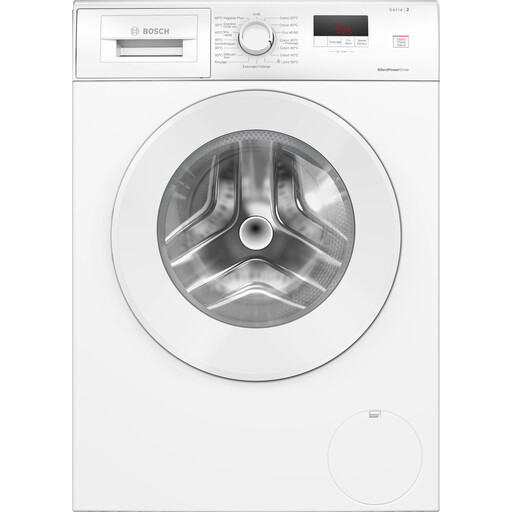 Image unavailable
A front-loading option for a household’s everyday laundry when there is enough space in front of the door.
7 kg, 1,400 rpm, energy class A, 40 kWh/100 cycles, 44 L/cycle, spin-drying efficiency class B and 72 dB with noise class A.
Stated dimensions: 59.8 × 84.8 × 59 cm; total depth including the door: 63.2 cm. Check the available space, connections and electrical installation before purchase.
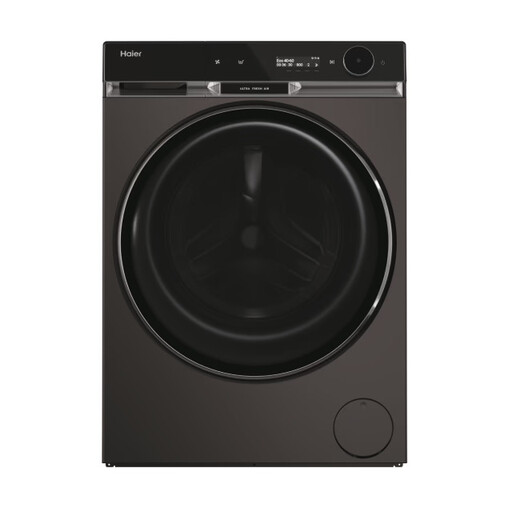 Image unavailable
This 10 kg front-loading machine is suited to regularly full family loads or frequent bulky items.
1,400 rpm, energy class A, 41 kWh/100 cycles, 48 L/cycle, spin-drying efficiency class B, 68 dB and noise class A.
Stated width: 59.5 cm; depth: 61.1 cm. A 10 kg drum may be more capacity than you need if your usual loads are modest.
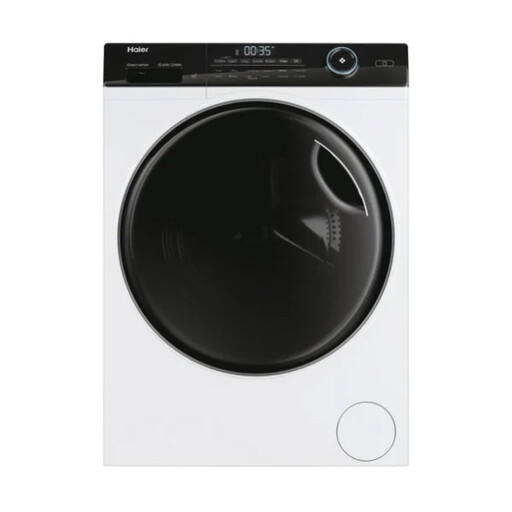 Image unavailable
This 9 kg front-loading model may suit a household of three to four people or families with frequent large loads.
1,400 rpm, energy class A, 49 kWh/100 cycles, 48 L/cycle, spin-drying efficiency class B, 70 dB and noise class A.
Stated dimensions: 59.5 × 85 × 58.3 cm; door opening: 36 cm. Check the space in front of the door and the durability index if repairability is a key consideration.
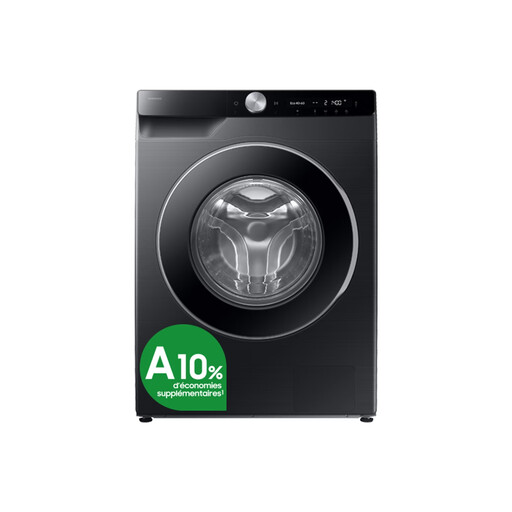 Image unavailable
A 9 kg front-loading machine to consider for regular family laundry and bulky items.
1,400 rpm, energy class A, 44 kWh/100 cycles, 50 L/cycle, spin-drying efficiency class B, 72 dB and noise class A.
Stated depth: 55 cm, or 63 cm including the door. Measure the actual clearance and check the durability index if long-term maintenance is important to your decision.
 Image unavailable
This 6 kg top-loading model is primarily suited to a narrow space, provided the top remains accessible.
Stated width: 40.5 cm; 1,400 rpm, energy class B, 49 kWh/100 cycles, 41 L/cycle, spin-drying efficiency class B, 79 dB and noise class C.
The 6 kg capacity is better suited to everyday loads than frequent large washes. Consider the noise level if the appliance is close to living areas.
For one person or a couple, 5 to 7 kg is generally enough, according to UFC-Que Choisir. For a family with children, 8 to 10 kg may be better suited to typical loads; only go larger if large loads are genuinely frequent and regularly filled.
Yes, because it helps remove more water before the clothes are put out to dry. ADEME recommends choosing an A spin-drying efficiency class when laundry needs to dry quickly indoors. Also compare the spin noise shown on the label, particularly in a flat.
Confirm the water inlet, drainage, socket and compliance with the safety zones. Promotelec states that in a bathroom, the appliance must be earthed, protected by a 30 mA residual-current device and positioned beyond zone 2.
For installations covered by the requirements described by Promotelec, a washing machine is one of the appliances that must be supplied by a dedicated circuit with a 16 A socket. If you are unsure about an existing home, have the installation checked by a professional before choosing where to put the appliance.
Look for the durability index displayed for the model. ADEME states that this index has applied to washing machines since April 2025 and takes reliability and repairability into account.