For regular laundry, start by choosing a capacity that suits the loads you typically wash. According to ADEME, 7 kg is usually enough. A front-loader is a good fit if you have room for the door to open, while a top-loader may be more convenient if you prefer access from above. Choose a washer-dryer if you also need to dry your laundry. In that case, check the washing and drying capacities separately, then compare the energy label information and maintenance options for each model.
Which households are these options suited to?
How often you do laundry matters just as much as the size of your household. Start with the loads you actually wash and the space you have available.
Households with frequent, varied loads
If you wash a mix of everyday clothes, bedding and towels, look for a capacity that suits the loads you can regularly build up. Then compare water and energy use, Eco programme duration, noise levels and spin performance across models.
Households with limited space or access
A front door and a top-opening lid offer different ways to load your washing. Check where the machine will go, how much room you need to open it and whether loading it feels comfortable before comparing models on their features.
Households that also need to dry laundry
A washer-dryer can take care of both jobs. However, its drying capacity needs to suit the amount of laundry you want to dry, so check it separately from the washing capacity.
What should you compare before choosing?
First, choose a format that suits your installation and how you prefer to load your laundry. Then compare specific models by looking at their capacity and data measured on the same basis.
Front-loading
Choose this if: you can open and load the machine from the front without blocking the way.
Bear in mind: check the space needed for the door to open, and only choose a larger capacity if your loads call for it.
Top-loading
Choose this if: you find it easier to load from above, or a front-opening door would get in the way. Electrolux France highlights both as reasons to choose a top-loader.
Bear in mind: keep the space above the machine clear and compare models individually rather than assuming their performance based on the format.
Washer-dryer
Choose this if: drying is also a priority and a combined appliance suits your space.
Bear in mind: you may be able to wash more laundry than you can dry in one cycle. Compare both capacities and the duration of a complete wash-and-dry cycle.
| Feature |
What to check |
Think about your needs |
| Capacity |
Compare the capacity in kg with your usual loads and the larger loads you wash regularly. According to ADEME, 7 kg is usually enough; it advises against half-loads. |
I want to gather enough laundry to fill the drum regularly, without choosing a machine based solely on an occasional large load. |
| Water and energy |
On the energy label, compare the Eco 40-60 programme: energy in kWh per 100 cycles, water per cycle and programme duration. Keep the model’s capacity in mind when looking at these figures. |
If I do laundry frequently, I want to compare consumption for the same programme and find out how long it takes. |
| Noise and spin performance |
Check the noise level during spinning in dB, its noise class and the spin-drying efficiency class. Independent testing can also help: UFC-Que Choisir says its testing protocol measures spin performance and noise, among other things. |
The machine is near my living areas, or I dry laundry indoors, so noise and how much water remains after spinning matter to me. |
| Combined drying |
For a washer-dryer, check the washing and drying capacities in kg separately. Also look at the data and duration for a complete wash-and-dry cycle. |
I want to dry my usual loads without assuming that the maximum washing load can be dried in one go. |
| Maintenance |
For a front- or top-loading washing machine sold in France, check its durability index, then look into parts, documentation and after-sales support for the exact model. |
I want to know who to contact and which parts to look for if the machine needs maintenance or repair. |
What buying mistakes should you avoid?
-
Choosing the biggest drum just in case
Extra capacity is no help if your usual loads are too small to fill the machine properly. ADEME says 7 kg is usually enough and advises against half-loads.
Before comparing capacities, think about the amount of laundry you wash regularly, including bedding and towels.
-
Looking only at the energy class or spin speed
These figures alone don’t tell you how much water a machine uses, how long the programme takes or how noisy it is during spinning. UFC-Que Choisir also measures washing, rinsing and other factors in its testing protocol.
Compare the energy label figures for the Eco 40-60 programme on a like-for-like basis. Where possible, also look at tests that explain how they were carried out.
-
Confusing washing capacity with drying capacity
These are separate figures for a combined appliance. For example, Electrolux France lists a model with a 10.5 kg washing capacity and a 6 kg drying capacity.
Check how much laundry you can dry and how long a complete cycle takes before choosing a washer-dryer.
-
Treating the durability index as a guarantee of repairability
The index alone doesn’t tell you which parts are available, how to obtain them or what support is offered for a particular model.
Compare the index for the models you’re considering, then check the documentation, available parts and after-sales support for the exact model.
Which brands should you consider for each format?
These ranges offer useful points of comparison, but you’ll need to check the features and maintenance options for each individual model.
Bosch
Bosch Electroménager France offers front-loading washing machines, integrated or under-counter models, and washer-dryers.
- The range includes the 7 kg front-loading WGE02203FR, listed at 1 200 tr/min, and the 9 kg WUU28T6MFR, listed at 1 400 tr/min, according to Bosch Electroménager France.
- Capacity alone doesn’t tell you about noise, consumption or maintenance. Check the energy label and information for the specific model you’re considering.
Miele
Miele France offers a catalogue of washing machine parts and a support service through which you can request a repair visit.
- These services let you look up maintenance information for a specific model.
- Their availability doesn’t guarantee that every part is in stock or that the same repair options are available for all models.
Electrolux
Electrolux France offers top-loading washing machines and washer-dryers, worth considering if access or drying needs influence your choice.
- The brand lists a SteamCare 700 washer-dryer with separate capacities of 10.5 kg for washing and 6 kg for drying.
- Check the dimensions, energy label information and maintenance terms for the model you’re considering rather than assuming these features apply across the range.
Washing machines to consider on Joybuy
This selection includes front-loading washing machines and appliances that combine washing and drying. Compare their capacities with your usual loads. If you’re interested in drying too, check the drying capacity and complete cycle as well.
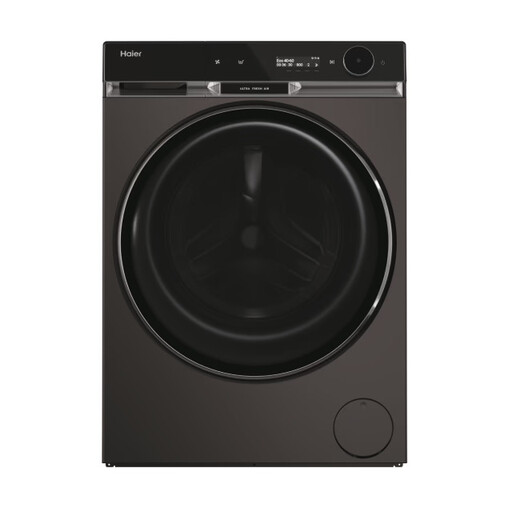 Image unavailable
Haier X Series 11 HW100-BD14397PGU1, 10 kg
This 10 kg front-loading washing machine is worth considering if your regular loads call for this capacity. The product title lists 1 400 tr/min, an A rating, Direct Motion, AutoDose, steam and Wi-Fi. Check the energy label, connections and maintenance options for this model before you choose.
View on Joybuy
 Image unavailable
Samsung WD11DG6B85BEU3, 11 kg washing, 6 kg drying
This washer-dryer could suit your washing and drying needs if a 6 kg drying capacity works for you. The product title lists an 11 kg washing capacity and an A rating, but doesn’t specify which cycle the rating applies to. You’ll need to reduce a full washing load before drying it. Also check the duration of a complete cycle and the maintenance information.
View on Joybuy
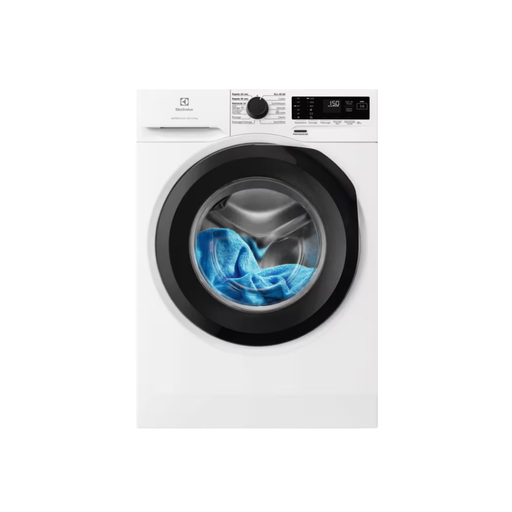 Image unavailable
Electrolux EWF1410N2, 10 kg
This 10 kg front-loading washing machine is worth comparing if you regularly wash large loads. The product title mentions TimeSave, steam and an Inverter motor, but these details don’t tell you how well it washes or how much it uses. Check the model’s energy label to compare water and energy consumption, noise and spin performance for the programme listed.
View on Joybuy
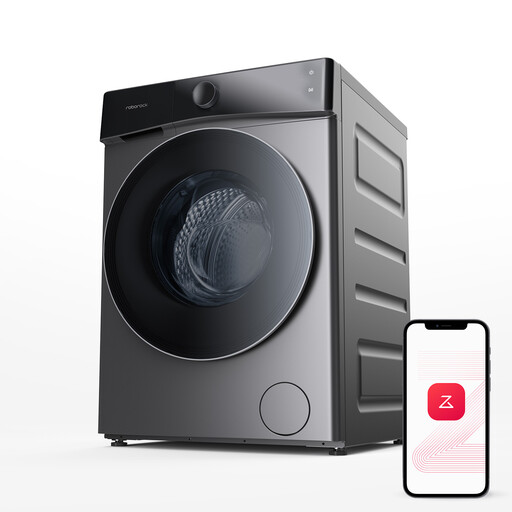 Image unavailable
Roborock Zeo Lite Gray, 10 kg washing, 6 kg drying
This washer-dryer is worth considering if you need both functions and a 6 kg drying capacity suits your loads. The product title lists a 10 kg washing capacity, 27 programmes, app control and automatic dosing. Check the energy label, cycle durations, dimensions and maintenance options for this model.
View on Joybuy
 Image unavailable
Samsung WD10HG6U34BEU3, 10 kg washing, 6 kg drying
This washer-dryer is worth comparing if you also want to dry your laundry and a 6 kg drying capacity suits your loads. The product title lists a 10 kg washing capacity and a D rating, but doesn’t specify which cycle the rating applies to. Before comparing it with another model, check the energy labels for washing and wash-and-dry cycles, as well as the maintenance terms.
View on Joybuy
Frequently asked questions
Which energy label figures should I compare between two washing machines?
Compare figures for the same Eco 40-60 programme: energy class, kWh per 100 cycles, water per cycle, duration, noise during spinning and spin-drying efficiency class. This programme is for normally soiled cotton declared washable at 40 °C or 60 °C. Don’t compare its consumption with that of a quick programme on another machine.
Can a washer-dryer dry the whole load it has just washed?
Not necessarily: check the washing and drying capacities separately. For example, Electrolux France lists a model with a 10.5 kg washing capacity and a 6 kg drying capacity, so you’d need to reduce a full washing load before drying it.
What should I check beyond the durability index?
Check the parts available, the documentation and the after-sales support for the specific model. According to the French Ministry of the Economy, the durability index replaced the repairability index for front- and top-loading washing machines from January 2025. The rating alone doesn’t explain what support is available for your model.
How can I avoid half-load cycles?
Choose a capacity that suits the loads you can regularly build up, then wait until you have enough laundry while leaving room for it to move around in the drum. ADEME says a half-load may use less water but just as much electricity.


