People living in a very narrow space
Compare the width and depth separately, and check how much clearance you need to open the door or lid. UFC-Que Choisir explains how these requirements vary by format.


Start by choosing a format that fits the available width and depth, with enough clearance to open the door or lid. Then match the capacity to your usual loads: a machine that fits in the room but cannot be opened is no use. UFC-Que Choisir describes top-loading washing machines as a narrow-width option, but you should check the depth of the specific model. A manually filled mini washing machine is only suitable if its instructions confirm this filling method and its capacity meets your needs for small loads. If you’re placing a machine in a bathroom, have the location and electrical installation checked before buying, in line with Promotelec’s recommendations.
Compare the width and depth separately, and check how much clearance you need to open the door or lid. UFC-Que Choisir explains how these requirements vary by format.
You want to do your laundry at home without assuming that a standard appliance can be connected. If installation involves building work, Service Public points out that some work requires the landlord’s permission.
A capacity that’s too small can mean running more cycles, while a compact format alone won’t tell you what capacity you need. ADEME recommends choosing a capacity that suits your needs.
When choosing a washing machine for a small home, UFC-Que Choisir recommends considering its width, depth and opening clearance. ADEME also advises matching the capacity to your needs and comparing the information on the energy label.
| What matters | What to check | Who is it important for? |
|---|---|---|
| Size and opening clearance | Measure the available width and depth, then check how much space you need to open the door or lid. | If access is narrow or the machine needs to open close to an obstacle, I check every dimension before comparing programmes. Around 36% of consumers prioritise an appliance that fits in the room and can be opened. |
| Installation and safety | Check the water supply, drainage, electrical supply and instructions; if it’s going in a bathroom, have the location checked. | If my home doesn’t have a suitable connection point, I check which connections are possible and what precautions apply before choosing an appliance. Around 29% of consumers prioritise an installation that’s feasible. |
| Capacity and number of cycles | Estimate the size of your usual loads and check the washing and spin capacities separately if they differ. | If I do laundry regularly or wash bulky items, I look for a suitable capacity rather than the smallest drum. Around 21% of consumers prioritise reducing the number of cycles. |
| Noise and energy and water use | Compare the kWh per 100 cycles, litres per cycle and spin noise on the energy label. | If the machine will be near a living area, I compare noise and energy and water use once I’ve found a format that fits the room. Around 14% of consumers prioritise comfort and running costs. |
The term often refers to a reduced depth, not a machine that’s narrow in every dimension. For example, the Candy ProWash 300 GD 27S7-S front-loader is 595 mm wide, according to its manufacturer’s specifications.
Measure the width and depth separately, then check the door clearance and the distances specified in the instructions for the exact model.
A compact 5 kg front-loader and a manually filled appliance are designed for different needs. The Wiltec 65816 has a stated capacity of 3.0 kg for washing and 1.0 kg for spinning.
Before choosing, check the filling method, drainage and washing and spin capacities carefully.
A drum that’s too small can mean running more cycles. A larger capacity is only useful if it suits your usual loads.
Think about the amount of laundry you usually have and any bulky items, then compare the capacities of models that can actually be installed in your home.
Worth considering if a narrow width and no front-opening door are essential, using a specific top-loading model as a point of comparison.
Worth comparing when the depth of a front-loading washing machine is a key constraint.
Worth comparing if the height or width of a standard front-loader is an issue, while taking the specific model’s dimensions into account.
Worth considering as a secondary appliance for small loads when manual filling is essential.
This selection includes a foldable portable mini washing machine and front-loading washing machines with capacities of 8 to 10 kg. Check each model’s dimensions and capacity against your available space and usual laundry loads.
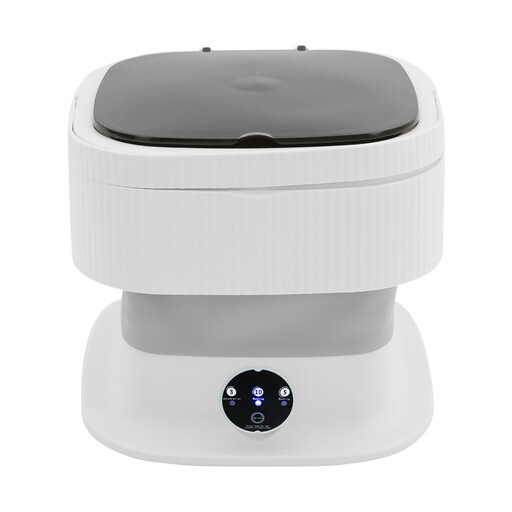 Image unavailable
The product title describes a portable, foldable design for use in places such as flats or halls of residence. Check how it’s filled and drained before choosing it.
Stated volume: 10 L. Three listed wash times: 2, 5 or 10 minutes. Stated motor power: 40 W; listed speed: 320 rpm.
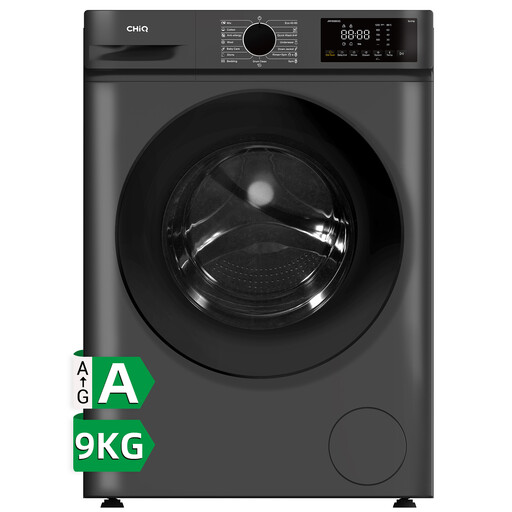 Image unavailable
The product title lists a slim width of 465 mm. Check that the depth, connections and door clearance suit your available space.
Stated capacity: 9 kg. Listed width: 465 mm. Stated drum size: 530 mm; listed spin speed: 1,400 rpm.
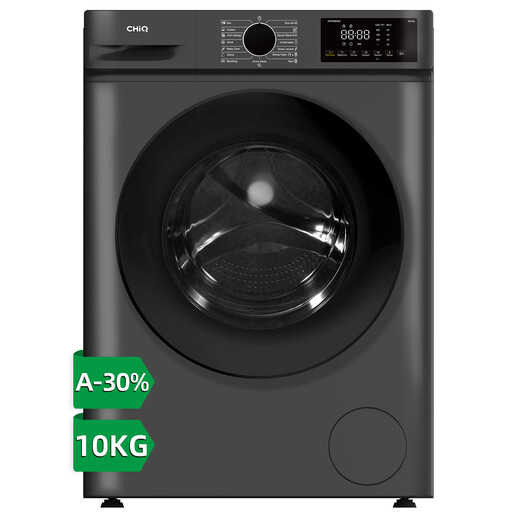 Image unavailable
This front-loader is worth comparing if its capacity suits your laundry loads. Check its dimensions and the clearance it needs before choosing it for a narrow room.
Stated capacity: 10 kg. Listed drum size: 530 mm. Spin speed: 1,400 rpm. 16 programmes listed.
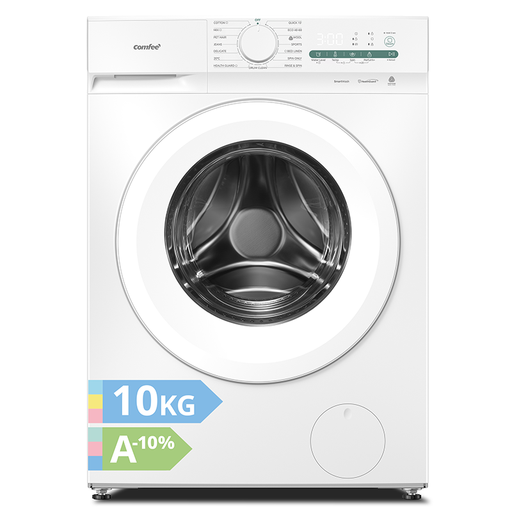 Image unavailable
If you’re choosing a machine for a small room, check this model’s dimensions and the space needed to use it. Its stated capacity should also suit your usual laundry loads.
Stated capacity: 10 kg. 16 programmes listed, including a pet-hair programme; steam function listed.
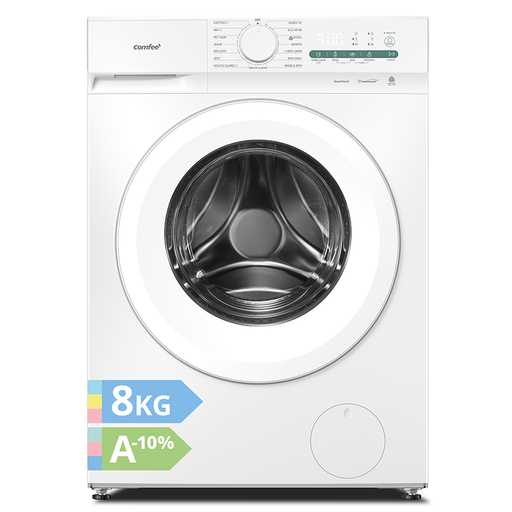 Image unavailable
Its stated depth could be useful if space behind the machine is limited. Also check the width, door clearance and required connections.
Stated capacity: 8 kg. Listed depth: 48 cm. 16 programmes listed; steam function listed.
No. It takes up less width and doesn’t need front-door clearance, but it still needs enough depth and headroom. Electrolux France lists the EW6T4613HA as 400 mm wide, 600 mm deep and 890 mm high, before allowing for the clearances specified in the instructions.
For a standard washing machine, check the instructions for the water supply, drainage, electrical supply and connection distances. A model designed by its manufacturer for manual filling may not need a fixed water supply, but you’ll still need a safe way to drain the wastewater.
No. Promotelec states that a washing machine in a bathroom must be installed outside zone 2, earthed and connected to a circuit protected by a 30 mA residual-current device. Have the zones and installation checked on site: these guidelines do not confirm that a particular location is suitable.
It depends on the work involved. Service Public distinguishes between using a property and making alterations to it, and says some work requires the landlord’s permission. If installing a water supply, drainage or electrical circuit involves building work, discuss the plans with your landlord before starting.
Compare the kWh per 100 cycles, litres per cycle and spin noise shown on the energy label, using a like-for-like basis. These figures can’t predict your personal bills; check the model’s instructions for maintenance advice too.