Households with regular heavy laundry loads
You often wash sheets, towels and full laundry baskets, and want to reduce the number of cycles without choosing a drum that is unnecessarily large.


Start by choosing based on the loads and programmes you actually use: the stated capacity refers to the amount of dry laundry accepted on the Cotton or Eco 40-60 programme, while the limits are lower for synthetics and wool. If you regularly wash sheets, towels and full laundry baskets, an 8 to 10 kg front-loading machine is suitable when the space allows; a top-loading or slim model is mainly the answer when space is limited. According to UFC-Que Choisir, an exceptionally large duvet may be better taken to a launderette or professional cleaner than accommodated by an oversized washing machine.
You often wash sheets, towels and full laundry baskets, and want to reduce the number of cycles without choosing a drum that is unnecessarily large.
You have limited width, depth or door clearance, and need to choose between a standard front-loader, a top-loader and a slim model before comparing features.
You sometimes wash a large duvet, but this does not necessarily justify a very high-capacity appliance: the filling and care label remain decisive.
First compare the load accepted by each programme and the appliance’s actual dimensions, then review the standardised data and durability information for the exact model.
| Priority | What to check | Your needs |
|---|---|---|
| Usable capacity by programme | Check the capacity in kg of dry laundry for Cotton or Eco 40-60, then review the load table for Synthetics, Wool, Delicates and Duvet. Also confirm that the appropriate programme is available for the textile concerned. | I want to wash sheets and towels without assuming that the same weight is accepted for wool, synthetics or a duvet. |
| Dimensions and access | Measure the width, total depth, hoses, porthole or lid opening, and the clearance in front of the appliance. A top-loader requires clearance above it; a slim front-loader may be deeper once connected. | My appliance must fit its space and remain practical to use every day, without blocking a passageway or preventing the door from opening. |
| Water, energy and spin cycle | Compare kWh/100 cycles, litres per cycle, Eco 40-60 duration, spin speed and noise levels across comparable models. The European Commission specifies that regulated performance measurements relate to the Eco 40-60 programme. | I want to compare like-for-like data while choosing a capacity I can fill regularly, rather than a drum that is too large for how I use it. |
| Durability and installation | Look for the durability score out of 10 and the associated document for the exact reference. Read the installation instructions before ordering to check the requirements for connection, levelling and plumbing. | I want verifiable information about the model I choose, beyond the brand name or marketing claims alone. |
An 8 or 10 kg appliance does not automatically accept the same load for synthetics, wool or delicates. Overloading can affect washing results or mean you have to run another cycle.
Before buying, check the manual or programme chart and note the maximum loads for Cotton or Eco 40-60, Synthetics, Wool and Duvet for the exact reference.
An oversized washing machine takes up more space and may be less suitable if it is usually underfilled. A large duvet may also be unsuitable depending on its size and filling.
Choose the appliance according to your regular loads. For an exceptionally bulky duvet, consider a launderette or professional cleaner, and always follow the care label.
This option involves a journey and an occasional expense, but avoids installing an XXL appliance for a rare requirement.
A slim model may no longer fit once connected, or it may obstruct the passageway when open. A top-loader also needs a clear area above it for loading laundry.
Before ordering, compare the overall dimensions, the measurements with the door open and the installation requirements in the manual with the actual space available.
Label values are based on Eco 40-60 and a standardised method. Household consumption varies depending on the textiles, programmes, loads and conditions of use.
Compare kWh/100 cycles, litres per cycle, Eco 40-60 duration, spin speed and noise levels between comparable appliances, then choose a capacity suited to your usual laundry loads.
The Bosch WGH254A0FR is a 10 kg front-loader with a 1,400 rpm spin speed for a standard space, with stated dimensions of 845 × 598 × 590 mm.
The LG F82SV50WHS combines a stated capacity of 8.5 kg with a cabinet depth of 470 mm, making it suitable where depth is limited.
The LFR73A943V is a 9 kg front-loader with a 1,400 rpm spin speed and a stated depth of 577 mm, for regular heavy loads without moving up to 10 kg.
The Electrolux EW6F5814BA is an 8 kg front-loader with a 1,400 rpm spin speed, a stated depth of 576 mm, and Cotton, Synthetics, Wool, Delicates and Eco 40-60 programmes.
Joybuy options for regular heavy laundry loads, including 8 to 10 kg front-loading models and a slim option for smaller spaces.
 Image unavailable
A front-loading option for frequent heavy loads of sheets and towels, provided standard installation space is available.
Stated capacity of 10 kg, 1,400 rpm spin speed, stated depth of 611 mm, 41 kWh/100 cycles and 48 L/cycle. Check the manual for the loads permitted by each programme, door clearance and the durability score displayed in France.
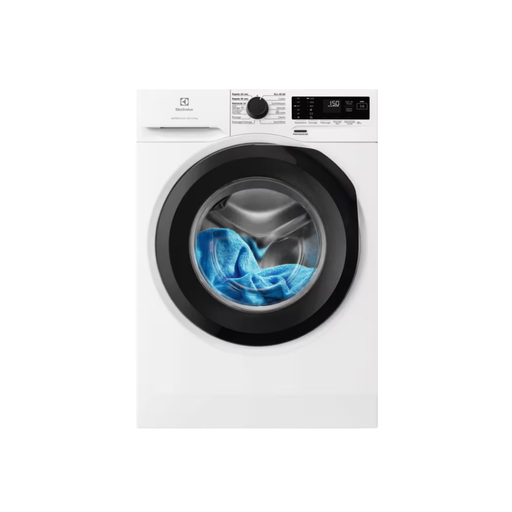 Image unavailable
This 10 kg format is designed for large laundry baskets, bedding and towels, provided there is enough clearance in front of the porthole.
Stated dimensions of 847 × 597 × 658 mm, spin speed of up to 1,351 rpm, 51 kWh/100 cycles and 52 L/cycle. Cotton, Delicates and Wool programmes are listed; check their maximum loads and the model’s installation requirements.
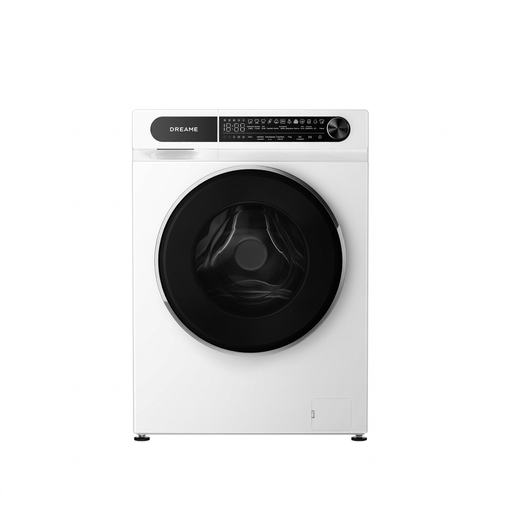 Image unavailable
An 8 kg front-loading option when available depth is the main consideration, without giving up a capacity suited to regular heavy loads.
Stated depth of 450 mm, 530 mm drum, 1,400 rpm spin speed, 47 kWh/100 cycles and 43 L/cycle. Confirm the depth once connected, door clearance and the maximum loads for each programme.
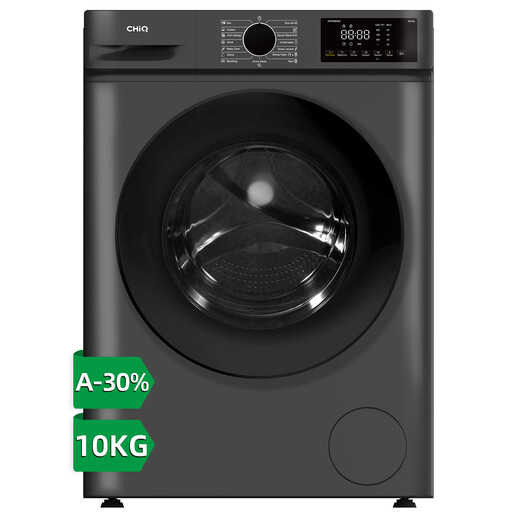 Image unavailable
This 10 kg model may suit large family loads and the occasional bulky item.
Stated 530 mm drum, 1,400 rpm spin speed and 16 programmes. Check the overall dimensions, porthole clearance, authorised loads for each textile and whether any duvet is compatible with its care label.
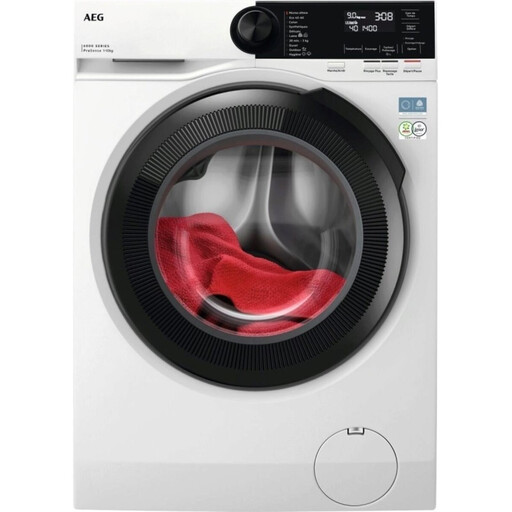 Image unavailable
A stated capacity of 10 kg for sheets, towels and large laundry baskets, provided front-loading installation is compatible with the available space.
Maximum stated spin speed of 1,400 rpm and dimensions of 71 × 64 × 90 cm. Check the exact nature of these measurements, the connections, door clearance and the programmes suited to your textiles.
No. According to UFC-Que Choisir, the stated capacity refers to the weight of dry laundry for cotton or the reference Eco 40-60 programme. Synthetics and wool accept smaller loads: check the model’s manual for the exact limits.
No. First check the care label and filling. UFC-Que Choisir states that a large duvet may require a larger drum, a launderette or a dry cleaner; for a natural-filled duvet, follow the manufacturer’s instructions.
Measure the width, height, available depth, clearance required for the porthole or lid, and the space taken up by the hoses. For example, the LG F82SV50WHS is stated to have a cabinet depth of 470 mm, a total depth of 535 mm and a door-open clearance of 1,015 mm.
Read the installation instructions for the exact reference before ordering. They should allow you to check the manufacturer’s requirements for connection, levelling and electrical connection; these requirements should not be inferred from another model.
For household washing machines covered by the scheme, yes: the French Ministry responsible for Ecology states that the durability score replaced the repairability score from 8 April 2025. The order of 5 April 2024 also covers online sales in France; look for the score out of 10 and the document associated with the exact model.