Which households is it for?

Households whose laundry baskets fill up quickly

You get through loads of clothes, towels and bedding and want to reduce the number of cycles without buying a capacity that is too large for your usual loads. UFC-Que Choisir recommends matching the capacity to your actual laundry routine.

Households that regularly wash sheets, blankets or duvets

You need to decide whether your bulky textiles are washed often enough to justify 10 to 12 kg, or whether an occasional trip to the launderette would be more suitable.

Buyers mindful of water, energy and installation

Rated capacity is not the only consideration: compare the energy-label figures and the actual dimensions before deciding where to install the appliance.

Buying priorities

Standard capacity, 8 to 9 kg

Choose this if: everyday laundry makes up most of your cycles and very large items are only washed occasionally.

Bear in mind: some large loads will need to be split, and certain duvets may not be suitable for washing at home.

Large capacity, 10 to 12 kg

Choose this if: sheets, blankets, towels and very full laundry baskets regularly feature in your household’s washing routine.

Bear in mind: the benefit depends on how full the drum really is; also check the depth, door access and spin-cycle noise.

A launderette for occasional bulky items

Choose this if: a duvet or very thick blanket is rarely washed and your household machine is suitable for everyday laundry.

Bear in mind: check access to the launderette, its instructions, the stated capacity and the textile’s care label.

Priority What to check Your needs
Usable capacity Compare the stated kg capacity with your usual loads of dry laundry. Check the maximum load for each programme, particularly synthetics, wool and delicate fabrics. I want to wash bedding and large loads without splitting them too often, while keeping a capacity that suits my usual cycles.
Water and energy Compare kWh per 100 cycles and litres per cycle on the Eco 40-60 label. Look at these figures for models with a similar capacity. I want to limit the number of cycles without running a very large drum that is almost empty most of the time.
Installation and noise Measure the height, width and depth, as well as door access and the clearance needed for the door. Check the spin-cycle noise level in dB and its noise class. The machine must fit in my home, connect properly and remain acceptable when positioned near living areas.
Occasional duvets Assess how often you wash duvets and thick blankets. Check the launderette’s capacity, on-site instructions and the textile’s care label. For a few bulky items a year, I would rather keep a machine suited to everyday use than buy an oversized appliance.

Mistakes to avoid

  • Confusing rated capacity with the permitted load for every textile

    The stated capacity refers to a reference weight of dry laundry; synthetic, jeans, wool and delicate programmes may accept a smaller load. A duvet may also exceed the recommended load or volume, even if it fits inside the drum.

    Read the maximum load for each programme in the manual and follow the textile’s care label before planning to wash a duvet.

  • Choosing a very large drum for a few duvets a year

    An XL drum that is rarely filled will not necessarily reduce the number of everyday cycles and may lead to unnecessarily high water and electricity consumption.

    Count your large loads over several weeks. If they are infrequent, compare the convenience of a large-capacity launderette with buying a larger domestic appliance.

  • Comparing only the energy class

    The class letter alone does not describe how the appliance will be used: the label provides standardised figures for the Eco 40-60 programme, while quick or specialist programmes may have different loads and consumption levels.

    For each model, compare kWh per 100 cycles, litres per cycle, duration and noise, then check which programme is suitable for your textiles.

  • Checking only the width

    Large-capacity front-loading washing machines can be approximately 60 cm wide while having noticeably different depths. The appliance must also fit through your home and allow the door to open fully.

    Measure the delivery route, final installation space, connections and the clearance required in front of the door before choosing a model.

Brand guide

Bosch

Worth considering for a 10 kg front-loading washing machine with dimensions close to the standard format: Bosch Électroménager France lists a capacity of 10 kg and dimensions of 845 × 597 × 588 mm for the WGG154A0FR model.

  • The WGG154A0FR model combines a 10 kg capacity with a width of 597 mm.
  • These specifications apply to this particular model; compare the energy label, noise level, depth and programmes of your chosen model.

LG

LG France offers 11 kg front-loading washing machines and recommends 11 to 13 kg for larger families or particularly heavy loads.

  • The 11 kg models are worth considering when large loads are genuinely frequent.
  • This is the manufacturer’s recommendation: check the dimensions, energy label and maximum load for each programme.

Samsung

Samsung France states that its 11 to 12 kg models can have a depth of 600 to 650 mm and are particularly intended for families of four or more.

  • An 11 to 12 kg capacity can suit large family loads, depending on the model.
  • The features highlighted by the brand do not replace a comparison of the exact dimensions, energy label and usable capacity for each programme.

Washing machines available on Joybuy

Joybuy options for substantial family laundry loads, including 9 kg models for predominantly everyday use and 10 to 11 kg models for more regular large loads.

Haier X Series 11 HW100-BD14397PGU1 washing machine, 10 kg

Haier X Series 11 HW100-BD14397PGU1, 10 kg

Worth considering for frequent family-sized loads, provided your installation space can accommodate its depth.

Declared figures: 41 kWh/100 cycles, 48 L/cycle and 68 dB(A) during spinning; dimensions 850 × 595 × 611 mm.

Check the manual for the permitted load for a duvet or particular textile, as well as the clearance required for the door.

Joybuy
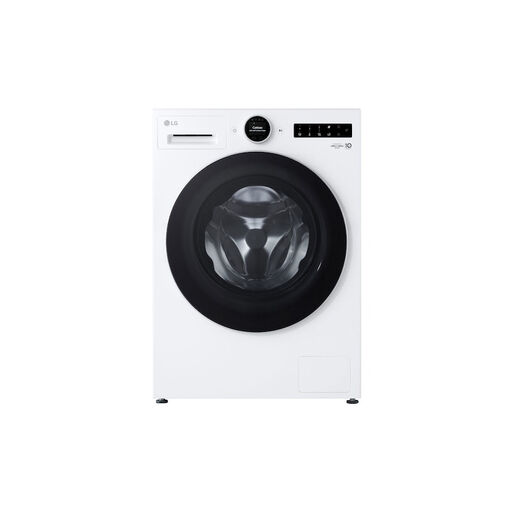
LG F4WX851Y washing machine, 11 kg

LG F4WX851Y, 11 kg

This 11 kg model is worth considering if sheets, blankets and very full loads are regularly washed at home.

Declared figures: 37 kWh/100 cycles, 50 L/cycle and 71 dB during spinning; Duvet programme and LoadSense function indicated.

Check the overall dimensions, door clearance and exact load permitted by the Duvet programme before buying.

Joybuy
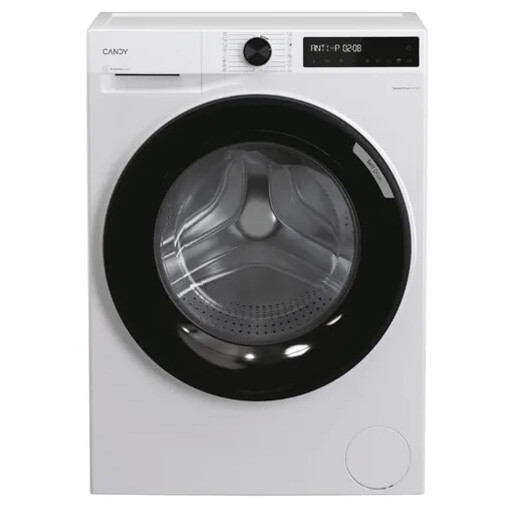
Candy BR 411BL9-S washing machine, 11 kg

Candy BR 411BL9-S, 11 kg

A large-capacity option for very full laundry baskets and frequent household washing, provided you have enough space.

Declared figures: 37 kWh/100 cycles, 48 L/cycle, 72 dB during spinning and a 78 L drum; stated depth of 681 mm.

Measure the access route, connections and door clearance; consult the manual for the permitted load for each programme.

Joybuy

Electrolux EWF1410N2 washing machine, 10 kg

Electrolux EWF1410N2, 10 kg

Worth considering for substantial family laundry if large loads are regularly filled to capacity.

Declared figures: 51 kWh/100 cycles, 52 L/cycle, 76 dB during spinning and a 68.6 L drum; dimensions 847 × 597 × 658 mm.

Check how the depth and noise level will affect your installation space, as well as the permitted load for duvets and thick blankets.

Joybuy
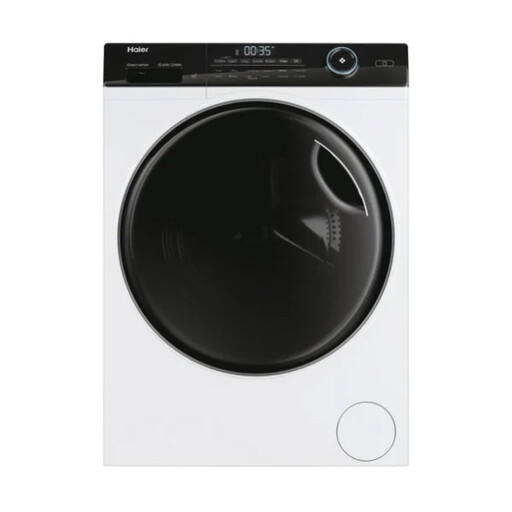
Haier HW90-B14959U1 I-Pro Series 5 washing machine, 9 kg

Haier HW90-B14959U1 I-Pro Series 5, 9 kg

A standard-capacity option to consider when everyday laundry makes up most of your washing and very bulky items are infrequent.

Declared figures: 49 kWh/100 cycles, 48 L/cycle and 70 dB(A) during spinning; dimensions 850 × 595 × 583 mm.

Some large loads may require several cycles; check the manual for the capacity of each programme and the capacity suitable for a particular duvet.

Joybuy

Frequently asked questions

Does the capacity shown in kg apply to every programme?

No. The stated capacity refers to a weight of dry laundry and the reference cotton or Eco 40-60 programme used for the label; synthetic, jeans, wool and delicate programmes generally accept less laundry. Check the model’s manual before loading a duvet or delicate textile.

Does a 10 to 12 kg washing machine necessarily use less than an 8 to 9 kg model?

No. A large drum can reduce the number of cycles when it is regularly filled properly, but becomes less suitable if it usually runs with a small load. Compare kWh per 100 cycles and litres per cycle on the Eco 40-60 label based on your usual loads.

What measurements should you take before buying?

Measure the available height, width and, above all, depth, as well as access through doors and corridors, the clearance needed for the door and the position of the connections. Large front-loading washing machines can remain approximately 60 cm wide, but their depth varies.

When is a launderette preferable for washing a duvet?

It may be more suitable if a very bulky duvet is rarely washed and your domestic machine is correctly sized for everyday laundry. Check the care label, the capacity stated on site and the launderette’s instructions; Wash ME says it offers professional machines with capacities of up to 20 kg.

Which energy-label figures should you compare?

For domestic washing machines sold in the European Union, the label shows, among other details, the energy class, energy consumption per 100 cycles, water consumption per cycle, cycle duration and airborne noise emissions. The European Commission specifies that these figures relate to the Eco 40-60 programme, so compare them on the same basis.