Buying priorities
Start with your usual loads, then compare the usage data and installation requirements of the model you are considering.
| Priority |
What to check |
Your needs |
| Suitable capacity |
Compare 8 to 9 kg with 10 to 12 kg based on how often you wash large loads. Also check the depth and available space. |
I want to reduce the number of loads without installing an overly bulky appliance. UFC-Que Choisir generally considers 8 to 9 kg suitable for a household of 3 to 4 people, while 10 to 12 kg becomes more appropriate when washes are frequent. |
| Bulky laundry |
Check the maximum load for the programme intended for duvets, blankets or delicate fabrics. Distinguish between the cotton capacity and that of other programmes. |
My sheets and thick textiles appear often enough to influence my choice. The European Commission defines nominal capacity as the mass of dry textiles for the selected programme, in accordance with the manufacturer's instructions. |
| Daily use |
Compare kWh per 100 cycles, litres per cycle, the Eco 40-60 duration and noise level. Read the figures, not just the energy class. |
I want to organise frequent washes while taking water, electricity, cycle time and noise into account. |
| Small loads |
Look for an explicit statement about weight detection or adjustment of water, energy and programme duration. Always compare the energy labels between models. |
Between two large loads, I want to avoid running a large drum without documented adjustment for a small load. |
| Durability |
Check the durability index, availability of parts, documentation and maintenance requirements. |
My appliance will be heavily used, so I want to look beyond capacity and consumption. ADEME states that the durability index applies to washing machines sold in France since April 2025. |
Options available on Joybuy
Joybuy options for frequent family laundry, with capacities from 8 to 10 kg and, depending on the model, advertised functions for handling different load sizes.
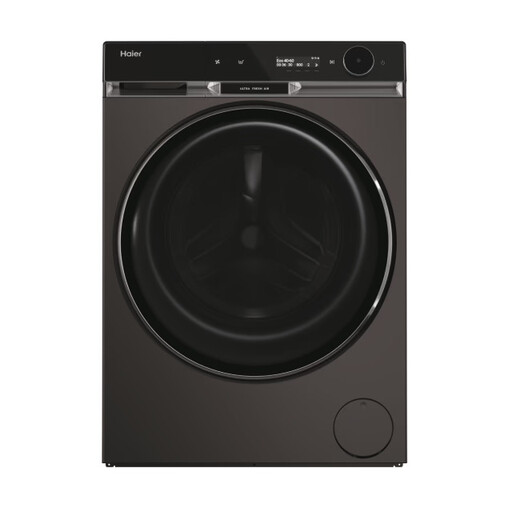 Image unavailable
Haier X Series 11 HW100-BD14397PGU1, 10 kg
For large loads and varying load sizes, with Smart AI load detection and AutoDose listed.
10 kg, 1,400 rpm, class A, 41 kWh/100 cycles, 48 L/cycle, Eco 40-60 duration of 3 h 58 and 68 dB(A). Check the instructions for the permitted load for a duvet and the display of the durability index.
Joybuy
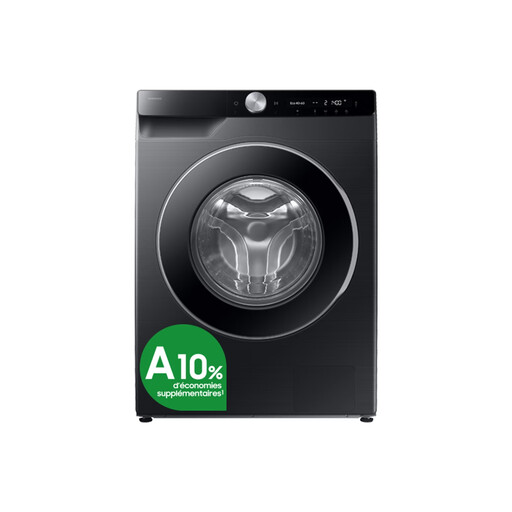 Image unavailable
Samsung WW90DG6U85LBU3 AI Wash, 9 kg
For a household alternating between everyday laundry and larger loads without always needing a very large drum.
9 kg, class A, 44 kWh/100 cycles, 50 L/cycle, Eco 40-60 duration of 3 h 48 and noise class A. AI Wash and Auto Dispense are listed; check the load limits for each programme when washing thick fabrics.
Joybuy
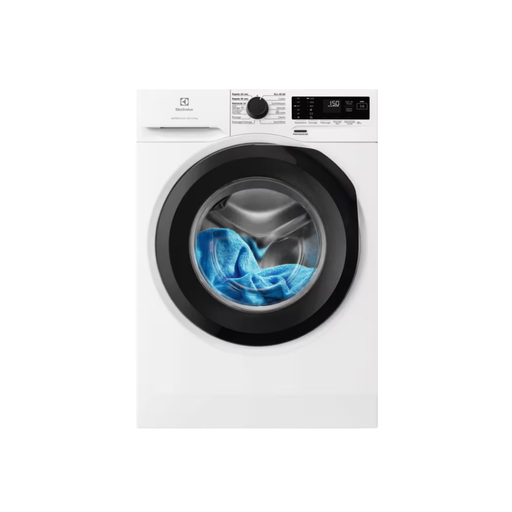 Image unavailable
Electrolux EWF1410N2 front-loading, 10 kg
A 10 kg capacity worth considering if cotton loads and household textiles need washing regularly.
Class A, 51 kWh/100 cycles, 52 L/cycle, spin noise level of 76 dB, with cotton, delicate, wool, sports and eco programmes. Check the Eco 40-60 duration, dimensions and permitted load for duvets.
Joybuy
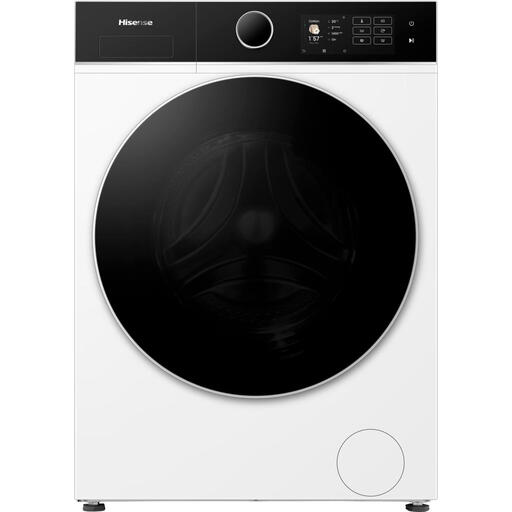 Image unavailable
Hisense WF5I8043BWF, 8 kg
For regular family laundry in a more limited space, when very large loads are not a constant requirement.
8 kg, 1,400 rpm, class A, 33 kWh/100 cycles, 38 L/cycle, Eco 40-60 duration of 3 h 38, noise class A and a depth of 470 mm. Bedding and Down programmes are listed; check their maximum load before washing a duvet.
Joybuy
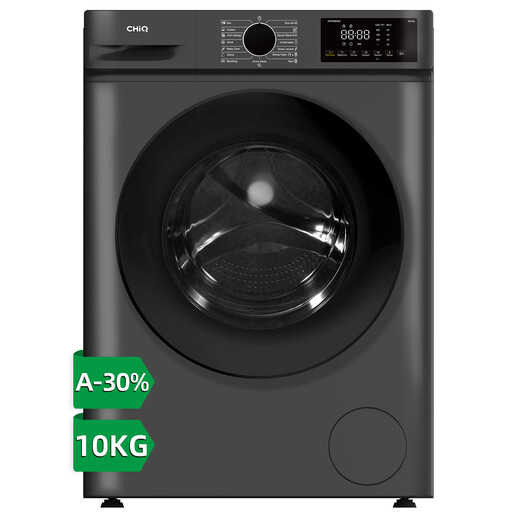 Image unavailable
CHiQ JW105883G front-loading, 10 kg
A 10 kg option for bringing together large family loads.
1,400 rpm, 530 mm drum, 16 programmes and steam function listed. Before buying, check the energy label, external dimensions and the limits of the programme intended for duvets.
Joybuy
Frequently asked questions
Is a 10 or 12 kg capacity necessarily more economical than an 8 kg washing machine?
No. A large capacity is useful when washes are frequent or large items genuinely need washing regularly, but it does not, by itself, promise savings. Compare kWh per 100 cycles, litres per cycle, Eco 40-60 duration and capacity. Load adjustment can be useful if you alternate between large and small loads.
Do the stated kilogrammes apply to every programme and fabric?
No. European regulations define nominal capacity as the maximum mass of dry textiles that can be handled on a given programme, in accordance with the supplier's instructions. UFC-Que Choisir observes that an appliance advertised as 8 kg accepts smaller loads for synthetics, jeans or wool, so check the instructions before washing a duvet or delicate fabric.
Should a large family choose a front-loading or top-loading washing machine?
The choice depends first on the available space and loading comfort. UFC-Que Choisir says that available space is often the deciding factor and that a top loader can save you from bending down. In either case, then check the capacity, dimensions, programmes and usage data for the specific model.
Which figures on the energy label should you compare?
At a minimum, compare the energy class, kWh per 100 cycles, litres per cycle, the duration of the Eco 40-60 cycle and the noise class. These indicators are based on a common standard, but the Eco 40-60 programme concerns normally soiled cotton that can be washed at 40°C or 60°C.
Is a mandatory durability indicator required for washing machines sold in France?
Yes. ADEME states that, since April 2025, washing machines sold in France must display a durability index. It takes into account factors including repairability, reliability, maintenance, documentation, access to spare parts and their price.


