Households that air-dry almost all their laundry
You want your laundry to come out less wet before you hang it up. In that case, the spin-drying efficiency class matters more than the maximum spin speed alone.


If you mainly dry your laundry indoors, start by comparing spin-drying efficiency classes. Then choose a capacity that suits your usual loads and check the declared noise level during the spin cycle. ADEME recommends choosing a spin-drying efficiency class A if you want your laundry to dry quickly indoors. A washer-dryer is a better fit if you want drying built in, but remember to check its drying capacity, which is separate from its washing capacity.
You want your laundry to come out less wet before you hang it up. In that case, the spin-drying efficiency class matters more than the maximum spin speed alone.
Measure the available space and check access to the drum before choosing between a top-loading machine, a front-loading model and a washer-dryer. With a washer-dryer, compare washing and drying capacities separately.
If your machine is close to a living area, check its declared noise level and noise class during the spin cycle. Make sure it is installed on a stable surface, too: Electrolux says that an unlevel machine or an unevenly distributed load can cause noise and vibration.
If you mostly dry laundry on a rack, start with your usual load sizes and the space available. Then compare the spin-cycle and noise specifications of the models you’re considering.
| What matters | What to check | Who it matters to |
|---|---|---|
| Laundry that comes out less wet | The spin-drying efficiency class on the label and settings suited to your fabrics. ADEME recommends choosing class A for quick indoor drying. | If I air-dry almost all my laundry, I want it to come out less wet so it dries more easily; around 31% of consumers put spin-drying performance at the top of their list. |
| A suitable capacity | Washing capacity in kg and the size of your usual loads, as well as any occasional bulky items. ADEME says that 7 kg is usually enough. | For everyday loads, I want a drum I can fill without having to run multiple cycles; around 25% of consumers prioritise a suitable capacity. |
| Spin-cycle noise | The declared noise level in dB(A), the noise class during the spin cycle and whether the machine can be installed on a level floor. | When the machine is running near my living area, I want to keep noise to a minimum; nearly 19% of consumers prioritise spin-cycle noise. |
| Space and integrated drying | Appliance dimensions and access; for a washer-dryer, check the washing and drying capacities separately. If stacking two appliances, check that the stacking kit is compatible. | If space is limited, I need to decide between drying some of my laundry in a combined appliance and installing two separate appliances; around 25% of consumers make this choice first. |
Maximum spin speed is no substitute for checking the spin-drying efficiency class when choosing a washing machine for indoor drying.
Check the class on the exact model’s energy label. ADEME recommends choosing class A if you want your laundry to dry quickly indoors, while also following the care instructions for your fabrics.
A washer-dryer cannot necessarily dry a full load of everything it can wash. For example, Bosch offers a model with a 10.5 kg washing capacity and a 6 kg drying capacity.
Compare both capacities in the specifications for the model you’re considering, and decide how much laundry you want to dry in one cycle.
A capacity you rarely use may not suit your usual smaller loads. ADEME says that 7 kg is usually enough, but this is only a general guide: think about your own loads, too.
Consider your usual loads and any occasional bulky items before choosing a capacity.
According to Electrolux, a machine that is not level or has an unevenly distributed load can make noise and vibrate during the spin cycle.
Compare declared noise levels before buying, then follow the installation and loading instructions for the machine you choose.
The brand’s washer-dryers are worth considering if you’re short on space for two separate machines.
Its top-loading washing machines are worth a look if width or top loading is a key factor in your choice.
The published specifications for its top-loading models show what to compare when width and spin-cycle noise matter.
These top-loading and front-loading models are for washing laundry that will mainly be dried indoors afterwards. For each one, compare its capacity and dimensions with your home, then check the spin-drying class, noise level and durability index for the model on offer.
 Image unavailable
Worth considering if you prefer to load your laundry from the top and 7 kg suits your usual loads.
Maximum declared spin speed: 1,200 tr/min. Before choosing this model for indoor drying, also compare its spin-drying efficiency class and declared noise level.
 Image unavailable
Top loading may suit your set-up, as long as you have enough clearance to open the machine.
Declared capacity: 6 kg; maximum spin speed: 1,400 tr/min. Check that this capacity suits your bulkier loads, and compare the spin-cycle noise specifications.
 Image unavailable
Worth considering if you prefer a front-loading machine and your usual loads call for an 8 kg capacity.
Maximum declared spin speed: 1,400 tr/min. If space is tight, check the full dimensions and clearance required, then look up the spin-drying efficiency class.
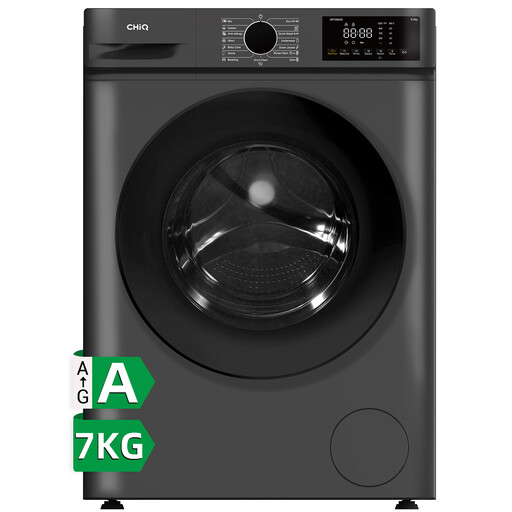 Image unavailable
Its declared capacity of 7 kg may suit everyday loads, but check the size of your usual washes first.
Maximum declared spin speed: 1,200 tr/min. Before choosing this model for indoor drying, check its spin-drying efficiency class and declared noise level: you can’t tell either from the spin speed alone.
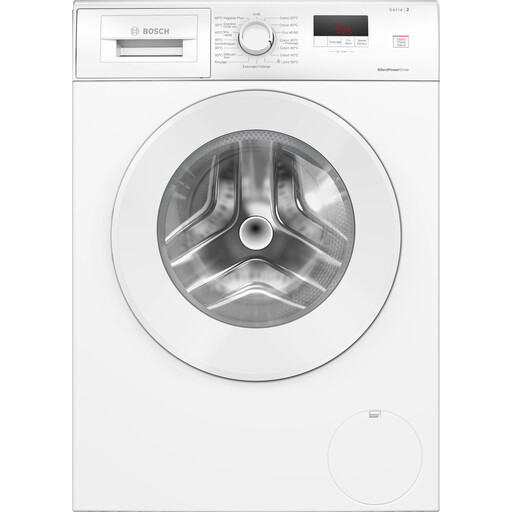 Image unavailable
Worth comparing if 7 kg suits your usual loads and you have space for a front-loading machine.
Maximum declared spin speed: 1,400 tr/min. When making your decision, distinguish the spin-drying efficiency class from the energy efficiency class, and check the durability index for this model.
Compare the spin-drying efficiency class, capacity and declared spin-cycle noise level, as well as the information about the Eco 40-60 programme. ADEME recommends choosing spin-drying class A if you want your laundry to dry quickly indoors.
Yes. The French Ministry for the Ecological Transition says that the durability index has applied to washing machines since 8 April 2025. It covers factors including reliability, maintenance and repairability. Check the index for the exact model rather than mistaking an older repairability rating for its durability index.
No. You need to check that the two appliances and the stacking kit are compatible. For example, Electrolux says one of its kits is suitable for front-loading appliances with a depth of 47 to 60 cm, subject to checking the models concerned.
No. The declared noise level helps you compare models, but installation and the load can also affect how much vibration you notice. Electrolux points out that a machine may not be level or the laundry may be unevenly distributed. Follow the installation and operating instructions for the model you choose.