You dry your laundry after every wash
Your main concern is reducing the amount of moisture left in your laundry before drying it indoors. ADEME recommends checking the spin-drying efficiency rating, which is separate from the energy rating.


If you dry your laundry indoors, start by comparing spin-drying efficiency and the stated noise level, then choose a capacity that suits your usual loads. The maximum spin speed alone doesn’t tell you how effectively a machine spins, and the stated noise level won’t guarantee the same comfort in every flat: space and ventilation also matter when planning how to dry your laundry.
Your main concern is reducing the amount of moisture left in your laundry before drying it indoors. ADEME recommends checking the spin-drying efficiency rating, which is separate from the energy rating.
You care about noise during the spin cycle and where the machine will go. For example, Les Numériques takes its laboratory measurements from one metre away; on their own, these don’t tell you how comfortable the noise level will be in your home.
You’re looking for a capacity that suits your laundry loads and a space that works with your drying solution. ADEME’s Q-WASH study also highlights that drying laundry indoors releases moisture into the air in your home.
If you dry your laundry in your flat, start by comparing spin-drying efficiency and noise, then consider capacity, available space and energy and water use in light of your usual habits. For indoor drying, ADEME recommends choosing a model with an A spin-drying efficiency rating. This is separate from the energy rating.
| What matters | What to check before you buy | Who it matters most to |
|---|---|---|
| Laundry that’s less damp | The spin-drying efficiency rating for the exact model, and the settings available in its programmes. | If I dry my laundry after every wash, I look at spin-drying efficiency first rather than just the number of revolutions per minute. Around 25 % of consumers prioritise laundry that’s less damp. |
| Spin-cycle noise | The noise level stated on the label and, if available, the method used for independent tests. | If the machine is near the living room or neighbours, I compare the measurements without assuming they guarantee quiet operation in my home. Around 25 % of consumers put noise comfort and consideration for neighbours first. |
| Space and ventilation | The washing machine’s published dimensions and the installation instructions for the drying solution you’re considering. | If space is limited, I check that the location will also work for drying and ventilating my home. Around 20 % of consumers prioritise space and ventilation. |
| Practical capacity | The stated capacity and whether it suits the size and frequency of your usual laundry loads. | When planning my washing, I compare the capacity with what I actually wash rather than automatically choosing the biggest drum. Around 15 % of consumers prioritise planning their laundry. |
| Consumption and maintenance | Water and electricity consumption measured on the same basis, as well as details of the durability index. | If I want to factor consumption and maintenance into my choice, I compare figures for the same type of cycle. Around 15 % of consumers put these factors first. |
Bosch’s advertised ten-year commercial warranty covers the EcoSilence Drive motor, not automatically the entire appliance.
Check the terms and what the commercial warranty covers, separately from your statutory rights.
A repair to another component may fall outside the scope of this motor warranty.
A standardised measurement, a laboratory test and how something sounds at home don’t describe the same conditions.
Compare figures obtained using similar methods and take into account where you plan to put the appliance.
A maximum capacity doesn’t mean you’ll regularly fill the drum.
Think about the size and frequency of your usual laundry loads before comparing stated capacities.
For separate tumble dryers, the A-to-G energy label scale has applied since 1 July 2025, according to the European Commission.
Compare labels that use the current scale, and bear in mind the difference between newly marketed appliances and existing stock.
The TimeCare range offers a useful reference point for comparing an 8 kg capacity and a stated maximum speed of 1400 tr/min on the EW5F1408NA model.
The Série 6 WGG244F1FR offers a useful reference point for a 9 kg capacity and a stated maximum speed of 1400 tr/min.
The BM3WFT410451C is one model you can explore in the brand’s washing machine range.
Here are some washing machines to compare when planning laundry in a home where clothes may be dried indoors. The features mentioned are those listed in each product name.
 Image unavailable
Worth comparing if you’re looking for a stated capacity of 9 kg and want to explore the spin settings for your usual laundry loads.
The product name lists connectivity, as well as SteamCare and SmartSelect features.
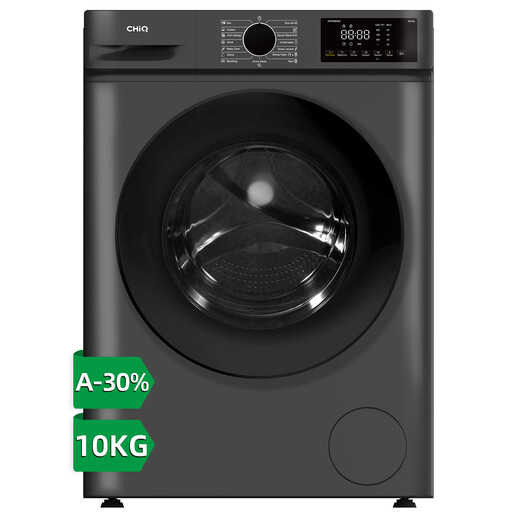 Image unavailable
Worth comparing if your usual laundry loads call for a stated capacity of 10 kg.
The product name lists 16 programmes, a steam function and Smart Wash.
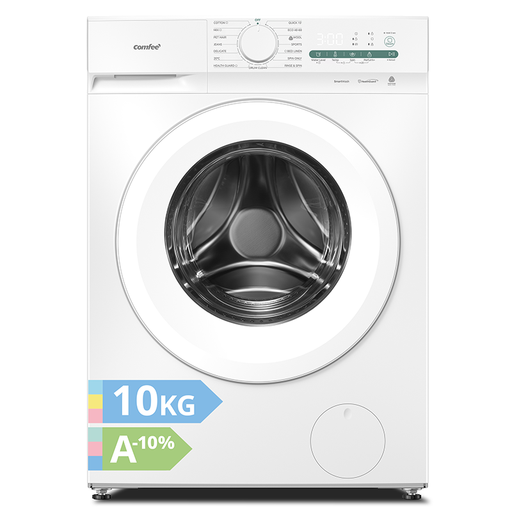 Image unavailable
Worth comparing if a stated capacity of 10 kg suits the size of your laundry loads.
The product name lists 16 programmes, a steam function and an add-garment function during the cycle.
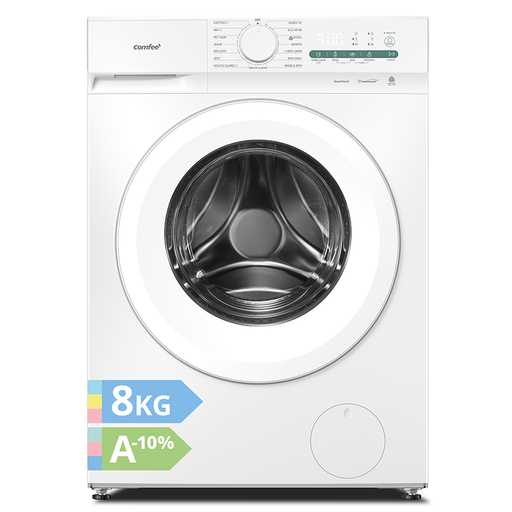 Image unavailable
Worth comparing if a stated capacity of 8 kg suits your laundry loads and how often you wash.
The product name lists 16 programmes, a steam function, a pet hair programme and an add-garment function.
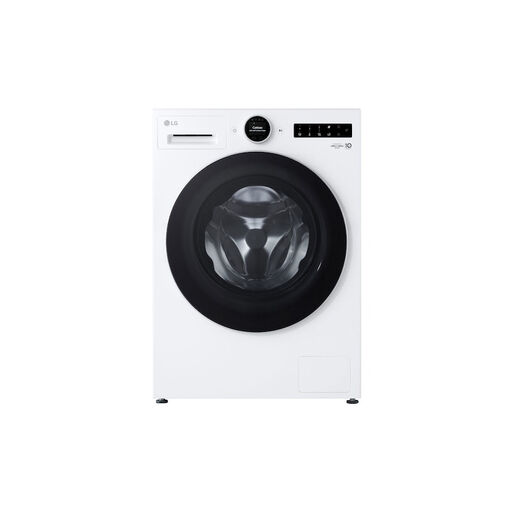 Image unavailable
Worth comparing if your usual laundry loads call for a stated capacity of 11 kg.
No. Energy efficiency and spin-drying efficiency are two separate criteria. Check the information for the exact model separately.
No. A stated noise level doesn’t mean you can always use the machine at night without restrictions. Service Public says that noise can amount to an abnormal neighbourhood disturbance by day or night, and the Ministry of the Interior notes that permitted hours aren’t the same everywhere in France. Check local rules and your building’s regulations.
No. The type of technology alone doesn’t confirm that a location is suitable. Electrolux addresses room humidity issues for both types of tumble dryer, so check the installation instructions for the model you’re considering.
No. According to the European Commission, the A-to-G energy label scale has applied to freestanding tumble dryers since 1 July 2025. The new requirements don’t apply retrospectively to appliances already placed on the market before that date and still in stock.
Check the durability index and how it’s scored for the relevant front-loading and top-loading washing machines in France, where it has applied since 8 April 2025, as stated by the Ministry of the Economy. Remember that this index is different from a commercial warranty, which may cover only a specific part of the appliance.