If you mostly dry your laundry on an indoor airer, start by choosing a washing machine with a capacity and spin performance that suit your loads, then check whether you can ventilate the room. A washer-dryer saves space compared with having a second appliance, but its drying capacity may be lower than its washing capacity. If you do laundry frequently, consider a separate tumble dryer if you have room to install one.
Who is this option for?
People drying laundry in a damp room
You often use an airer in a flat or a room that is difficult to ventilate. The Ministry for Ecological Transition advises ventilating the room if you have no choice but to dry laundry indoors. Choosing a particular appliance won’t solve an ongoing damp problem.
Households short on space
You need to fit your appliances into a kitchen, utility room or another compact space. Width matters, but so do the door opening, connections and, if you’re considering stacking two appliances, whether they’re compatible.
Households doing laundry frequently
You want to avoid having several loads of wet laundry waiting their turn. In that case, look at washing and drying capacities separately, particularly with a washer-dryer.
What should you look for?
Washing machine and airer
Worth considering: if you can dry your loads in a well-ventilated space. Whether you choose a front-loading or top-loading model will depend in part on the space available.
Bear in mind: spinning doesn’t eliminate the moisture released as laundry dries on an airer. The Ministry for Ecological Transition advises ventilating the room when indoor drying is necessary.
Washer-dryer
Worth considering: if you want to dry laundry without setting aside space for a second appliance.
Bear in mind: you may need to reduce a washed load before drying it. For example, Bosch lists a 9 kg washing capacity and a 6 kg wash-and-dry capacity for the WNG24402FR.
Washing machine and separate tumble dryer
Worth considering: if you do laundry frequently and want to rely less on an indoor airer.
Bear in mind: you’ll need space for the second appliance or a compatible stacking setup. LG offers a stacking kit to secure the tumble dryer above the washing machine.
| Consideration |
What to check |
Who is it for? |
| Indoor humidity |
Check whether you can ventilate the room and look for signs of condensation. If you’ll keep using an airer, compare spin efficiency classes. ADEME recommends choosing class A for faster drying. |
When my laundry dries in a poorly ventilated room, I want to avoid adding more damp loads without being able to manage condensation. This could be the main priority for around 31% of consumers. |
| Available space |
Measure the space and allow enough clearance to open the appliance. If you’re stacking two appliances, confirm that the kit and both model references are compatible. |
If the space I have is narrow, I need to be able to open and install the appliance without compromising on a suitable capacity. Around 31% of consumers may put this constraint first. |
| Capacity and laundry routine |
Compare your usual load with the washing and drying capacities: these differ on a washer-dryer. ADEME says that 7 kg is enough for washing most of the time. |
When I do several loads close together, I want to avoid splitting every load before drying it or leaving damp laundry waiting. This could be the main need for around 23% of consumers. |
| Noise and energy use |
Compare spin noise levels and the figures on the labels for their reference cycles. With a washer-dryer, check the figures for washing alone and for washing and drying separately. The European Commission provides this information for washer-dryers. |
If the appliance is near a room in use, cycle noise matters to me, as do the energy-use figures for the way I plan to use it. Around 15% of consumers may make this their priority. |
Mistakes to avoid
-
Assuming washing and drying capacities are the same
A full wash load may not fit into a single drying cycle in a washer-dryer. Bosch lists a 9 kg washing capacity but a 6 kg wash-and-dry capacity for the WNG24402FR.
Compare both capacities for the model you’re considering with the amount of laundry you actually plan to dry.
-
Choosing an appliance without checking ventilation
The Ministry for Ecological Transition advises avoiding indoor laundry drying or, if you have no choice, ventilating the room. If condensation persists, you should also look for the cause.
Check the ventilation and condition of the room before drying more laundry there. Don’t expect replacing your washing machine alone to solve a damp problem.
-
Confusing a compact top-loader with a drying solution
A narrow top-loading machine may suit a space with limited room, but your laundry will still need to be dried after washing.
Choose a format that fits your space, then decide separately whether air-drying and ventilation will work for you or whether you need a drying appliance.
-
Stacking two appliances without checking they’re compatible
LG’s installation instructions specify a kit for securing the tumble dryer above the washing machine. This doesn’t mean the appliances can simply be stacked without one.
Check the instructions for both models and confirm the kit is compatible, along with the required clearance and installation stability.
Brands to know when comparing options
Bosch
Its washer-dryers make it easy to compare washing and drying capacities for the same model.
- Bosch lists a 9 kg washing capacity and a 6 kg wash-and-dry capacity for the WNG24402FR.
- These capacities apply to this model. Check the figures for the model you’re considering.
Whirlpool
Its top-loading washing machines are worth considering if you have limited width available.
- Whirlpool lists a width of 40 cm and a 6 kg capacity for the ZEN TDLRBX 6252BS FR/N.
- Also check the depth, the clearance needed to open the lid and how you’ll dry your laundry.
Electrolux
Its separate tumble dryers are worth considering if you want to rely less on an indoor airer.
- Electrolux lists an 8 kg drying capacity for the EW9HI783FC.
- For this model, the manufacturer specifies a room temperature of between 5 °C and 35 °C. Check the installation requirements for any other model.
LG
Its installation guidance helps you check the space and fittings needed to stack two appliances.
- LG says a stacking kit is used to secure the tumble dryer above the washing machine.
- You’ll still need to check that the kit, appliances and space are compatible with the models you choose.
Joybuy products for different setups
This selection includes front-loading and top-loading washing machines for drying laundry on an airer, as well as separate tumble dryers to reduce how often you need one. Check how each appliance will fit into your setup before choosing. A tumble dryer on its own won’t replace a washing machine.
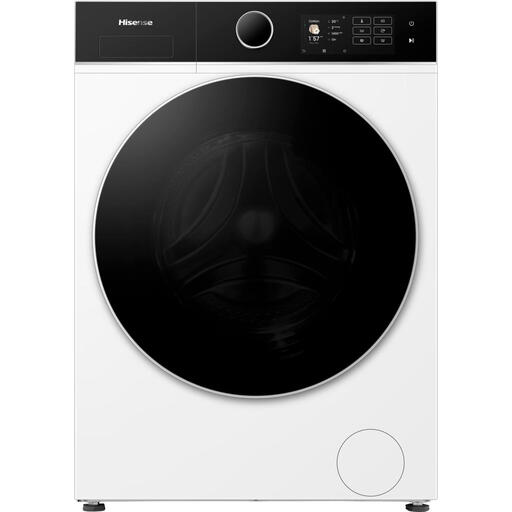 Image unavailable
Hisense WF5I8043BWF, 8 kg front-loading washing machine
Worth considering if you wash regular loads before drying them on an airer.
Listed washing capacity: 8 kg; spin speed up to 1,400 rpm. This washing machine doesn’t dry laundry, so allow for the air-drying space and ventilation you’ll need.
View on Joybuy
 Image unavailable
Electrolux EW7FI259160V SteamCare SmartSelect, 9 kg washing machine
Compare it with your usual loads if you do large washes and dry your laundry indoors afterwards.
Listed washing capacity: 9 kg; spin speed up to 1,600 rpm. Check the model’s spin efficiency class on the label. This appliance doesn’t dry laundry.
View on Joybuy
 Image unavailable
Candy TCA464TM4-S ProWash 500, 6 kg top-loading washing machine
A top-loading model is worth considering if you have limited space to open a front-loading machine.
Listed washing capacity: 6 kg; spin speed up to 1,400 rpm. Measure the clearance above the machine and plan separately for drying your laundry.
View on Joybuy
 Image unavailable
Hotpoint CHD84MWBSEE, 8 kg heat pump tumble dryer
Worth considering if you’d rather dry loads separately than leave them on an indoor airer.
Listed drying capacity: 8 kg. This appliance doesn’t wash laundry, so check its installation dimensions and whether it’s compatible with your washing machine before setting aside space for it.
View on Joybuy
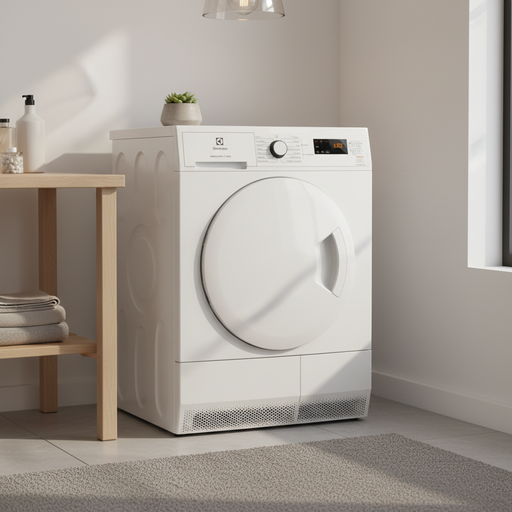 Image unavailable
Electrolux EDH1018CD GentleCare, 8 kg condenser tumble dryer
Worth considering if you already have a washing machine and want to dry some loads in a separate appliance.
Listed drying capacity: 8 kg. Check how the collected water is managed and allow for installation clearance. If you plan to stack the appliances, check that the models are compatible.
View on Joybuy
Frequently asked questions
What capacity should I choose if I dry laundry on an airer?
Choose a capacity that suits your usual loads rather than automatically opting for a large drum. ADEME says that 7 kg is enough for washing most of the time. If you dry laundry indoors, also compare spin efficiency classes and make sure you can ventilate the room.
Can a washer-dryer dry the whole wash load?
Not always. Compare the washing capacity with the wash-and-dry capacity for the model you’re considering. Bosch lists capacities of 9 kg and 6 kg respectively for the WNG24402FR, so a full-capacity wash load needs to be reduced before you run a drying cycle.
Do I need to buy a tumble dryer if I dry laundry indoors?
No. It depends on how often you do laundry, the space available and whether you can ventilate the room. The Ministry for Ecological Transition advises avoiding indoor drying or ventilating the room if it’s necessary. If condensation or mould persists, look for the cause of the damp as well.
Can I put a tumble dryer on top of any washing machine?
No. The two models and the stacking kit must be compatible. LG says a kit is used to secure the tumble dryer above the washing machine. Also check the instructions, available space and stability of the setup.


