If you can hang your washing out to dry and ventilate your home, start by choosing a capacity that suits your laundry loads, then compare the spin-drying efficiency class and noise level. A high maximum spin speed alone doesn’t tell you how well a machine will perform. If space is limited, check the appliance’s full dimensions. A washer-dryer can save you from having to hang out some loads, but its drying capacity is often lower than its washing capacity.
Who is this guide for?
Households that dry laundry indoors
You’re looking for a capacity that suits your laundry loads and a spin cycle that removes more moisture before you hang clothes out to dry. ADEME recommends considering the spin-drying efficiency class when drying laundry indoors. Noise and ventilation at home matter too.
People with limited space
The available depth may be the first thing that determines which size to consider. Then check the installation dimensions, capacity and spin-drying specifications of the exact model. The term “Slim” alone doesn’t guarantee faster drying.
Households looking to avoid hanging out some loads
You’re considering a washer-dryer, provided its drying capacity and full cycle suit your routine. Its drying capacity may be lower than its washing capacity.
What to compare
Start with your usual laundry loads and the space available, then compare the model’s spin cycle or, for a washer-dryer, the capacities and specifications for the wash-and-dry cycle.
| Criteria |
What to check before buying |
Who it matters most to |
| Spin cycle before hanging out laundry |
Compare the spin-drying efficiency class, maximum spin speed and stated noise level. For indoor drying, ADEME recommends choosing a machine with spin-drying class A. |
When I dry my laundry indoors, I want it to come out less damp, without overlooking noise if the machine is near living areas. Around 40% of consumers prioritise spin performance before hanging out laundry. |
| Suitable capacity |
Choose a washing capacity that matches the size of your usual laundry loads. For a washer-dryer, compare the washing and drying capacities separately. |
If my laundry loads vary, I want a capacity that suits the loads I actually wash, without assuming I can then dry every load in the machine. Around 20% of consumers prioritise choosing the right capacity. |
| Size and installation |
Measure the space and access route, then check the dimensions and instructions for the exact model, including the door opening and connections. |
When space is limited, I want to know whether the machine can be installed and used without obstructing access. Around 20% of consumers prioritise the appliance’s size. |
| Integrated drying |
Check the drying capacity, information about the full cycle and the installation requirements for the model you choose. |
If I can’t hang some loads out to dry, I want to know which ones can go straight from washing to drying in the machine. Around 20% of consumers prioritise integrated drying. |
Mistakes to avoid
-
Choosing a washer-dryer based on its washing capacity alone
The drying capacity may be lower, so a load washed in one go may need to be reduced or split up for drying.
Compare both capacities in kilograms and check the full-cycle specifications before deciding which loads you’ll dry in the machine.
You may need to split some loads or hang some of your laundry out to dry.
-
Assuming revolutions per minute tell you how well a machine spins
Maximum spin speed alone doesn’t sum up a model’s spin-drying performance. Noise can also matter if the machine is near living areas.
Check the spin-drying efficiency class, maximum spin speed and stated noise level together for the exact model.
-
Assuming a Slim model will fit without measuring up
The format alone doesn’t tell you how much space you’ll need for connections, access or opening the door.
Measure the space and access route, then check the dimensions and instructions for the model you’re considering.
-
Assuming better-spun laundry will solve damp in your home
Spinning removes moisture from laundry before you hang it out, but you should still consider ventilation at home. ADEME highlights the role of ventilation in removing moisture.
Assess your drying space and ventilation. For an appliance with a drying function, check the installation requirements in its instructions.
Brands to consider for your needs
Bosch
The range includes front-loading washing machines and washer-dryers; the specifications of one model won’t necessarily apply to the whole range.
- Bosch describes the WAN28258FR as an 8 kg front-loading washing machine with a maximum spin speed of 1 400 tr/min.
- These stated specifications aren’t enough to establish real-world spin-drying performance or whether it will fit every space.
Electrolux
Worth considering if limited depth leads you to look at a Slim front-loading model.
- Electrolux describes the EW6S1064NA as a 6 kg Slim model.
- Check the installation dimensions and spin-drying class for the exact model: “Slim” doesn’t describe drying performance.
LG
An option to consider if you want to dry laundry in a machine without adding a second appliance.
- LG lists a washing capacity of 9 kg and a drying capacity of 6 kg for the F964R76WRST model.
- For this model, the load for a full cycle must take account of its drying capacity, which is lower than its washing capacity.
Whirlpool
Worth comparing if your installation needs point you towards a washer-dryer, particularly a built-in model.
- Whirlpool lists a washing capacity of 9 kg, a drying capacity of 6 kg and a maximum spin speed of 1 400 tr/min for the BIWDWG961485FR.
- These specifications apply to this model only. They aren’t an independent measure of drying performance or specifications shared by all Whirlpool washer-dryers.
Washing machines available on Joybuy
These front-loading washing machines are worth considering for washing laundry before drying it on an airer. Choose a capacity to suit your loads and check the spin performance and dimensions of the exact model.
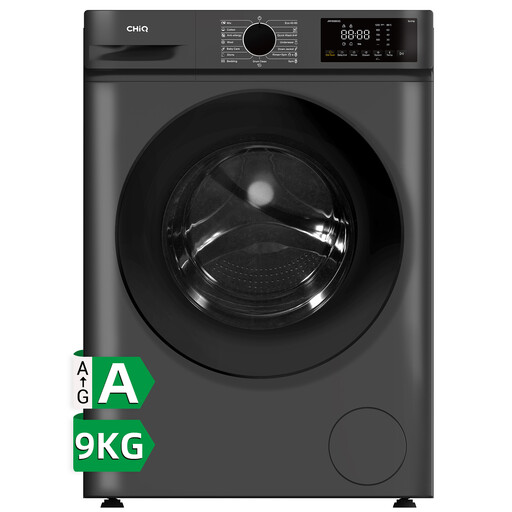 Image unavailable
CHiQ JW95883G, 9 kg front-loading washing machine
Worth considering if you’re looking for a front-loading model to wash suitable loads before drying them indoors.
Washing capacity: 9 kg; maximum spin speed: 1 400 tr/min; stated width: 465 mm; steam wash and a 15-minute quick wash programme.
View on Joybuy
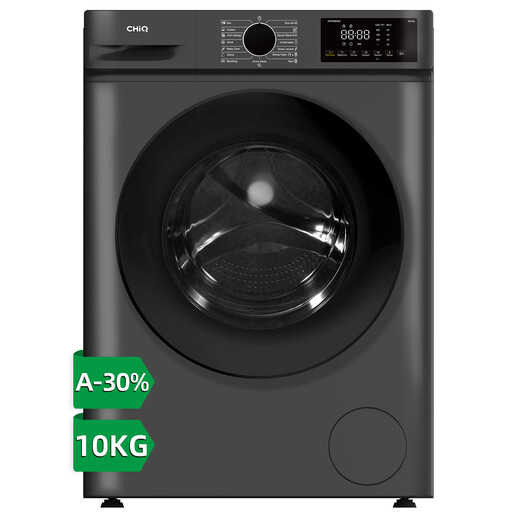 Image unavailable
CHiQ JW105883G, 10 kg front-loading washing machine
Consider this model if your usual laundry loads call for a 10 kg washing capacity before drying.
Washing capacity: 10 kg; maximum spin speed: 1 400 tr/min; 16 programmes and steam wash.
View on Joybuy
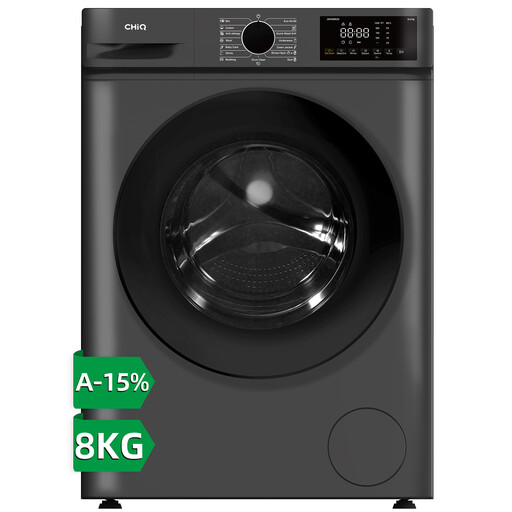 Image unavailable
CHiQ JW85883G, 8 kg front-loading washing machine
Worth considering if an 8 kg capacity suits your loads before you hang them out to dry indoors.
Washing capacity: 8 kg; maximum spin speed: 1 400 tr/min; 16 programmes and steam wash.
View on Joybuy
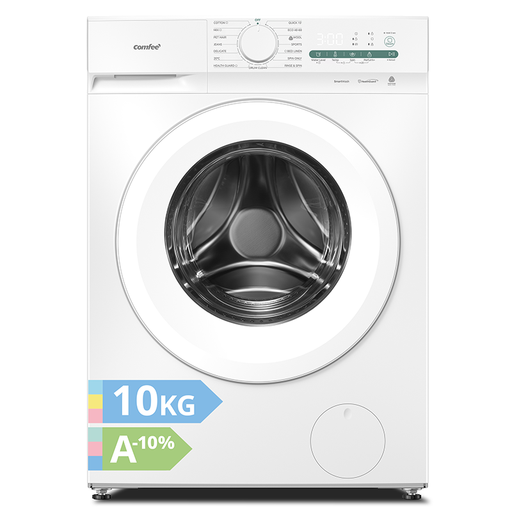 Image unavailable
Comfee CF10EWP05W-HR, 10 kg washing machine
Worth considering if you regularly have large loads to wash before hanging them out to dry.
Washing capacity: 10 kg; steam function; pet hair programme; add-garment function and 16 programmes.
View on Joybuy
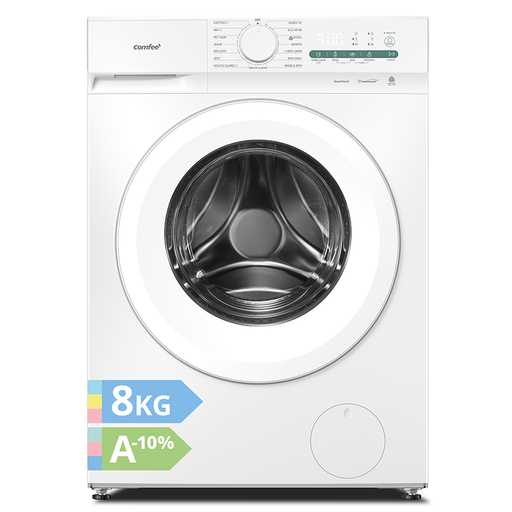 Image unavailable
Comfee CF08EWP05W, 8 kg front-loading washing machine
Worth considering if you’re looking for a front-loading model and its dimensions suit the space available.
Washing capacity: 8 kg; stated depth: 48 cm; steam function, pet hair programme and 16 programmes.
View on Joybuy
Frequently asked questions
Does a high maximum spin speed guarantee less damp laundry?
No. It isn’t enough to judge spin-drying performance. Also compare the class stated for the model. For indoor drying, ADEME recommends choosing class A and checking the noise level if the machine will run at night.
Can you automatically dry a washer-dryer’s full maximum load?
Only if the load is within the programme’s drying capacity. For example, LG lists a washing capacity of 9 kg and a drying capacity of 6 kg for the F964R76WRST. Check the limits for the model you choose before running both stages one after the other.
What should you check for ventilation and installation?
When drying laundry indoors, spinning doesn’t replace fresh air: ADEME highlights the role of ventilation in removing moisture from your home. Check the instructions for the appliance and the setup you’re considering. Clearance guidance published for a specific installation won’t necessarily apply to every model.
How do you compare the energy use of a washing machine and a washer-dryer?
Compare like with like: distinguish the figures for washing alone from those for a wash-and-dry cycle. The figures and capacities should relate to comparable cycles to help you make an informed choice.
Which rating should you look at for front-loading or top-loading washing machines sold in France?
For the front-loading and top-loading washing machines covered, the durability index replaced the repairability index on 8 April 2025, according to the French Ministry of the Economy and Finance. Don’t assume this applies to washer-dryers without checking.


