
Livraison le jour même ou le lendemain

Qualité garantie

Débloquez vos offres de bienvenue: Livraison GRATUITE | Jusqu'à -80 % | 30 jours d'essai gratuits à JoyPlus
Téléchargez l'application
A washing machine isn't chosen on looks alone. Capacity, depth, energy consumption, noise level and programmes all have a direct impact on your day-to-day comfort and your bills. However, some features highlighted on product pages can push the truly important criteria into the background.
Before comparing models, here are the main mistakes to avoid.
A 10 or 11 kg washing machine can be useful for a large family or for regularly washing duvets. On the other hand, an oversized drum for one or two people will often run half-empty, while taking up unnecessary space.
For most households, an 8 kg washing machine offers a good compromise. 9 or 10 kg models are better suited to families, frequent laundry loads and bulky items.
A washing machine with 1,400 rpm generally extracts more water than a slower model. But spin speed alone isn't enough to judge a machine's performance. Also look at the spin-drying efficiency class, the noise level in decibels and the appliance's stability.
A fast spin can shorten drying time, but it may also crease certain fabrics more. The speed should therefore be adjustable depending on the programme and the type of laundry.
A Wi-Fi-enabled washing machine lets you monitor a cycle remotely, receive notifications or download additional programmes. That doesn't mean the machine will automatically use less energy. Load detection, the programmes you choose and how you use the app will have a much greater influence.
Steam can also refresh clothes or reduce creases, depending on the programme used. However, it doesn't replace a cycle suited to the level of soiling.
A front-loading washing machine usually offers a top surface that can be used as a worktop and can sometimes be fitted under a work surface, if its dimensions allow. A top-loading washing machine, which opens from the top, is easier to fit into a narrow room, provided there is enough space above to open the lid.
Some useful guidelines:
The European energy label shows the energy efficiency class, consumption in kWh for 100 cycles of the reference programme, water consumption, cycle duration and noise level during the spin cycle.
An A-rated washing machine can use less electricity than a less efficient model. However, the actual cost also depends on the number of cycles, the temperature selected and the amount of detergent used. Trust the figures on the label rather than a simple marketing claim like "economical".
Measure the width, height and especially the available depth. Remember to add space for the hoses and the door to open. A compact washing machine with a depth of 45 to 48 cm can make all the difference in a bathroom or small utility room.
The noise level during the spin cycle is given in dB(A). A machine at 72 dB(A) will be noticeably less intrusive than a model approaching 80 dB(A), particularly in an open-plan home or if you run the machine at night. An inverter motor, BLDC or direct drive can help reduce consumption and vibrations, but the overall design of the machine and its levelling remain just as important.
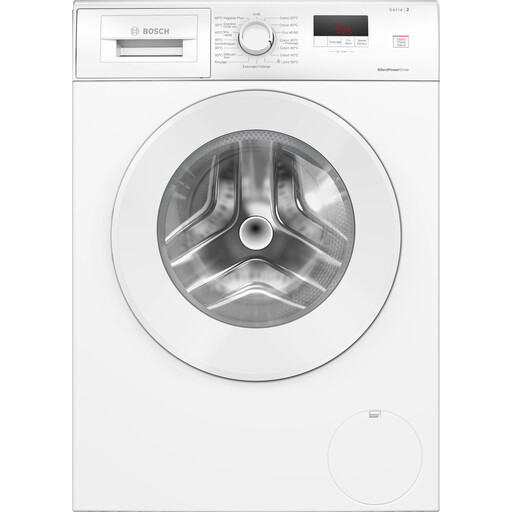
Why this choice suits this profile: its 7 kg capacity and simple design make it a front-loading washing machine ideal for households that want the essentials without a host of smart features.
The product page states class A, 40 kWh for 100 cycles, 72 dB during spin and 59 cm depth: concrete data to compare models.
15 programmes, spin up to 1,400 rpm, load detection, EcoSilence Drive motor and add-laundry function.
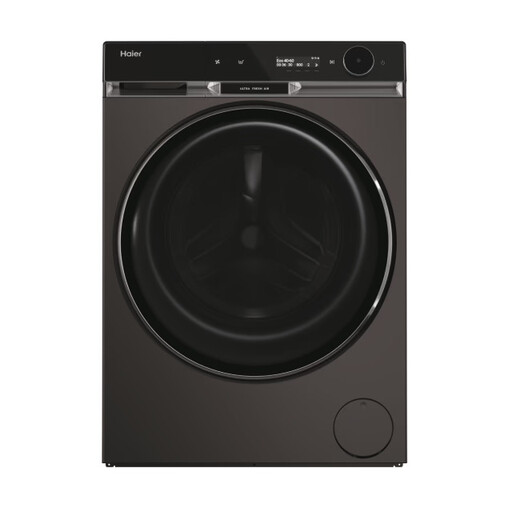
Why this choice suits this profile: this 10 kg smart washing machine is aimed at households that want to automate detergent dosing and control certain settings from an app.
The product page states 41 kWh for 100 cycles, 48 litres per cycle and 68 dB(A) during spin: precise figures rather than a simple marketing claim.
AutoDose, Wi-Fi, Bluetooth, steam programme, Direct Motion motor, 16 programmes and 10 kg capacity.
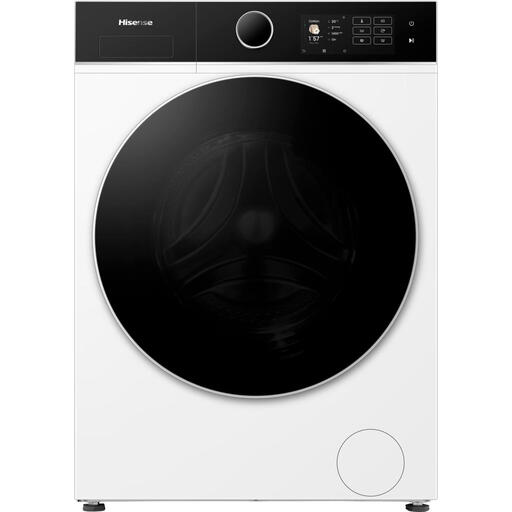
Why this choice suits this profile: with a stated depth of 47 cm, this model is designed for flats and small utility rooms where every centimetre counts, without sacrificing the 8 kg capacity.
The product page details 33 kWh for 100 cycles, 38 litres per cycle and 72 dB(A) during spin: enough to objectively compare compact models.
Class A, spin at 1,400 rpm, inverter motor, steam, Wi-Fi, quick programmes and ConnectLife app.
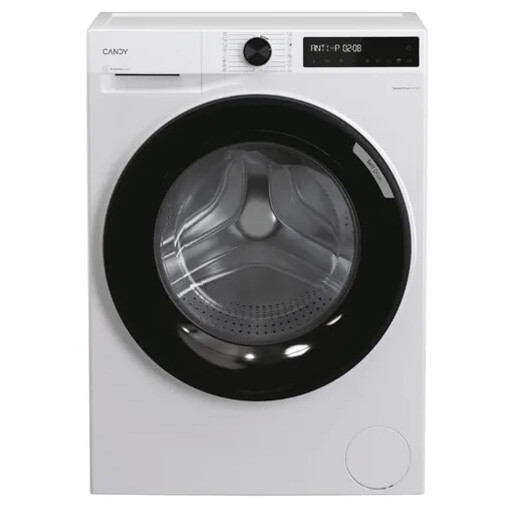
Why this choice suits this profile: its 11 kg drum and 78-litre tub are built for large laundry loads and bulky items, provided you have the space for it.
Its large capacity comes with verifiable data: 37 kWh for 100 cycles, 48 litres per cycle and 72 dB during spin.
Class A, inverter motor, 16 programmes, Wi-Fi, 14-minute quick cycle and spin up to 1,400 rpm.
We've compiled a comprehensive, real-time updated selection of products that meet these strict criteria, as well as European safety requirements.
A 7 or 8 kg model is usually sufficient for a couple's laundry. If you often wash sheets, towels or other bulky items, a 9 kg appliance will offer more flexibility, provided its dimensions suit your home.
Class A represents the best energy efficiency on the European scale. To estimate running costs, check the consumption in kWh for 100 cycles, then multiply it by your electricity tariff and the number of cycles you run. The temperature, how full the drum is and the programme you choose also play a role.
Regularly remove any residue from the door seal and detergent drawer, clean the filter and leave the door slightly open after each use. Also make sure the machine is level, stick to the maximum load and empty pockets before each cycle. Finally, remove the transit bolts according to the instructions before first use.