Which households is it for?

Households with a laundry basket that overflows every week

Choose a capacity that matches the loads you actually wash, rather than simply opting for the highest figure. Check the cotton capacity, your household laundry loads and the risk of having to run multiple partially filled cycles. ADEME recommends matching the capacity to your needs.

Households with limited laundry-room space

Measure the width, depth, access route and door clearance before comparing performance. A front-loading machine may allow you to place or stack a tumble dryer on top; a top-loading model may be the answer when width is the main constraint.

Shoppers focused on running costs and lifespan

Compare the energy-label data on a like-for-like basis, then check the durability index for the exact model. Spin noise, cycle times and maintenance also matter in everyday use.

Buying priorities

Front-loading washing machine

Best when: you have enough width and want greater capacity, a usable top surface or the option to stack a tumble dryer.

Keep in mind: measure the depth and door clearance; a large capacity is only useful for regular large loads.

Top-loading washing machine

Best when: limited width or top loading is essential for your installation.

Keep in mind: check the clearance above the machine, usable capacity, noise level and availability of the exact model.

Priority What to check Your needs
Suitable capacity Cotton capacity in kg; usual volumes of clothes, towels and bedding; dimensions and loading type. I want to avoid running back-to-back cycles without buying a drum that will often be underused. ADEME states that 7 kg is usually sufficient.
Water, electricity and cycle time kWh per 100 cycles; litres per Eco 40-60 cycle; Eco 40-60 programme duration; comparison between models in the same category. I want to compare everyday use on a clear, like-for-like basis rather than relying solely on the energy-efficiency class letter.
Spin performance and noise Spin-drying efficiency class; noise class and noise level during spinning; spin speed in rpm, considered alongside the other data. The laundry needs to dry indoors or near living areas, so I’m looking for a balance between residual moisture and noise disturbance.
Durability and repairability The model’s durability index out of 10; a breakdown of the criteria where available; brand after-sales data only as an additional benchmark. I want to distinguish between comparable appliances by considering maintenance, spare parts and resistance to everyday use, not just the initial purchase price.

Mistakes to avoid

  • Choosing the largest capacity without considering the loads you actually wash

    An oversized drum does not necessarily make household organisation easier if your usual loads are small. ADEME recommends avoiding multiple cycles with insufficiently filled drums; UFC-Que Choisir tests cotton at 80% of the maximum load, considering a completely full drum unrealistic.

    Record your usual loads for one or two weeks, including towels and bedding, then choose the corresponding cotton capacity. Only opt for a larger capacity if you regularly wash genuinely large loads.

  • Reducing the energy label to its class letter alone

    Two appliances may differ in water consumption, Eco cycle duration, spin performance and noise. These figures affect household routines just as much as consumption comparisons.

    For similar capacities, note the kWh per 100 cycles, litres per Eco 40-60 cycle, Eco duration, spin-drying efficiency class and noise class before making your choice.

  • Buying a top-loading machine simply because it looks compact

    A top-loading machine solves a width constraint but requires access from above. Recent comparisons also point to a more limited selection of newer products, and the available capacities are often restricted.

    If your space requires a top-loading machine, check the width, capacity, noise level, lid clearance and the model’s durability index. Also compare a front-loading model if your space allows.

  • Inferring a model’s durability from a brand’s general reputation

    The durability index applies to an individual model. Benchmarks based on after-sales service data can help complete the comparison, but they do not replace the regulatory score for a specific reference.

    Check the score out of 10 shown for the model you are considering and, where available, the document detailing its criteria. Then examine the dimensions, capacity and energy label.

Brand benchmarks for washing machines

Electrolux

A priority comparison for a front-loading washing machine when after-sales service data is an important factor in your decision. In the Fnac Darty after-sales service benchmark for front-loading washing machines, Electrolux scores 164/200.

  • The published score is based on reliability, repairability, spare-part availability and the average cost of parts recorded by Fnac Darty’s after-sales service.
  • This brand benchmark does not indicate the capacity, noise level or consumption of any particular Electrolux model.

Miele

Worth comparing for a front-loading washing machine if durability indicators matter to you. The Fnac Darty after-sales service benchmark gives it a score of 159/200.

  • The benchmark provides a reference based on after-sales service data for this product category.
  • Always check the energy label and the durability index shown for the exact model.

Siemens

A brand worth comparing when repairability and the types of faults recorded by an after-sales network matter. In the Fnac Darty after-sales service benchmark for front-loading washing machines, Siemens scores 147/200.

  • The score is an additional indicator based on the frequency and types of faults recorded by Fnac Darty’s after-sales service.
  • Dimensions, noise, water and energy consumption and the durability index may vary between references.

LG

Worth comparing if you are looking for a front-loading model where ease of use and low noise are priorities. Les Numériques includes the LG F14X76BSTA in its selection and highlights its quiet operation.

  • Les Numériques gives the LG F14X76BSTA five stars and mentions its user-friendly controls and almost perfect rinsing performance.
  • According to Les Numériques, this model may struggle with difficult stains and its drum seems small for the recommended load; these observations apply to this specific model.

Washing machines available on Joybuy

Joybuy options for a household comparing capacity, footprint, the Eco 40-60 cycle, spin performance and noise levels across front-loading and top-loading washing machines.
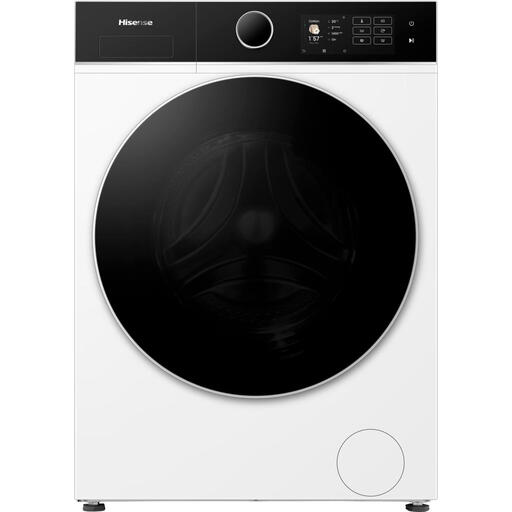
Hisense WF5I8043BWF washing machine, 8 kg

Hisense WF5I8043BWF, 8 kg, 1 400 rpm

For regular loads where depth is more restricted.

Capacity of 8 kg, depth of 470 mm, 33 kWh/100 cycles, 38 L per Eco 40-60 cycle, 1 400 rpm and 72 dB(A) indicated.

Check the model’s durability index for sale in France, as well as door clearance and connections.

Joybuy
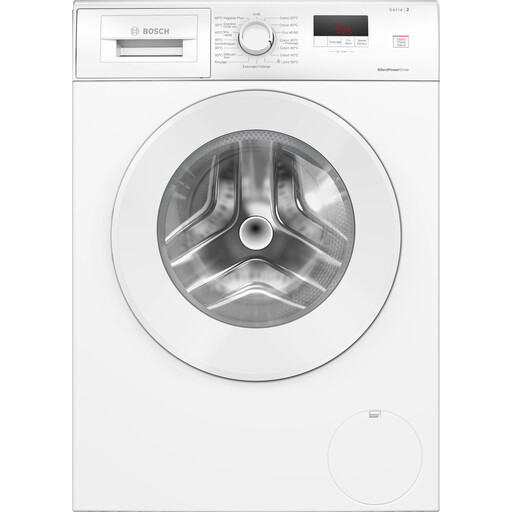
Bosch WGE02407FR washing machine, 7 kg

Bosch WGE02407FR, 7 kg, 1 400 rpm, class A

For everyday weekly loads without aiming for a particularly high capacity.

40 kWh/100 cycles, 44 L per cycle, 175 minutes on Eco, spin-drying efficiency class B and 72 dB indicated.

The product sheet lists a repairability index of 8.6/10; check the model’s French durability index and installation requirements separately.

Joybuy

Haier T Series 7 THASN276TM6-S top-loading washing machine, 7 kg

Haier T Series 7 THASN276TM6-S, 7 kg top-loading machine, 1 200 rpm

For a narrow laundry space where top loading is the right fit.

Width of 405 mm, 40 kWh/100 cycles, 42 L per Eco 40-60 cycle and an Eco duration of 3 hours 28 minutes indicated.

The stated spin noise is 77 dB(A), with a noise class of C; also allow clearance above the appliance.

Joybuy
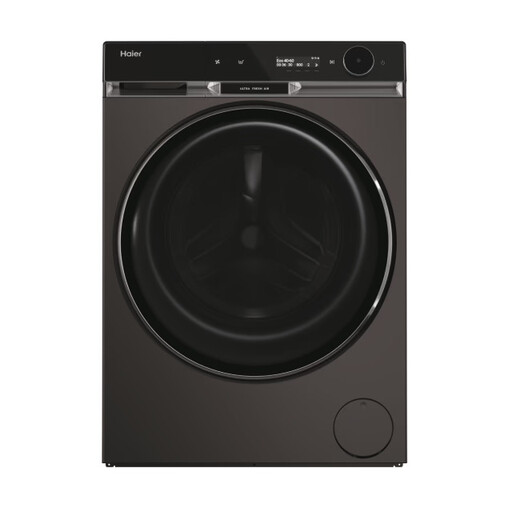
Haier X Series 11 HW100-BD14397PGU1 washing machine, 10 kg

Haier X Series 11 HW100-BD14397PGU1, 10 kg, 1 400 rpm

For regular, bulky loads of laundry and household textiles.

Capacity of 10 kg, 63 L drum, depth of 611 mm, 41 kWh/100 cycles, 48 L per cycle and 68 dB(A) indicated.

This capacity is less suitable if your usual loads are modest; also check the durability index and the appliance’s full footprint.

Joybuy
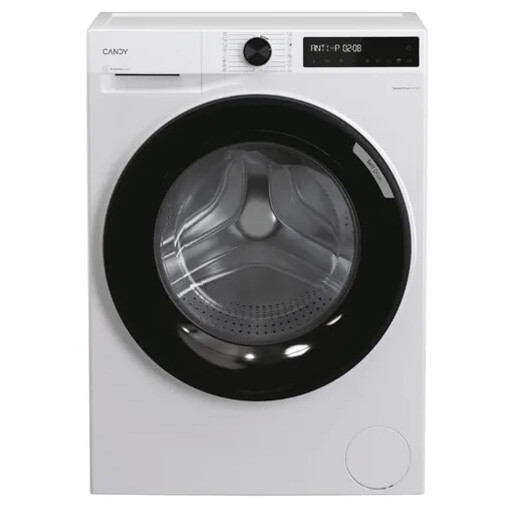
Candy BR 411BL9-S washing machine, 11 kg

Candy BR 411BL9-S, 11 kg, class A

For a household that regularly washes very large loads and has plenty of space.

Capacity of 11 kg, 78 L drum, depth of 68.1 cm, 37 kWh/100 cycles, 48 L per cycle and 72 dB(A) indicated.

The stated Eco 40-60 cycle lasts 3 hours 58 minutes; check that this suits your routine and verify the model’s durability index.

Joybuy

Frequently asked questions

Is a 7 kg washing machine enough for a household?

ADEME states that a 7 kg washing machine is usually sufficient to avoid running multiple cycles with insufficiently filled drums. This is not an automatic rule: if you regularly wash a lot of household linen or large quantities of clothing, compare your usual loads with the model’s cotton capacity.

Should you choose a top-loading or front-loading washing machine for a small space?

A top-loading model may be suitable when width is the limiting factor: models available in France are around 40 to 41 cm wide. A front-loading model may be more suitable if space allows and you want greater capacity, a usable top surface or the option to stack a tumble dryer; also measure the depth, hoses and door clearance.

What should you check on a washing machine’s energy label?

At a minimum, compare the energy class, kWh per 100 cycles, litres per Eco 40-60 cycle, Eco 40-60 programme duration, spin-drying efficiency class and noise class. These figures should be compared within the same appliance category and for the exact model; the class letter alone does not provide a complete picture of water use, duration or noise.

Is the durability index compulsory for new washing machines sold in France?

Yes. The French ministry responsible for ecology states that the durability index has been gradually replacing the repairability index for washing machines since 8 April 2025. This score out of 10 should be checked for the specific new model, together with a breakdown of the criteria where available.

Does a high durability score mean you do not need to check noise and spin performance?

No. The durability index covers longevity, reliability and repairability; it does not replace the energy label or comparisons of water use, spin performance, Eco duration and noise level. UFC-Que Choisir’s survey specifically identifies spin noise as one of the aspects receiving more mixed assessments.