Households whose laundry basket fills up quickly
Compare the machine’s capacity with the amount of laundry you actually gather between cycles. The size of your household alone doesn’t tell you whether a large drum will be regularly filled.


Choose a capacity that suits the amount of laundry you actually gather between washes: a large drum is no help if it’s often underfilled. Next, check that the programmes suit your fabrics, then compare water and energy use, spin performance and noise on the energy label. Before buying, also check the available space and connections.
Compare the machine’s capacity with the amount of laundry you actually gather between cycles. The size of your household alone doesn’t tell you whether a large drum will be regularly filled.
If you wash everything from everyday cottons to delicates, sportswear or a duvet, check for suitable programmes and their load limits.
The stated spin noise level matters, but so do the space around the machine and the stability of the floor when choosing and installing your washing machine.
Start with how often you do your washing and the loads you usually run, then compare the programmes and label figures on a like-for-like basis.
| Criteria | What to check | Think about your needs |
|---|---|---|
| Capacity | Compare the kilograms of dry laundry with the amount you gather between cycles. If your loads vary, check which programmes are designed for smaller washes. | My laundry basket sometimes overflows, but I wouldn’t necessarily fill a large drum every time. ADEME recommends choosing a capacity that suits your needs rather than running lots of underfilled cycles. |
| Energy and water use, and spin performance | On the energy label, compare kWh per 100 cycles, litres per cycle, cycle duration and spin-drying class. The reference figures are based on the Eco 40-60 programme. | I want to compare water and electricity use on a like-for-like basis, without assuming that capacity or energy class alone sums up how I use the machine. |
| Programmes | Look for cycles that suit your fabrics, then check the load limits and conditions for quick programmes. A quick cycle isn’t necessarily intended for the same use as the Eco 40-60 programme. | I sometimes need to run a small, urgent wash, but I also wash larger loads. Both needs should be covered by programmes that are suitable for the laundry in question. |
| Noise and installation | Compare the stated spin noise level in dB(A). Measure the space, door opening and clearance, then check the floor is stable and the connections are in place. | In a flat, I need to be able to install the machine properly and take its spin noise into account if it’s near living areas or neighbours. |
A larger capacity will only help with a growing pile of laundry if you can use it regularly. ADEME recommends choosing a capacity that suits your needs; UFC-Que Choisir also notes that an unsuitable capacity can affect water and electricity consumption.
Think about the loads you usually gather before comparing capacities, and don’t forget the days when you only wash a few clothes.
The load and fabric conditions for a short programme may differ from those for the Eco 40-60 programme. According to the European Commission, requirements covering factors such as efficiency and water use are based on the latter programme.
Check what the quick cycle can handle, but use the energy label figures to compare machines’ consumption.
A washing machine may fit into an alcove but still lack room for the door to open, the hoses or the necessary clearance. UFC-Que Choisir also recommends installing it on a flat, stable floor.
Measure the delivery route and the whole installation space, then check the water inlet, waste outlet and power supply before ordering.
A water-management feature, a cycle advertised as shorter or a steam function will depend on the model and how it’s used. These claims alone don’t prove a general advantage.
Check the exact model, programme conditions, energy label and applicable warranty terms.
These examples describe specific models: their features don’t automatically apply to every machine in a brand’s range.
The WGG244FRFR is a 9 kg Series 6 front-loading washing machine with a reload function.
The F94V71WHST is a 9 kg front-loading model with programmes for different fabrics and short cycles among its features.
The WWD380 WCS PWash&Steam&9kg is a 9 kg front-loading W1 model with steam functions.
This selection includes front-loading models with capacities of 9 or 10 kg, plus a 6 kg top-loading model. Compare their capacities with your usual loads before looking at the programmes and space required.
 Image unavailable
Worth considering if you alternate between large loads and different types of fabric. This connected front-loading model lists SteamCare and SmartSelect. Check which fabrics and load sizes are supported, and how long the short cycle you’re interested in takes, as well as the space needed for installation.
 Image unavailable
Compare its 10 kg capacity with the amount of laundry you actually gather: it won’t automatically make small washes more economical. The product title lists 1 400 tr/min, class A and AutoDose. Check that the fabric programmes and short-cycle limits suit your needs.
 Image unavailable
This top-loading model is worth considering if your usual loads are suited to a 6 kg capacity. That may be limiting if you often have large amounts of laundry to wash. The product title lists 1 400 tr/min, class B and 17 programmes. Check which ones suit your fabrics and smaller loads.
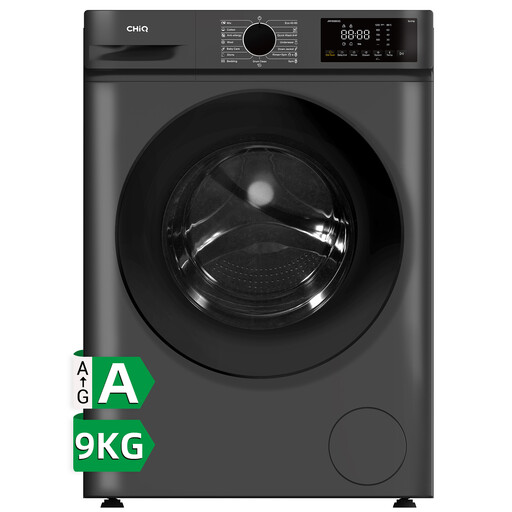 Image unavailable
This capacity may suit you if it matches the loads you regularly gather. The product title mentions a steam wash and a 15-minute quick cycle: check the load limit for that cycle. Confirm the exact dimensions before buying, as the stated depth measurements are inconsistent.
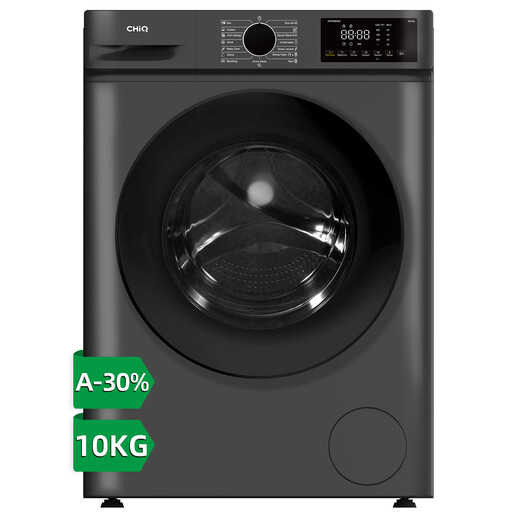 Image unavailable
Consider its 10 kg capacity if it suits the loads you gather, rather than choosing it just because you wash frequently. The product title lists 16 programmes and a steam function. Check the specific programmes, dimensions, spin noise and energy label figures before comparing this model with others.
No. ADEME recommends choosing a capacity that suits your needs to avoid underfilled drums. Think about how much laundry builds up between cycles: a capacity that’s too small could also mean you need to run more washes.
Compare the energy class, kWh per 100 cycles, litres per cycle, cycle duration, spin-drying class and stated noise level. In the European Union, the Eco 40-60 programme is used as the reference for requirements covering factors such as efficiency, duration and water use; quick cycles have different conditions of use.
First compare the stated spin noise level, then check that the machine can stand on a flat, stable floor with enough clearance around it. UFC-Que Choisir recommends leaving at least 0,5 cm between the machine and furniture during installation.
Check the available space, water inlet, waste outlet and electrical supply, as well as the machine’s position in relation to the bath or shower. If you’re unsure about the connections or installation safety, ask a qualified professional to check them before installation.