Households whose laundry basket fills up quickly
If you want to combine loads, start by considering the size of your usual wash. ADEME says that a 7 kg drum is usually enough, so a larger capacity should meet a regular need.


To cut down on the number of washes, choose a capacity that suits the loads you wash regularly, especially sheets and towels, rather than automatically going for the biggest drum. A front-loading machine is worth considering if these loads are often bulky; a top-loading model may be a better fit if space or access is an issue, but check its capacity before you buy.
If you want to combine loads, start by considering the size of your usual wash. ADEME says that a 7 kg drum is usually enough, so a larger capacity should meet a regular need.
If sheets and towels often fill the drum, look at the machine’s capacity as well as its programme times and spin cycle. The capacity in kilograms alone doesn’t tell you everything about how it will suit your everyday needs.
If the space available or access to the drum limits your choice, compare the dimensions and opening style of front-loading and top-loading models. UFC-Que Choisir notes that available space often determines this choice, and that some people prefer to load their laundry from above.
Worth considering: if you regularly wash large loads and have enough space for the door to open.
Bear in mind: UFC-Que Choisir says that the greater capacity of front-loading machines can come with longer programmes.
Worth considering: if space or top-loading access matters more than combining very large loads.
Bear in mind: UFC-Que Choisir says the top-loading models in its guide have a maximum capacity of 8 kg; check that your chosen model can handle your household linen.
Once you’ve chosen a format, compare machines based on your usual loads and the Eco 40-60 programme data. Don’t confuse the stated capacity with the loads you’ll actually be able to combine.
| Feature | What to check | Who is it for? |
|---|---|---|
| Usable capacity | Compare the capacity in kg with your regular loads, including household linen. | When my laundry basket is often full, I want to combine loads without choosing a drum that’s rarely full. Around 45% of consumers would prioritise this usable capacity. |
| Space and access | Measure the space available, including the clearance needed for the door and connections. | If space is limited or loading from the top matters more to me, the format comes before maximum capacity. This is estimated to be the priority for around 18% of consumers. |
| Programmes and everyday use | Check the Eco 40-60 programme duration, kWh per 100 cycles, water per cycle, noise and spin-drying class. | When I do laundry frequently, I want to be able to compare programme times, noise and consumption before choosing. Around 37% of the consumers concerned would put these features first. |
A large capacity will only reduce the number of cycles if your loads are big enough to make use of it. ADEME recommends matching capacity to your actual needs and says that 7 kg is usually enough.
Before comparing capacities, think about the size of your usual laundry loads and how often you wash bulky items.
According to UFC-Que Choisir, the increased capacity of front-loading machines can go hand in hand with longer programmes.
Compare the Eco 40-60 programme time for the specific model with the programmes you plan to use.
Top-loading can be a good solution if space or access is an issue, but the top-loading machines featured by UFC-Que Choisir have a maximum capacity of 8 kg.
Check the model’s dimensions and capacity against your sheets, towels and other bulky loads.
The European Commission says the label also shows energy consumption per 100 cycles, water per cycle, programme duration and noise. The rating alone doesn’t tell you everything about how a machine will perform in everyday use.
Compare these figures and the capacity on the labels of the models you’re interested in.
Front-loading models worth considering if you’re looking for a 9 kg capacity and want to compare the programmes available on each model.
Front-loading models with different capacities to compare if you’re deciding between moderate and larger regular loads.
7 kg top-loading models to consider when loading from above is essential.
These front-loading models offer stated capacities from 9 to 11 kg. Compare them with your regular loads: a larger capacity will only help you space out your washes if you can make proper use of it.
 Image unavailable
Worth considering if you regularly wash bulky loads; check that this capacity suits your usual laundry basket.
Front-loading model with a stated spin speed of 1,400 rpm, an A energy rating, AutoDose and Wi-Fi.
Check the dimensions and the clearance needed for the door to open.
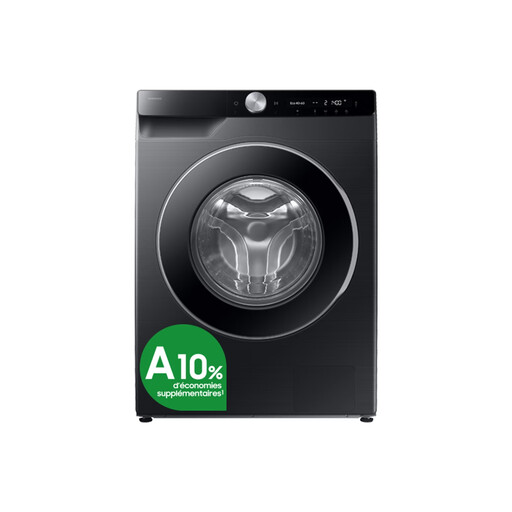 Image unavailable
Worth considering if a 9 kg capacity suits your regular loads without leaving the drum too empty.
A-rated washing machine. To compare cycles, also check the model’s Eco 40-60 programme duration and spin-drying figures.
 Image unavailable
A capacity worth considering if your regular loads call for 9 kg; compare programme times before choosing a machine for frequent use.
Connected front-loading model with a stated spin speed of 1,600 rpm. Also check that its depth and door opening suit the space available.
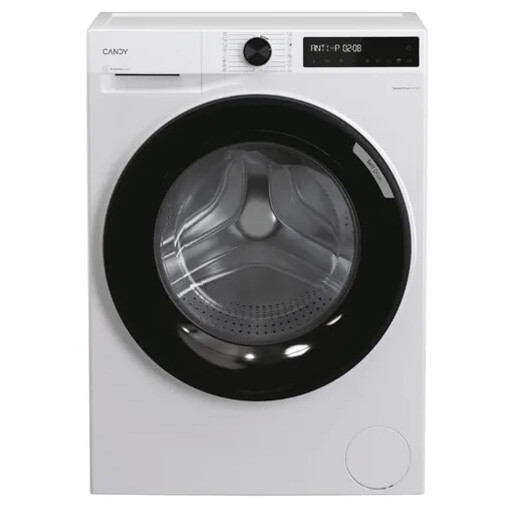 Image unavailable
Worth considering for very bulky, regular loads; 11 kg may be more than you need if your washes are usually small or medium-sized.
A-rated front-loading model. Compare its dimensions and the programme times for cycles suited to your laundry.
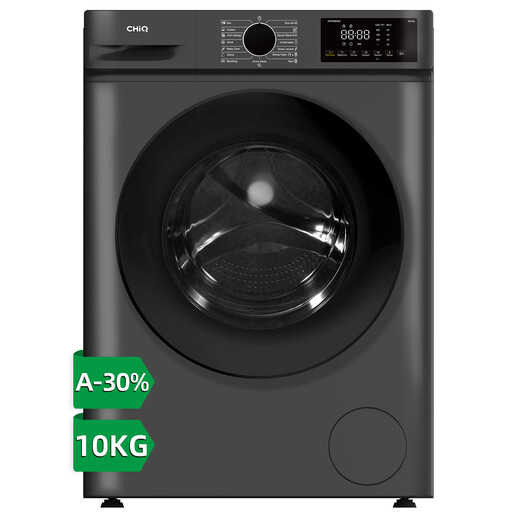 Image unavailable
Worth considering if you regularly wash loads close to 10 kg; check that this capacity suits your usual laundry.
Front-loading model with a stated spin speed of 1,400 rpm and 16 programmes. Before comparing it for everyday use, check its energy label, Eco 40-60 programme duration, noise level and exact dimensions.
Choose a capacity to suit your regular loads, rather than basing it only on how often you do the laundry. ADEME says that 7 kg is usually enough. If you regularly wash bulky loads, also compare larger front-loading models, provided you can make use of their capacity.
Compare the energy rating, kWh per 100 cycles, water per cycle, programme duration and noise level, as well as capacity. The European Commission says that the label data is based on the Eco 40-60 reference programme, so check separately which programmes you’ll use day to day.
No. Its duration alone won’t tell you whether it’s suitable for all your loads. UFC-Que Choisir assesses washing, rinsing, spin-drying, programme duration, consumption and noise separately. Check the conditions for the quick programme and the cycles suited to your laundry.
Before you buy, check the care instructions, availability of spare parts and the service terms for the model you’ve chosen. UFC-Que Choisir highlights the importance of maintenance to help a washing machine work properly and last longer.