
Livraison le jour même ou le lendemain

Qualité garantie

Débloquez vos offres de bienvenue: Livraison GRATUITE | Jusqu'à -80 % | 30 jours d'essai gratuits à JoyPlus
Téléchargez l'application
A washing machine shouldn't be chosen based solely on its price or the number of programmes it offers. In the UK, two washing machines can differ significantly in their actual capacity, energy consumption, spin noise level, and overall dimensions. A model that looks appealing on paper can quickly become a nuisance if its depth doesn't fit your home, if its main cycle drags on, or if its vibrations echo through neighbouring rooms.
Here are the key factors to consider before buying, followed by a selection of models suited to different needs.
An 8 kg washing machine, 9 kg or 10 kg model shows the maximum load allowed for certain programmes. This doesn't mean every cycle should be filled to the brim. Delicate fabrics, wool and duvets often have programmes with a more limited capacity.
For a couple, an 8 kg front-loading washing machine can work perfectly well. A family might prefer a large capacity washing machine of 9 kg, 10 kg or 11 kg to space out the laundry loads. Models with 14 kg are aimed more at households that regularly wash large volumes and have the necessary space.
An A energy rating is a good starting point, but it should be considered alongside the kWh consumption per 100 cycles, water usage and the duration of the Eco 40-60 programme. Some product sheets show, for example, 37 to 51 kWh per 100 cycles. However, these values are linked to the programme used and the frequency of washes.
Mentions like "A-10%" or "A-30%" are usually specific to the manufacturer's product sheet. To compare appliances, it's better to refer to the data on the European energy label rather than relying on a standalone marketing slogan.
A washing machine with steam may offer a refresh function, a de-wrinkling feature or a steam programme combined with washing. It doesn't necessarily replace a full cycle, especially for stubborn stains. Before using it, check the temperature, duration and maximum permitted load.
Claims about eliminating bacteria or allergens should also be considered in the context of the programme and conditions specified by the brand. They don't constitute a general medical guarantee.
Measure the available width, depth and height, allowing enough room for hoses, the door opening and ventilation. A model described as compact can still be difficult to install if its door protrudes significantly from the cabinet.
A 1400 rpm washing machine generally extracts more water than a slower model, given comparable programmes and conditions. This can reduce drying time. However, the spin efficiency class remains decisive. The decibel figures quoted usually refer to the spin cycle, the noisiest part of the wash.
In a flat, also pay attention to the noise emission class. Some models show 68, 70, 71 or 72 dB during spinning, while others exceed 75 dB. A perfectly levelled machine will reduce vibrations, but it won't turn a noisy appliance into a quiet washing machine.
Automatic dosing, load detection, a quick programme and the ability to add laundry mid-cycle can genuinely simplify use. Wi-Fi connectivity can be handy for receiving a notification when a programme finishes or controlling certain functions remotely. However, it does require a compatible app and a stable network.
Before paying extra for an option, ask yourself whether you'll use it every week. In daily use, a clear control panel and a short programme can prove more useful than a long list of rarely used features.
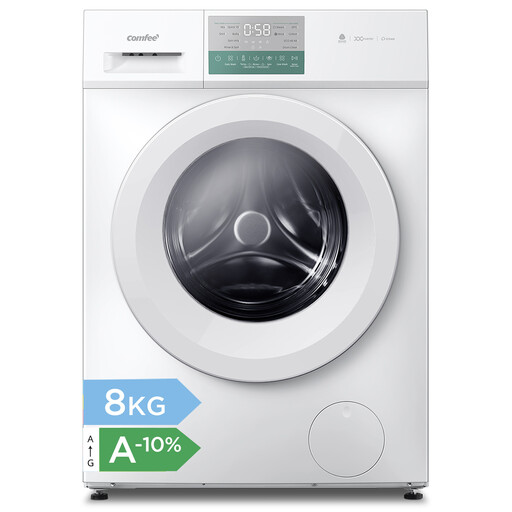
Why this choice suits this profile: its 8 kg drum and 15-minute quick programme are ideal for everyday use without a host of connected features.
The product sheet states A-10%, a BLDC motor and sensors that adjust water and energy according to the load. Check the label values before ordering.
8 kg, spin speed up to 1400 rpm, steam function, a wool programme described as Woolmark certified and a 90 °C drum cleaning cycle.
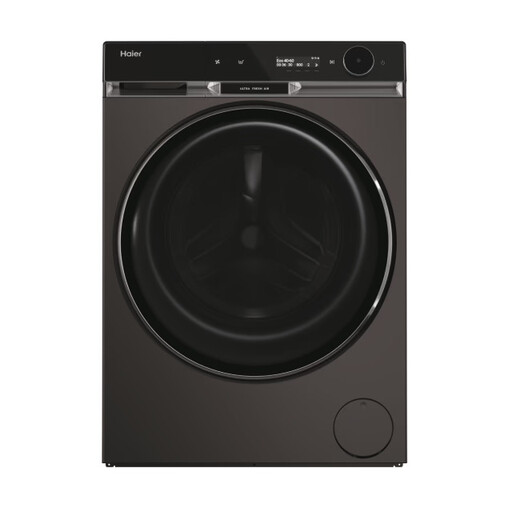
Why this choice suits this profile: it combines a 10 kg capacity, automatic dosing and Wi-Fi connectivity for households looking for more advanced control.
The stated consumption is 41 kWh per 100 cycles, with a noise level of 68 dB during spinning. Useful data for objectively comparing this model with other product sheets.
A rating, AutoDose, steam, refresh programme, Aquastop protection and hOn app, according to the product sheet.
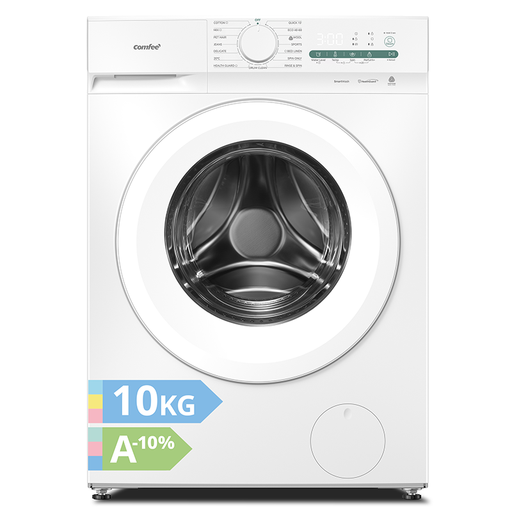
Why this choice suits this profile: its 10 kg capacity, 16 programmes and dedicated pet hair cycle meet the needs of households running frequent and varied laundry loads.
The dedicated programme avoids using a cycle that's poorly suited to fabrics covered in hair. The add-laundry function, meanwhile, lets you catch common forgotten items.
10 kg, BLDC motor, stated A-10% rating, steam, 16 programmes and a depth of 48 cm as indicated by the manufacturer.
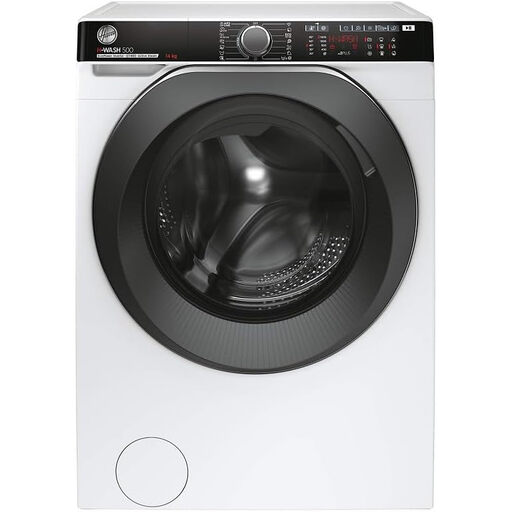
Why this choice suits this profile: its 14 kg capacity is aimed at households that frequently wash bedding, duvets or large quantities of clothing.
Its large capacity avoids having to run several smaller loads for the same wash. However, its stated noise level of 80 dB is worth considering depending on where you plan to install it.
14 kg, 1400 rpm, 16 programmes, stainless steel drum and compatibility with a connected environment.
We've compiled a comprehensive, real-time updated list of products that fully meet these strict selection criteria and European safety regulations.
A 9 or 10 kg capacity is generally suitable for family laundry and occasional bulky loads. An 11 kg model could be worthwhile if you wash frequently or regularly clean bedding. However, the capacity should remain consistent with the available space and your washing routine.
A faster spin can extract more water, depending on the fabric and programme selected. This can make air drying or tumble drying easier. Also check the spin efficiency class and the residual moisture percentage shown on the product sheet.
The cost depends on the electricity consumption in kWh per 100 cycles, water usage, the programme chosen and your local energy tariff. To compare two models, rely on the data from the European energy label and estimate the number of cycles you run each month.