Households looking to avoid extra cycles
You regularly wash bedding or towels, but don’t want to run a large drum half-empty. ADEME recommends matching the capacity to your household’s actual needs.


Choose a capacity based on the loads you actually wash and the programmes you use, then compare spin performance, noise, water and energy consumption on a like-for-like basis. A front-loading model may suit you if you have room to open the door and want a larger capacity; a top-loading machine is more likely to suit a narrow space or a preference for loading from above. If you’re considering a washer-dryer, check the washing and drying capacities separately.
The right capacity depends more on your laundry loads and how often you wash than on the number of people in your household alone.
You regularly wash bedding or towels, but don’t want to run a large drum half-empty. ADEME recommends matching the capacity to your household’s actual needs.
The route to the machine, the available width or the way you load it can help you choose between a front-loading appliance and a top-loading model.
The spin cycle matters when planning to dry clothes on an airer. You’ll also need space to hang your laundry and a way to ventilate the room: ADEME points out that air-drying adds moisture to your home.
Start with your usual laundry loads and the space available. Then compare the figures for the reference cycle with the programmes you plan to use: a figure shown for one cycle won’t necessarily apply to all the others.
| Criterion | What to check | Who is it for? |
|---|---|---|
| Capacity and laundry routine | Compare your usual loads and bulky items with the capacity in kg of dry laundry. Also check the permitted load for the programmes you’ll use. | If bedding and towels mean I have to run extra cycles, I’m looking for a drum that suits these loads without being too large for the rest of my laundry. Around 33% of consumers put this match first. |
| Spin performance and drying | Check the spin-drying efficiency class and the figures for the cycle being compared. For a washer-dryer, distinguish between its washing and drying capacities. | When I mainly dry my laundry on an airer, I want to plan the spin cycle and have somewhere to hang it. This is the top priority for around 27% of consumers. |
| Size and opening | Measure the route in and the space where the machine will go, then check the clearance needed for the door or lid. Check the connections required in the instruction manual. | If access is narrow or I prefer to load laundry from above, the machine first needs to fit and open in my home. Around 20% of consumers prioritise this constraint. |
| Consumption, noise and cycle duration | Compare the label figures for kWh per 100 cycles, litres per cycle, cycle duration and noise, taking the reference cycle into account. | If I do laundry frequently, I want to know the model’s consumption, cycle duration and noise levels before choosing. These are the main priorities for around 20% of consumers. |
Two households of the same size don’t necessarily have the same laundry loads. Fabric types, how often you wash and bulky items all matter too; the stated capacity won’t automatically apply to every programme.
Make a note of your usual loads, then check the manual for the limits on cotton, synthetics and wool programmes.
The energy class or maximum spin speed doesn’t tell you everything about water consumption, cycle duration or noise. UFC-Que Choisir assesses these separately in its washing machine test procedure.
Compare appliances using the same reference cycle, then check the details for the programmes you’ll actually need.
The two capacities can differ. For example, Electrolux lists 8 kg for washing and 4 kg for drying on the EW8W3816BI. This means a full-capacity wash load can’t be dried in one go at full capacity on this model.
Check both figures for the model you’re considering and decide whether you can split the load for drying.
An appliance might fit in its intended space but not through a doorway, or there may not be enough room to open the lid. If you plan to stack appliances, they and the stacking kit must also be compatible.
Measure the route in, check the connections and clearances listed in the manual, then confirm the delivery and installation options for your address.
Bosch offers a range of front-loading washing machines, including a Series 4 model listed with a 9 kg capacity and a spin speed of 1,400 rpm.
Whirlpool offers top-loading washing machines. The brand lists the TDLR6253BFR as 40 cm wide, making it one to consider if space is limited.
Electrolux offers top-loading models and washer-dryers, which cater to different needs.
These models offer a range of capacities for household laundry, including both front-loading and top-loading options. For each one, compare the stated capacity with the programmes you use, the space available and how you dry your laundry.
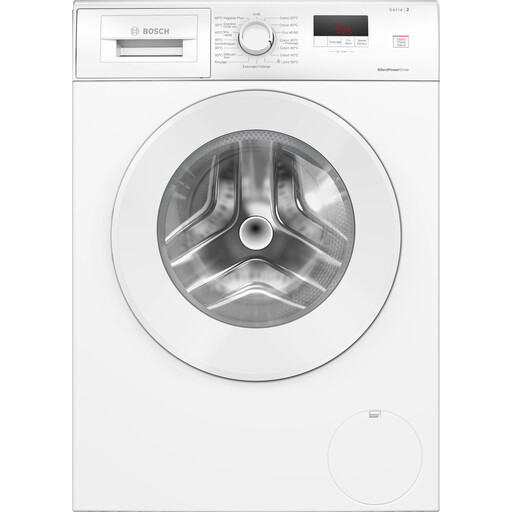 Image unavailable
Worth considering if your regular loads suit a 7 kg capacity and you have enough space in front of the door.
Stated capacity: 7 kg; maximum spin speed: 1,400 rpm; stated energy class: A. Check the manual for the permitted loads for each programme and the clearances needed for installation.
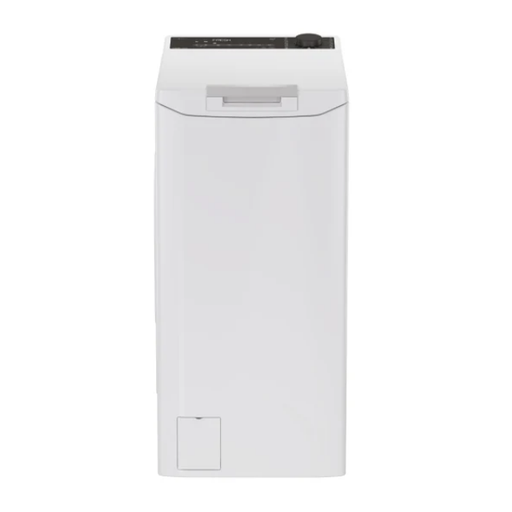 Image unavailable
Consider this model if top-loading suits your space or how you prefer to load your laundry.
Stated capacity: 7 kg; maximum spin speed: 1,200 rpm; stated energy class: A. Measure the space needed to open the lid and check the load limits for each programme.
 Image unavailable
Consider whether its stated capacity suits your usual loads: a 10 kg drum is only useful if your laundry and the programmes you use allow you to make the most of it.
Stated capacity: 10 kg; maximum spin speed: 1,400 rpm; stated energy class: A. Check the energy label, load limits for each programme and dimensions of this model before choosing it.
No. It refers to a load of dry laundry under the conditions of the programme it relates to. Limits may be lower for synthetics, wool or delicate fabrics. Check the model’s manual if these programmes make up a large part of your laundry.
Compare the energy class, kWh per 100 cycles, water per cycle, cycle duration and noise for the stated reference cycle. ADEME also recommends checking the spin performance; then compare these figures with the programmes you’ll use.
Not always: check the washing and drying capacities separately. Electrolux lists 8 kg for washing and 4 kg for drying on the EW8W3816BI. With this model, an 8 kg wash load needs to be reduced or split for drying.
No. Check that both appliances and the manufacturer’s stacking kit are compatible before planning a stacked set-up. For example, Electrolux describes a kit for certain front-loading appliances with a depth of 47 to 60 cm, with compatibility checked against the PNC reference.