What should you compare?
Choose the type of appliance to suit your laundry loads and available space, then compare the figures for models that meet both requirements.
Front-loading
Consider it: for regular, larger loads, provided the space in front of the appliance is accessible.
Bear in mind: you’ll need room for the door to swing open, and you’ll have to bend down to load it.
Top-loading
Consider it: if width is limited or you’d find it easier to load from above.
Bear in mind: capacity is generally more limited; UFC-Que Choisir says the top-loaders featured in its guide have a maximum capacity of 8 kg.
Washer-dryer
Consider it: if you need both washing and drying but don’t have room for two appliances.
Bear in mind: the drying capacity is lower than the washing capacity, as UFC-Que Choisir points out.
| Criteria | What to check | Think about your needs |
|---|
| Capacity |
Compare the stated capacity in kg with your usual loads. Check the capacity for the programme you use and make sure there’s enough room to load the machine. |
My laundry basket fills up quickly, but I don’t want to run cycles with half-empty drums. ADEME says that a capacity of 7 kg is enough for most households. |
| Energy and water use, and cycle duration |
On the EU energy label, compare kWh per 100 cycles, litres per cycle and the duration of the Eco 40-60 programme. Also check the stated spin noise level. |
I do laundry regularly and want to compare water and energy use, as well as cycle duration, using the same reference programme—not different programmes. |
| Washing and drying |
For a washer-dryer, check the washing and drying capacities separately. Compare the label figures for washing alone with those for a wash-and-dry cycle. |
One appliance would save me space, but I need to be able to adjust the load if I want to go straight from washing to drying without taking any clothes out. |
| Installation and lifespan |
Measure the width, depth and height, as well as the clearance needed to open the door. For the model you’re considering in France, check the durability index and care information. |
I want to be able to load the machine each time without difficulty, and choose a model whose durability information I can check. |
Joybuy models for these needs
This selection includes front-loaders, top-loaders and a washer-dryer. The right capacity depends on your usual loads; for the washer-dryer, consider how much drying you really need too.
 Image unavailable
Haier T Series 7 THASN276TM6-S, 7 kg top-loader
Its top-loading design could suit you if width is limited and 7 kg is right for your usual laundry loads.
The model name indicates a 1,200 rpm spin speed and an A energy rating. Allow enough room to open the top, and check the full dimensions and the durability index for this model.
View on Joybuy
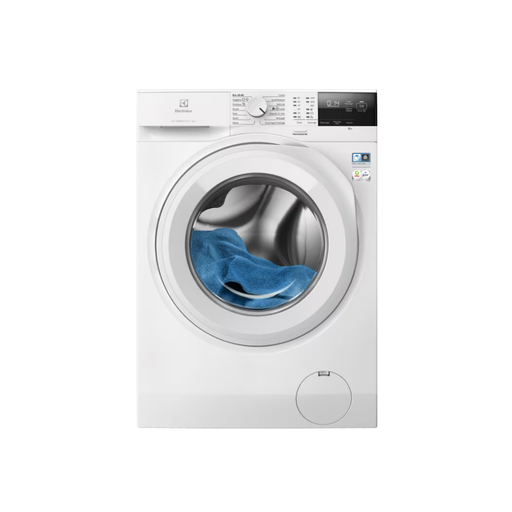 Image unavailable
Electrolux EW6FI4805AW, 8 kg front-loader
Consider this front-loader if your usual loads make good use of its 8 kg capacity and you have enough clearance in front of the door.
The model name indicates a 1,400 rpm spin speed and SensiCare function. Before deciding, compare the Eco 40-60 duration and the durability index for this model.
View on Joybuy
 Image unavailable
Candy TCA464TM4-S ProWash 500, 6 kg top-loader
This top-loader is best suited to households whose regular loads are close to 6 kg and who prefer to load laundry from above.
The model name indicates 17 programmes, a 1,400 rpm spin speed and a B energy rating. Check the space above the appliance, the Eco 40-60 duration and the durability index for this model.
View on Joybuy
 Image unavailable
Samsung WD10HG6U34BEU3 washer-dryer
This combination model is worth considering if you need drying but don’t have room for a second appliance. Its name lists a 10 kg washing capacity and a 6 kg drying capacity, while other information linked to this model states an 11 kg washing capacity. Confirm the exact capacity on the product page before buying.
To go straight from washing to drying without removing any laundry, stick to the drying capacity. Compare the figures for washing alone with those for the combined cycle, and check the durability index too.
View on Joybuy
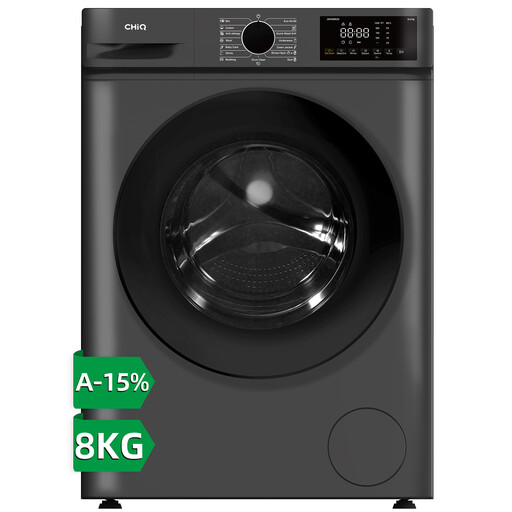 Image unavailable
CHiQ JW85883G, 8 kg dark grey front-loader
Its stated 8 kg capacity could suit you if it matches the loads you accumulate between washes.
The model name indicates 16 programmes and a 1,400 rpm spin speed. To compare its energy and water use with other front-loaders, check the label for kWh per 100 cycles and litres per cycle. Also check the installation dimensions and the durability index.
View on Joybuy
Frequently asked questions
Do you need a large capacity if you do laundry often?
Not necessarily. It’s only useful if your usual loads fill it sufficiently or if it helps you avoid extra cycles. ADEME says that a 7 kg washing machine is enough for most households, so consider how much laundry you accumulate between washes.
Which figures should you compare on the energy label?
When comparing two washing machines, look at kWh per 100 cycles, litres per cycle, the Eco 40-60 duration and the spin noise level. The European Commission lists these figures on the label. For a washer-dryer, compare the figures for washing alone separately from those for the wash-and-dry cycle.
Can a washer-dryer dry a full wash load?
Not necessarily. UFC-Que Choisir says that its drying capacity is lower than its washing capacity. To run both functions back to back without taking any laundry out, keep the initial load within the model’s drying capacity.
How can you check durability before buying?
Look up the durability index for the model you’re considering in France, then check the care information and warranty terms. ADEME says that washing machines have been covered by this index since April 2025; make sure you check the figure for the exact model.


