Households that build up large loads
Washing piles up regularly, sometimes including bulky items. The key is to choose a capacity that works for your day-to-day needs, without frequently running a large drum half-empty.


Choose a capacity that matches the loads you can realistically combine: according to ADEME, 7 kg is enough for most households, even if you do laundry frequently. Then compare the spin-cycle noise and energy and water consumption on the label for the exact model you’re considering. A washer-dryer is mainly worth considering if you need drying built in, but remember to check its drying capacity separately.
Washing piles up regularly, sometimes including bulky items. The key is to choose a capacity that works for your day-to-day needs, without frequently running a large drum half-empty.
Your washing machine is near a living area, or you need to dry your laundry on an airer afterwards. In that case, it’s worth comparing the spin-cycle noise and spin-drying efficiency class on each model’s label.
You don’t have room for two appliances or space to hang all your washing. A washer-dryer could be a practical solution, but you may not be able to dry a full wash load in one go.
Start with the size of your usual loads, then compare appliances based on the factor that matters most in your household: spin performance, running costs or available space. If the width of the space limits your options, also look at top-loading models. Their format doesn’t mean you can skip checking capacity and the energy label.
| Feature | What to check | Who it matters to |
|---|---|---|
| Usable capacity | Compare the stated capacity in kilograms of dry laundry with your usual loads and the programme’s loading instructions. | My laundry builds up, and I can genuinely combine it into large loads rather than doing lots of small washes. Around 33% of consumers would prioritise this usable capacity. |
| Noise and spin performance | Check the decibel rating and noise class during spinning, as well as the spin-drying efficiency class; don’t judge the appliance by its revolutions per minute alone. | When the washing machine is near a living area, I want to keep disruption to a minimum while getting laundry ready to dry. Around 27% of consumers would put noise and spin performance ahead of other features. |
| Water and electricity use | On the model’s label, compare energy use per 100 cycles, water use per cycle and the duration of the Eco 40-60 programme. | When I do laundry frequently, I’d rather compare the consumption figures for each appliance than look at its energy class alone. Around 20% of consumers would prioritise this. |
| Space and drying | Measure the available space and required clearances. For a washer-dryer, check the washing and drying capacities separately. | I don’t have room for two appliances or space to hang my usual loads, so having drying built in matters more to me. This would be a priority for around 20% of consumers. |
Doing laundry frequently doesn’t mean every load is large. ADEME says that 7 kg is enough for most households. A large drum that’s often underfilled won’t, by itself, solve the problem of laundry piling up.
For a week or two, keep track of which loads genuinely overflow and which you can combine before choosing a larger capacity.
The maximum spin speed doesn’t tell you how noisy the spin cycle will be or, by itself, how well each load will be spun. Bosch, for example, says that an unbalanced load can automatically reduce the maximum speed on its WUU28T69FR model.
Compare the decibel rating, noise class and spin-drying efficiency class for the model you’re considering, especially if the machine is near a living area.
A wash load may be too large to dry in one go in the same appliance. Electrolux, for example, lists an 8 kg washing capacity and a 4 kg drying capacity for the EW8W3816BI.
Check both capacities and the wash-and-dry programme details before planning to wash and dry a full load without any intervention.
According to France’s Ministry for Ecological Transition, the durability index has applied to washing machines in France since 8 April 2025. The decree of 5 April 2024 defines which household washing machines are covered.
Compare the index shown for the models covered, then check the information on spare parts, maintenance and warranty terms.
The details below relate to the models mentioned, not to every appliance made by each brand.
Worth a look if your usual loads call for a 9 kg front-loading washing machine.
The WWG660 WCS TDos&9kg gives you a chance to compare the specifications of a 9 kg front-loading model, including its spin-cycle noise.
Two washer-dryers show why it’s important to size washing and drying capacity separately.
These appliances cater to different needs when you do laundry frequently: a top-loading model if width is a concern, front-loading washing machines in a range of capacities, and a model with drying built in. First choose based on your loads and available space, then check the label and dimensions of the model you’re considering.
 Image unavailable
Worth considering if you prefer a top-loading design and 7 kg suits your usual loads.
The model name indicates a spin speed of 1,200 rpm, energy class A and Wi-Fi connectivity. Check that there’s enough clear space to open the lid.
 Image unavailable
A capacity to consider if your regular loads are larger than 7 kg but don’t require a much bigger drum.
The model is listed at 1,400 rpm. Measure the available depth, allowing for the door and installation clearances.
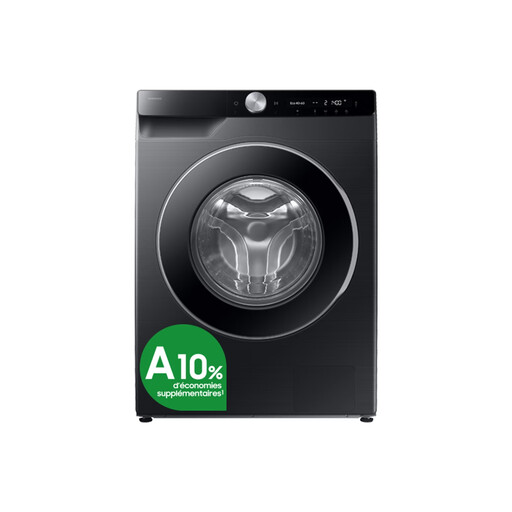 Image unavailable
The 9 kg capacity is worth considering if you regularly combine loads that would make use of it.
The model name indicates energy class A. Check that the appliance, including the door, will fit in your available space.
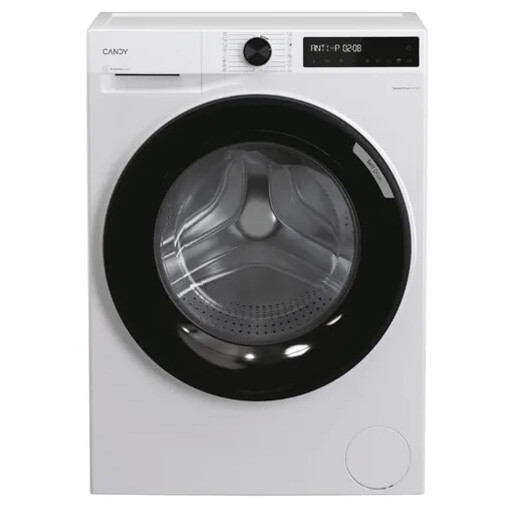 Image unavailable
This capacity only makes sense if you can regularly combine large loads; doing frequent but small washes isn’t reason enough on its own.
The model name indicates energy class A. Check its full dimensions and required clearances before planning where to install it.
 Image unavailable
Worth considering if you need to wash and dry with one appliance, rather than simply looking for a large washing capacity.
It’s listed with a 10 kg washing capacity and a 6 kg drying capacity, so you may need to split a full wash load before drying. The product name shows class D; check the label for separate details on washing alone and the wash-and-dry cycle.
Not just because you do laundry often: according to ADEME, 7 kg is enough for most households. A larger capacity makes sense if your usual loads, not just a few occasional ones, can genuinely fill the drum.
As well as the energy class, compare the energy use per 100 cycles, water use per cycle, Eco 40-60 programme duration and spin-cycle noise. The European Commission explains these details on the label, and ADEME also recommends considering spin performance and noise.
Not always: its drying capacity may be lower than its washing capacity. For example, Electrolux lists an 8 kg washing capacity and a 4 kg drying capacity for the EW8W3816BI. If your load exceeds the chosen model’s drying capacity, you’ll need to split it.
Yes, for washing machines within its scope. According to France’s Ministry for Ecological Transition, the durability index has been gradually replacing the repairability index for this category since 8 April 2025. Check the index for the model you’re considering, along with information about spare parts and maintenance. The decree of 5 April 2024 sets out which household washing machines are covered.