For a household of 3 to 4 people, Que Choisir says that a capacity of 8 to 9 kg is generally enough; 10 to 12 kg is a better fit when you regularly have large loads to wash. If you often wash smaller loads too, compare the consumption figures and load-adjustment features, rather than assuming that a larger drum uses less energy. Before choosing, check the load permitted by the programme designed for your fabrics, the appliance’s dimensions and the clearance needed to open the door.
Who is this type of washing machine for?
Households that regularly wash bulky bedding
If you regularly wash sheets, throws and duvets at home, a larger capacity could save you from splitting big loads across several cycles. Que Choisir suggests that 10 to 12 kg models are worth considering when you often have large loads to wash; the occasional duvet on its own isn’t enough to justify this choice.
Households that alternate between large and small loads
Space for bedding matters, but so does everyday use for clothes and smaller loads. Compare the energy label figures and check how any load-adjustment features work on each model.
Buyers with restricted access or installation space
There’s no point choosing a suitable capacity if the appliance won’t fit through your doorways or the door is difficult to open once it’s installed. Que Choisir says that front-loading washing machines are generally around 60 cm wide and 85 cm high; check the exact model’s depth, the delivery route and access to the filter.
Which features should you compare?
Start by thinking about how often you wash large loads, then check that the programme for your fabrics and the available space are a good fit for the model.
| Feature | What to check | To suit my needs |
|---|
| Usable capacity |
Compare the stated kg of dry laundry with the maximum load for the programme you plan to use. Also check the duvet’s care label. |
I often wash duvets or several large items: the 10 to 12 kg capacities Que Choisir suggests for frequent large loads are worth comparing. If this is only occasional, I’ll also look at 8 to 9 kg models. |
| Small loads |
Compare the consumption figures for the Eco 40-60 programme. If the model has a load-adjustment feature, check the manual to see which programmes it applies to. |
I often wash small loads between bedding washes, so I won’t choose a larger capacity based solely on a promise of automatic adjustment. |
| Installation and access |
Measure the model’s height, width and depth, the delivery route and the space in front of the door. Also check where the filter is located. |
I need to be able to get the machine into my home, fit a large item inside and reach the parts needed for maintenance. |
| Spin cycle and noise |
Compare the spin and noise information for the models you’re considering, and check the limits of the programme suited to your fabrics. |
If I dry large items indoors or the machine is close to a living area, these features matter just as much as the stated capacity. |
Mistakes to avoid
-
Choosing 12 kg or more for the occasional duvet wash
A large drum may go underused if most of your loads are ordinary-sized. Que Choisir links the benefits of 10 to 12 kg capacities more closely to regularly washing large loads.
Think about how often you really wash sheets, throws and duvets before comparing capacities.
-
Assuming the stated capacity applies to every programme
The stated maximum weight doesn’t mean that every programme can take the same load. A duvet also needs to be washable in accordance with its care label.
Check the manual to find out the load limit for the programme you have in mind, then check the fabric’s care instructions.
-
Comparing capacity or energy rating alone
On their own, these figures don’t tell you how long a cycle takes, how much water it uses or how a load-adjustment feature works with smaller loads. Standardised information for the Eco 40-60 programme doesn’t necessarily describe other programmes.
Compare the labels of models with similar capacities and read the manual for the features you’re interested in.
-
Forgetting about the delivery route and door clearance
Two front-loading machines of a similar width may have different depths. Not having enough space in front of the machine can also make loading and accessing the filter more difficult.
Measure your doorways, hallways and installation space, then check the appliance’s exact dimensions and the clearance needed to open the door.
Brands to compare
Bosch
A brand worth considering if you’re looking for a large-capacity front-loading washing machine. Bosch says its WGG254FAFR model holds up to 10 kg and measures 845 × 598 × 588 mm.
- This model lets you compare a 10 kg capacity with the space available where you plan to install it.
- Check the programmes and dosing features on the model you choose: they aren’t the same across the entire range.
Samsung
Samsung lists a 10 kg capacity and dimensions of 600 × 850 × 560 mm for the WW10FG6U34LKU3 washing machine.
- The published dimensions help you check whether this model will fit through your access route and in your chosen space.
- Samsung describes laundry-detection features on some appliances. Check whether the model you’re considering has them and how they work, rather than assuming they deliver a measured saving.
Miele
Miele’s French catalogue includes the 10 kg WCK360 WCS PWash front-loading washing machine, with a stated spin speed of 1,400 rpm.
- You can compare this model with other 10 kg machines based on their stated capacity and spin speed.
- Check the features and permitted load for each programme on the specific model instead of assuming they apply across the whole range.
Washing machines to consider on Joybuy
These models have a washing capacity of 10 or 11 kg, making them worth comparing if you regularly wash large loads. The Samsung is a washer-dryer, so its drying capacity is different from its washing capacity. For each appliance, check the manual to find the programme suitable for your bulky fabrics.
 Image unavailable
Haier X Series 11 HW100-BD14397PGU1, 10 kg
Its stated 10 kg capacity could suit you if you’re looking for space to handle large loads regularly. The product title lists a 1,400 rpm spin speed and an AutoDose function. Check the manual for the load limit of the programme designed for your duvet, and for the conditions that apply to the advertised features.
View on Joybuy
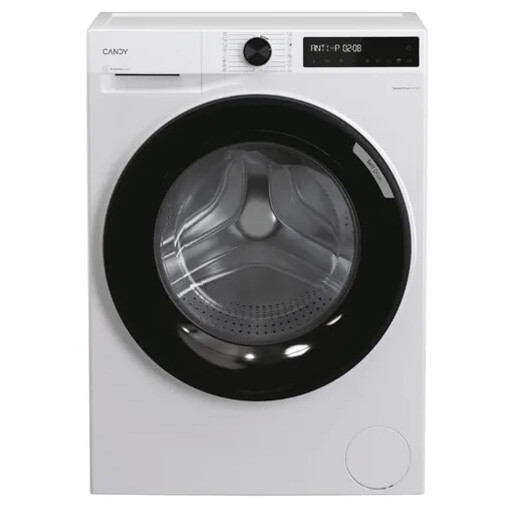 Image unavailable
Candy BR 411BL9-S, 11 kg front-loading washing machine
With a stated capacity of 11 kg, this model is one to consider for frequent large loads. Before washing a duvet, check the permitted load for the relevant programme and the space needed for installation.
View on Joybuy
 Image unavailable
Samsung WD11DG6B85BEU3, 11 kg wash, 6 kg dry
This washer-dryer has an 11 kg washing capacity but a 6 kg drying capacity, so don’t assume that a large wash load can also go straight into the dryer. Check the manual for each programme’s load limits and how the advertised load-based settings work.
View on Joybuy
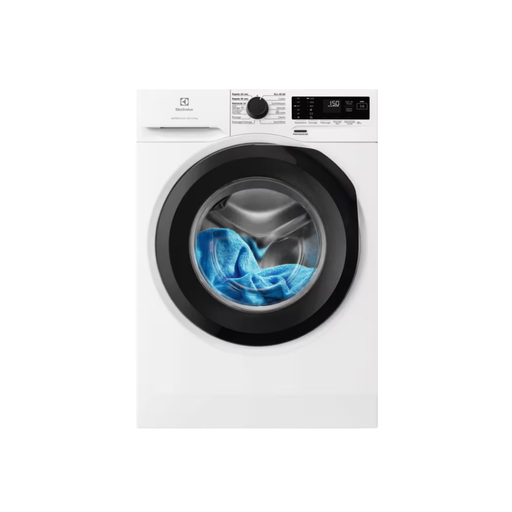 Image unavailable
Electrolux EWF1410N2, 10 kg front-loading washing machine
Its stated 10 kg capacity is worth comparing if you regularly wash large items. Check the load limit for the programme you’ll use for these fabrics, as well as the space available to install and open the appliance.
View on Joybuy
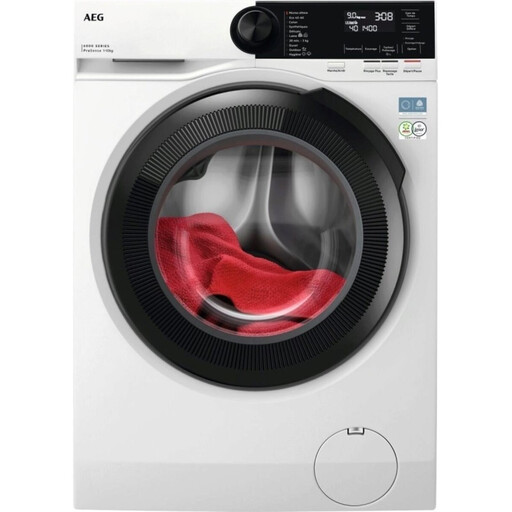 Image unavailable
AEG LFR62E114S, 10 kg front-loading washing machine
Its stated 10 kg capacity is worth considering for frequent large loads; the product title also lists a 1,400 rpm spin speed. Check the exterior dimensions, energy label and load limit for the programme suited to your fabrics before choosing.
View on Joybuy
Frequently asked questions
What capacity should I choose if I regularly wash duvets and throws?
Que Choisir says that 8 to 9 kg is generally enough for a household of 3 to 4 people, while 10 to 12 kg is a better fit when you regularly have large loads to wash. However, check your fabrics’ care labels and the maximum load for the programme you plan to use.
Does the stated capacity apply to every programme?
No: the permitted load can vary depending on the programme and the fabric. For a duvet, check the washing machine manual and the duvet’s care label rather than relying only on the kilograms shown on the product page.
How can I check whether a large washing machine will fit in my home?
Compare the model’s height, width and depth with your doorways, hallways, lifts and the space where you plan to install it. Remember to leave room in front of the door. Samsung specifically advises checking that its WW10FG6U34LKU3 model will fit through your access route while still in its packaging.
How should I compare two machines if I also wash small loads?
Compare their energy label figures for the Eco 40-60 programme, then read the manuals for the programmes and load-adjustment features you’re interested in. The European Commission explains that requirements relating to factors such as efficiency, cycle duration and water use apply to Eco 40-60; don’t automatically assume these figures apply to every cycle.


