Which homes is it suitable for?

Studio or small-flat residents

When space is tight or the kitchen and bathroom are compact, check the width, depth, loading type and access to the connections first. Que Choisir and Whirlpool France highlight the difference in footprint between top-loading and front-loading formats.

Households with small to medium regular loads

If you do laundry frequently, choose a capacity that matches the amount of washing you actually accumulate. ADEME states that a 7 kg washing machine is usually sufficient and helps you avoid running multiple drums that are not full enough.

Homes where noise and indoor drying matter

Near a living area, the spin noise, noise class and spin-drying class become more important. These factors can also help you plan how to dry laundry inside your home.

What to check before buying

Top-loading washing machine

Consider it: if the space is too narrow for a standard front-loader and there is enough room above to open the lid.

Bear in mind: the lid means you cannot use the top as a worktop or place another appliance above it.

Compact or slim front-loader

Consider it: if a width of around 60 cm is available but depth is limited.

Bear in mind: slim models often offer 4 to 6 kg capacities and need clearance in front of the door.

Washer-dryer

Consider it: when you have space for only one appliance to wash and dry your laundry.

Bear in mind: the drying capacity is generally lower than the washing capacity.

Priority What to check Your needs
Footprint and opening Compare the overall width, depth and height. Allow extra room for the hoses and the door or lid opening. I want to install the machine without blocking a passageway, piece of furniture or its own opening.
Drum capacity Match the stated kg capacity to the amount of laundry accumulated between cycles. ADEME states that 7 kg is usually sufficient; according to Que Choisir, slim front-loaders are often rated at around 4 to 6 kg. My washing loads should suit my usual routine, without buying an oversized drum or running multiple half-loads.
Noise and spin cycle Compare the noise level and noise class, as well as the spin-drying efficiency class. An independent test can supplement the label with comparable criteria. The machine will be close to a living area, and I want the laundry to dry more easily indoors.
Consumption For comparable capacities and formats, compare the A to G class, kWh per 100 cycles, litres per cycle and cycle duration shown on the European label. I prefer to compare standardised indicators rather than rely on general claims about savings.
Connections and safety Check the water inlet, drainage, hose routing and access to the filter. Near a shower or bath, have the safety zones and suitable circuit checked. I want to avoid choosing an appliance that cannot be connected or safely installed in the intended space.

Mistakes to avoid

  • Measuring only the alcove

    A shallow front-loader still needs space in front of the door, while a narrow top-loader needs enough room for the lid to open. A drain hose that is kinked, blocked or pushed in too far can also prevent the machine from working properly.

    Measure the available width, depth and height, then allow for the door or lid opening and the hose routing. Make sure the tap, trap and pump filter remain easy to access.

  • Assuming a washer-dryer can dry the entire wash load

    The drying capacity is often lower than the washing capacity. A full load may therefore need to be partially removed or dried in several batches.

    Read both capacities in kg separately, then compare the duration and energy class of the wash-and-dry cycle.

  • Confusing spin speed, noise and washing performance

    These criteria describe different things: the label provides information such as noise level and spin-drying class, while Que Choisir tests also assess washing, rinsing, duration and consumption.

    For a home where laundry dries indoors, pay particular attention to spin noise and the spin-drying class, then compare available test results using the same methodology.

  • Installing it in a bathroom without checking the location

    Being close to a bath or shower means that specific rules apply to electrical equipment. The room layout and existing installation remain decisive.

    Do not rely solely on the presence of a socket or an old appliance. Have the installation plan, dedicated circuit and safety zones checked before installation.

Brand benchmarks

Whirlpool

Worth considering for a top-loader designed for a narrow alcove: Whirlpool sells 6 to 7 kg top-loading models in France designed for smaller homes.

  • The Whirlpool TDLR6247FR/N is an example of a top-loader measuring 40 cm wide and 60 cm deep, with a 6 kg capacity.
  • These dimensions apply to this specific model and are not representative of the entire Whirlpool range.

Bosch

Worth considering for a 7 kg front-loader if standard width is available and you want to compare dimensions, capacity and spin performance precisely.

  • The Bosch WGE02407FR is rated at 7 kg, 1,400 rpm and 848 × 598 × 588 mm, with an energy class of A.
  • These specifications apply to this particular model and do not allow you to generalise the noise level or compactness of all Bosch models.

Electrolux

Worth considering for a washer-dryer when the main aim is to avoid the footprint of a separate tumble dryer.

  • The EW7W4954DS and EW7IW4966BG models illustrate capacities of 9/5 kg and 9/6 kg for washing and drying.
  • Check the actual drying capacity, dimensions and label data for the wash-and-dry cycle of your chosen model.

Joybuy products for this need

Joybuy options suited to regular laundry in a compact home, including a selection of washer-dryers and a top-loader for narrow alcoves.
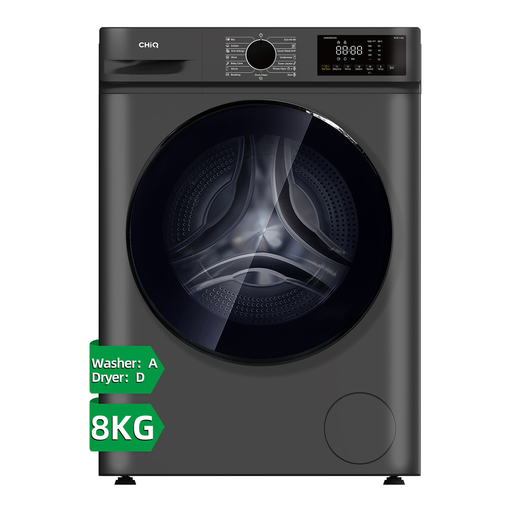
CHiQ JW85882HG 8 kg washing machine and 5 kg dryer

CHiQ JW85882HG 8/5 kg washer-dryer

Worth considering when one appliance needs to handle both washing and drying in a limited space.

Stated dimensions: 600 × 520 × 847 mm; 8 kg washing capacity, 5 kg drying capacity and 1,400 rpm. The drying capacity means you cannot plan to dry a full wash load in one go. Check the dimensioned diagram: the 465 mm stated in the title differs from the detailed dimensions.

Joybuy
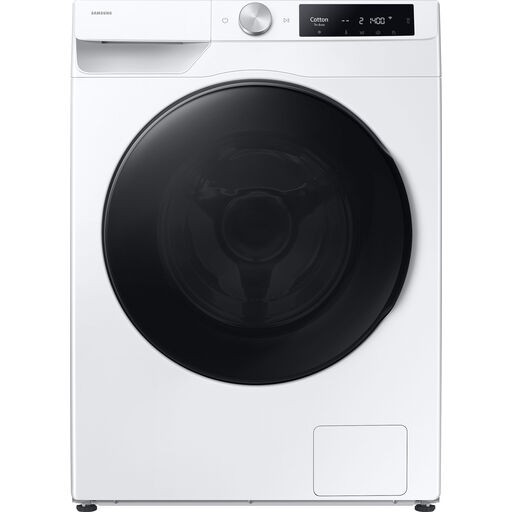
Samsung WD11DG6B85BEU3 11 kg washing machine and 6 kg dryer

Samsung WD11DG6B85BEU3 11/6 kg washer-dryer

Suitable for larger loads when there is room for only one appliance for washing and drying.

Stated format: 60 × 85 × 60 cm, with an 11 kg washing capacity and 6 kg drying capacity. The spin speed is rated at 1,400 rpm, 72 dB and noise class A; the 60 cm depth means this is not a slim model.

Joybuy

Candy TCA464TM4-S ProWash 500 6 kg top-loading washing machine

Candy TCA464TM4-S ProWash 500 6 kg top-loader

A top-loading option for an alcove where 60 cm of width is not available, provided there is enough room to open the lid.

Stated dimensions: 86 × 40.5 × 60 cm, with a 6 kg capacity and spin speed of up to 1,400 rpm. The stated spin noise level is 79 dB, with noise class C; check this carefully if installing it near a living area.

Joybuy
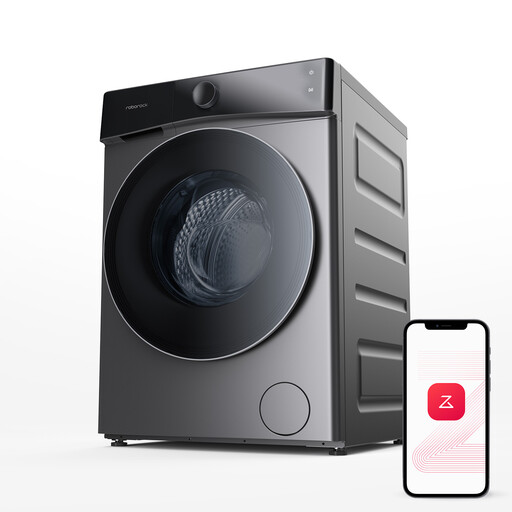
Roborock Zeo Lite 10 kg washing machine and 6 kg dryer

Roborock Zeo Lite 10/6 kg washer-dryer

Worth considering if integrated drying is a priority and there is no room for two appliances.

Stated capacities: 10 kg for washing and 6 kg for drying, with 27 programmes and automatic dosing. Check the dimensions, depth, noise level and label information before confirming the installation.

Joybuy
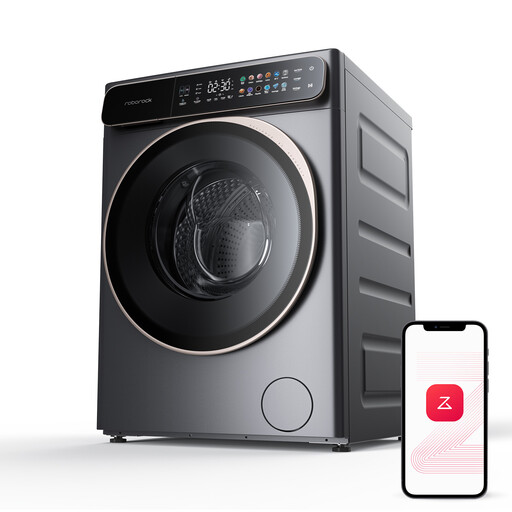
Roborock Zeo One 10 kg washing machine and 6 kg dryer

Roborock Zeo One 10/6 kg washer-dryer

An all-in-one solution to consider if you want to avoid buying a second laundry appliance.

The stated capacities are 10 kg for washing and 6 kg for drying, with automatic dosing and a LintClear system. Check the dimensions, noise level, consumption, energy label and clearance required in front of the door.

Joybuy

Frequently asked questions

What capacity should you choose for a small home?

Do not automatically choose the largest drum. ADEME states that a 7 kg washing machine is usually sufficient; match the capacity to your laundry routine to reduce lightly loaded cycles. A slim front-loader may offer only 4 to 6 kg, so check your usual laundry volume before prioritising a shallow model.

Does a top-loading washing machine take up less space than a front-loader?

It mainly reduces width: top-loading models are generally around 40 cm wide, compared with approximately 60 cm for front-loaders. However, you must be able to open the lid from above, so this format is not suitable beneath a fixed worktop or an appliance placed above it.

What should you check near a bathroom or shower?

Check the water inlet, drainage, appliance position and electrical circuit before buying. In France, Promotelec points out that bathroom safety zones and dedicated circuits, including the washing-machine circuit, are covered by NF C 15-100. If the appliance is close to a bath or shower, have the plans checked by a qualified professional.

What should you check about the water connections?

Make sure an accessible tap is available and that the inlet hose will not be kinked or trapped. The drain hose must also reach the trap without being blocked, kinked or pushed in too far, as these issues can prevent the machine from filling or draining.

Can a washer-dryer dry the entire wash load?

Not necessarily: always compare both capacities. For example, Electrolux states 9 kg for washing and 5 kg for drying for the EW7W4954DS, and 9/6 kg for the EW7IW4966BG. After a full wash load, you may need to remove some of the laundry before starting the drying cycle.