Households with frequently full laundry baskets
If clothes, towels and household linens regularly fill the drum, it’s worth considering a capacity of 10–12 kg. Que Choisir associates this range with households that do large loads one after another.


For a large household, choose a capacity based on the loads you actually wash, rather than simply the number of people in your home. According to Que Choisir, 8–9 kg is generally enough for a household of 3 to 4 people, while 10–12 kg is a better fit when you regularly have large loads to wash. If you alternate full loads with smaller ones, check the limits for each programme and the model’s figures for partial loads. A load-sensing function alone isn’t enough to justify buying a larger drum.
The best guide is how often you wash full loads, especially when bedding and other household linens are added to your clothes.
If clothes, towels and household linens regularly fill the drum, it’s worth considering a capacity of 10–12 kg. Que Choisir associates this range with households that do large loads one after another.
An occasional duvet doesn’t represent all your washing. Compare the load limits for the programmes you use most often, and check how the model performs with a partial load.
Before choosing a large drum, measure the delivery access and the space where the machine will go. The machine’s depth, the door opening and the clearance needed all matter too.
According to Que Choisir, 10–12 kg capacities make most sense when you regularly wash large loads. Then compare models against the programmes you use, your available space and your laundry routine.
Consider this if: you do laundry often, but large loads and duvets are occasional.
The trade-off: if your baskets are regularly full, you may need to run more cycles.
Consider this if: large loads often fill the drum and you want to avoid splitting them across several cycles.
The trade-off: check the space it takes up and how it handles partial loads if you often wash smaller loads.
| Criteria | What to check | Your needs |
|---|---|---|
| Usable capacity | Compare the kilograms of dry laundry allowed on the reference programme, then check the maximum loads for the programmes you usually use. Que Choisir points out that the stated capacity doesn’t automatically apply to every programme. Check the instructions for duvets too. | I want to wash full baskets without assuming that every fabric can be washed up to the stated capacity. |
| Partial loads | Check the Eco 40-60 programme figures on the energy label and consult the EPREL record for the exact model. Compare the stated cycle times at full load and, where the record includes them, at half and quarter load. Assess any advertised load-sensing function separately. | I alternate large loads with smaller ones, so I want a model that works for both. |
| Installation | Measure the space and delivery access. Check the machine’s depth, the space needed with the door open and the clearances specified in the manual. | A large drum won’t be useful if the machine won’t fit through the access routes or I can’t open the door. |
| Spin performance and noise | Check the model’s spin-drying efficiency, noise level and programme duration on the label, as recommended by ADEME. Consider where your laundry dries and what time you run the machine. | I sometimes run several cycles in a row, so I need to know how long they take and how noisy the spin cycle is. |
| Maintenance | Check how easy it is to access the filter, door seal and detergent drawer, as well as the model-specific maintenance and levelling instructions. | When I do laundry often, I want to be able to carry out the required maintenance without struggling to reach anything. |
A large drum that’s rarely full won’t automatically reduce the number of cycles and may lead to unnecessary energy and water use. On the other hand, if your baskets are regularly full, a higher capacity could be a better fit.
For one to two weeks, note how often you have full loads, duvets and other bulky items before deciding what capacity you need.
The reference load is given as the weight of dry laundry; other programmes may have lower limits. So the number on the label alone doesn’t tell you how much wool or synthetic laundry you can wash.
Check the model’s manual for the programmes you use at home, especially those intended for bulky fabrics.
The presence of an automatic function doesn’t tell you how long a half-load cycle will take or how much energy it will use on a specific model.
Compare the energy label with the EPREL record for the model you’re considering. If you want to understand how it performs with a partial load, look for an independent review of the same model too.
The machine’s depth and the space needed to open the door may prevent it from being installed or used in the intended space.
Measure the access routes and available space, then compare them with the dimensions and clearances in the manual.
These brand examples give you a basis for comparing capacity and dimensions. The specifications mentioned apply to the models listed, not to each brand’s entire range.
The WGB256A2FR is a 10 kg model worth comparing against your available space and the programmes you use.
The F14R31WHSA lets you consider a stated capacity of 11 kg if the space in front of the door is a factor.
The X11 HW120-BD14397PGU1, with a stated capacity of 12 kg, is worth comparing if you regularly wash very large loads.
The WW11DB7B94GBU3 is another model with a stated capacity of 11 kg, giving you another option to compare for capacity and dimensions.
These front-loading models offer 10–11 kg drums for regular large loads. If your baskets are rarely full, compare them with an 8–9 kg model instead.
 Image unavailable
Worth considering if your dry laundry loads regularly approach 10 kg. The model name specifies 1,400 rpm, class A, AutoDose and Wi-Fi. Check the manual for the permitted load for duvets and, if you’re relying on load sensing, the model’s figures for partial loads.
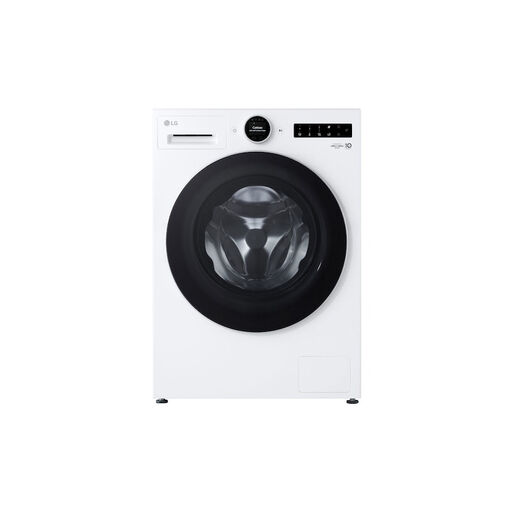 Image unavailable
This capacity is worth comparing if you often have large laundry loads. Before washing a duvet, check the permitted load for the relevant programme. Also measure the space where the machine will go and the clearance needed with the door open.
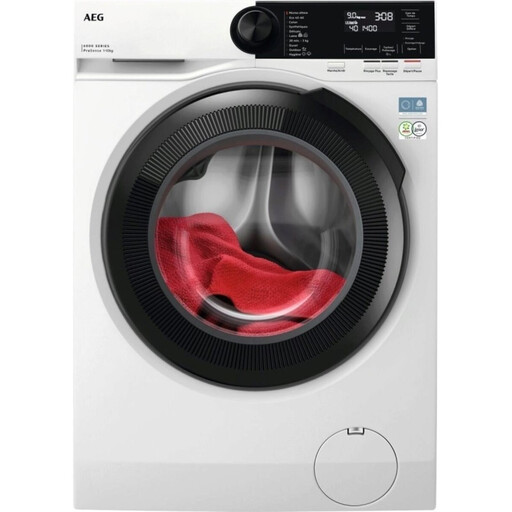 Image unavailable
Worth comparing if your baskets are often full. Before choosing it for bedding or duvets, check the instructions and maximum loads for the relevant programmes, as well as the space needed for installation.
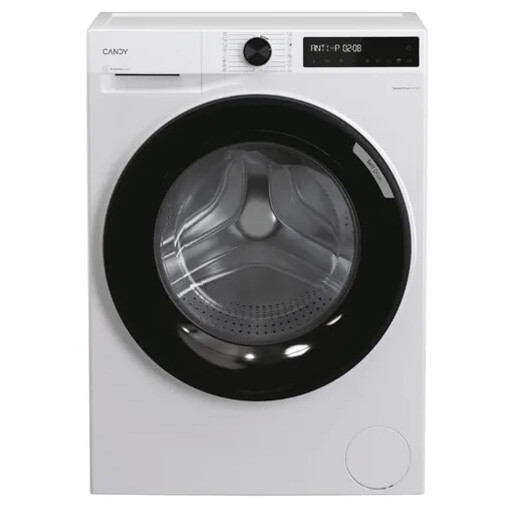 Image unavailable
Its stated capacity makes it worth considering for regular large loads. If you also wash smaller loads or bulky items, check the programmes and their load limits, along with the EPREL record for this model.
 Image unavailable
This capacity is worth considering if your baskets are often full. Check the manual to see which loads are permitted on the programmes you usually use, especially before washing a duvet.
No. Que Choisir explains that the stated capacity is the weight of dry laundry for the reference cotton or Eco 40-60 programme; other programmes may allow a smaller load. Check the manual for the model you’re considering, including guidance for your usual fabrics and duvets.
Compare the energy label with the EPREL record for the exact model, especially the Eco 40-60 cycle times at the stated load levels. Assess any advertised load-sensing function separately: its name alone doesn’t tell you how the model performs with a half load.
Measure the delivery access, the space for the machine and the clearance in front of the door. Then check the dimensions and clearances for the model you’ve chosen. For example, LG gives the F14R31WHSA 11 kg model’s depth as 565 mm, but 1,100 mm with the door open at 90°.
Before you buy, check how easy it is to access the filter, door seal and detergent drawer, then follow the model’s maintenance instructions. Electrolux also highlights the importance of positioning the machine correctly to limit vibrations and movement while it’s running.