What to prioritise when buying
Start by estimating the amount of dry laundry you accumulate, then check the limits of the programmes you actually use before comparing water consumption, energy use, noise and durability.
| Priority |
What to check |
Your needs |
| Usable capacity |
Compare the capacity in kg of dry laundry with the amount you usually accumulate. Also check the manual: cotton and Eco 40-60 do not necessarily accept the same load as synthetics, jeans, wool or delicates. |
I want to wait until I have a worthwhile load without needing to run extra cycles because the drum is too small, while also avoiding running an appliance regularly half empty. |
| Water, energy and duration |
Compare kWh per 100 cycles and litres per cycle on the same basis. Check the duration of the Eco 40-60 programme and distinguish it from quick or delicate programmes. |
I want to compare appliances consistently, while bearing in mind that my consumption will also depend on my programmes, temperature and number of cycles. |
| Spin noise |
Look at the sound level in dB and the noise class shown on the label. You should also ensure that the machine is installed level on a flat, hard floor. |
The machine may run while people are at home; I want to minimise vibrations and everyday noise. |
| Durability and documentation |
In France, compare the durability index and its criteria for the exact model. Also consult the installation, safety and maintenance documents. |
I want to assess the appliance on more than just its capacity and anticipate its usage and maintenance requirements. |
Washing machines available on Joybuy
Joybuy options covering standard capacities, a top-loading format and a larger capacity, helping you organise washing according to the amount of laundry you usually accumulate.
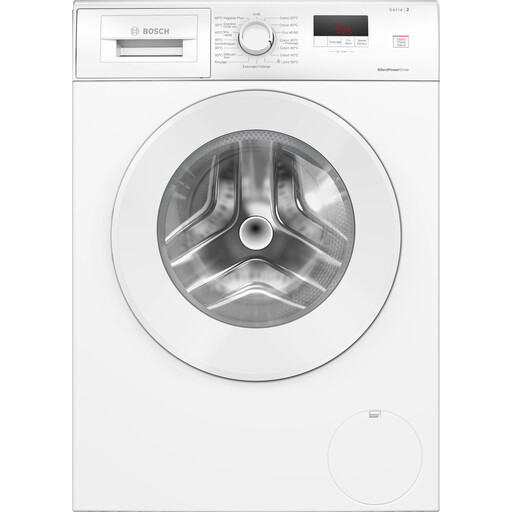 Image unavailable
Bosch WGE02407FR 7 kg front-loading washing machine, 1,400 rpm
Worth considering for medium-sized loads before moving up to a larger capacity.
Stated features include a 7 kg capacity, front loading, 1,400 rpm and energy class A.
Check the manual for the permitted loads for each programme, as well as the installation requirements for the exact model.
Joybuy
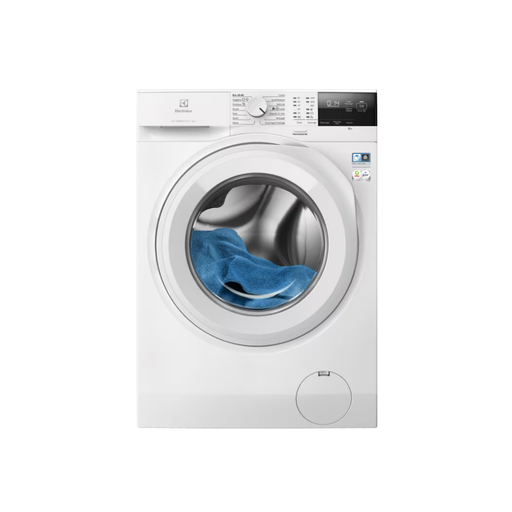 Image unavailable
Electrolux EW6FI4805AW 8 kg front-loading washing machine, 1,400 rpm
An option for a household that alternates between everyday loads and occasional small washes.
Stated features include an 8 kg capacity, front loading, 1,400 rpm, SensiCare and a Steam Hygiene programme.
The declared spin noise level is 75 dB; check the permitted loads for each programme and the model’s durability index before buying.
Joybuy
 Image unavailable
Haier T Series 7 THASN276TM6-S 7 kg top-loading washing machine
This top-loading format may suit you if loading from above and moderate everyday loads match your usual habits.
Stated features include a 7 kg capacity, 1,200 rpm, energy class A, an Inverter motor and Wi-Fi.
The declared spin noise level is 77 dB(A); check the load limits for each fabric and the durability index applicable to the model.
Joybuy
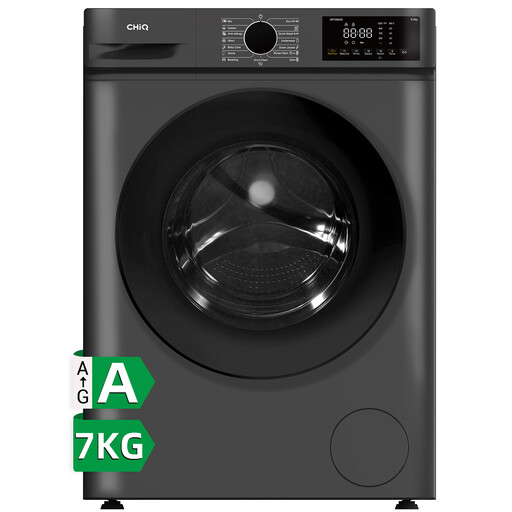 Image unavailable
CHiQ JW75883G 7 kg front-loading washing machine, 1,200 rpm
A standard capacity to consider for everyday loads before opting for an 8 or 9 kg drum.
Stated features include a 7 kg capacity, 1,200 rpm, energy class A, 16 programmes and Smart Wash.
Check the energy label, spin noise, durability index and maximum loads for each programme before comparing this model.
Joybuy
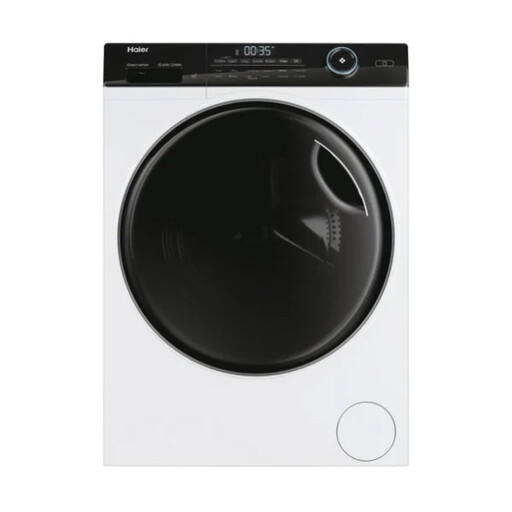 Image unavailable
Haier HW90-B14959U1 I-Pro Series 5, 9 kg
This larger capacity is better suited to regularly full baskets and frequent household linen loads.
Stated features include a 9 kg capacity, 1,400 rpm, energy class A, a Direct Motion motor and Wi-Fi.
The specification lists 49 kWh/100 cycles, 48 L/cycle and 70 dB(A) during spinning; also check the load limits for each programme and the model’s durability index.
Joybuy
Frequently asked questions
Can the stated kg capacity be used for every programme?
No. The stated capacity generally refers to the permitted dry laundry weight for cotton or Eco 40-60; UFC-Que Choisir states that synthetic, jeans and wool programmes usually have lower maximum loads. Check the load table in the manual before buying and before use.
Does a larger drum always save water and electricity?
No. A large drum can avoid additional loads when it is regularly filled, but an unsuitable capacity can lead to frequent half-load cycles. Choose according to the loads you actually accumulate and the fabrics you wash.
How can I read the energy label without misjudging household consumption?
Compare kWh per 100 cycles, litres per reference cycle, the duration of Eco 40-60, the class and spin dB levels between appliances. These measurements allow you to compare models; your consumption will also depend on the number of cycles, programme, temperature and load used.
Is the durability index compulsory for washing machines sold in France?
Yes. The DGCCRF states that, since 2025, front-loading and top-loading washing machines have been subject to durability-index display requirements in France. Compare the score out of 10 with the calculation criteria provided for the model concerned.
Which installation factors affect noise and vibrations?
Install the appliance level on a flat, hard floor, then adjust the feet according to the manual. Electrolux recommends this installation approach to help limit vibrations, noise and movement.


