Choose the capacity based on the weight of the dry laundry you usually wash. According to ADEME, 7 kg is enough for most households, but regularly washing larger loads may justify a bigger drum. Then choose between a front-loading and a top-loading machine based on the space needed to open it, and compare spin performance, noise levels and the stated energy and water use. A larger capacity or a claimed ability to adapt to the load does not guarantee fewer cycles or lower costs.
Who is this choice for?
Households with regularly full laundry baskets
You’re looking for a capacity that can handle your usual loads without needlessly splitting them across several cycles. How often you do laundry, how you sort it and whether you wash larger items all matter too. ADEME recommends choosing a capacity that meets your actual needs.
People with limited space
Choosing between a top-loading and a front-loading machine depends on the space available, the clearance needed to open it and access to the connections. UFC-Que Choisir’s buying guide describes top-loading models as narrower, but you should check their depth too.
Households sensitive to spin-cycle noise
If the machine will be near a living area, compare the stated spin-cycle noise levels of the models you’re considering. The European Commission displays this information on the energy label, while UFC-Que Choisir’s test results show that performance varies between models.
What to compare
When choosing a domestic washing machine in France, start with the factor that matters most to your household. ADEME advises choosing a capacity that meets your actual needs, rather than running extra cycles with an underfilled drum.
| What matters |
What to check |
Who it matters most to |
| Usable capacity |
Compare the weight of your usual loads with the load limits of the programmes you use most often. |
If you want to combine your usual laundry without choosing a drum that’s too large for your baskets, around 29% of consumers put usable capacity at the top of their list. |
| Size and access |
Check the dimensions, delivery access and the space needed in front of the door or above the lid. |
If the machine needs to fit into a tight space and remain accessible once installed, around 23% of consumers prioritise its size and access to the drum. |
| Spin-cycle noise |
Compare the stated noise level during the spin cycle with the machine’s planned location. |
If your washing machine is near a living area, you may prefer a model with a stated noise level that suits the location. Around 18% of consumers put noise levels first. |
| Spin performance and drying |
Check the spin-drying efficiency class and maximum spin speed, taking into account the programmes and loads concerned. |
If you want your laundry to come out less damp before drying it, around 18% of consumers prioritise spin performance. |
| Energy and water use and running costs |
Compare the kWh per 100 cycles and litres per cycle for the reference programme, then consider how you use your machine. |
If you want to compare the stated consumption with the cost of buying the machine, around 12% of consumers make this their top priority. |
Pitfalls to avoid
-
Automatically choosing the largest capacity to cut down on laundry loads
A higher rated capacity doesn’t necessarily mean you can wash textiles together if they need to be sorted. Maximum load sizes may also be lower for programmes other than the reference programme.
Assess several real loads of dry laundry and check the limits of the programmes you use most often. ADEME recommends matching capacity to your actual needs.
-
Confusing a narrow machine with a small footprint
A top-loading washing machine may be narrow without being shallow. Its lid also needs clearance above the machine.
Measure the width, depth, available height and delivery access for the model you’ve chosen. Then check there’s enough room to open it and reach the connections.
If there isn’t enough space to open the lid or access the connections, you may need to rethink your planned installation.
-
Comparing an old energy rating with the current scale
Older ratings such as A+++ can’t be compared directly with the current A to G scale.
Compare current labels and their figures on the same basis. The European Commission states that the current scale for washing machines has been in use since 1 March 2021.
Brands to consider for your needs
Bosch
The WAN2827FFR is an example of an 8 kg front-loading washing machine to consider if this capacity suits your laundry baskets.
- Bosch’s product information lists a maximum spin speed of 1 400 rpm and dimensions of 845 × 598 × 590 mm for this model.
- Bosch notes that the maximum spin speed may be reduced if the load is unbalanced.
Whirlpool
The TDLR 62667 FR is an example of a 6 kg top-loading washing machine to consider if you’re looking for a narrower model.
- Whirlpool France’s product information lists dimensions of 40 × 90 × 60 cm for this model.
- The same product information lists a noise level of 79 dB. Check the stated noise level and the clearance needed for the lid on the model you’re considering.
Electrolux
The PerfectCare 600 EW6T3465DA is another 6 kg top-loading model to compare for its dimensions and stated consumption.
- Electrolux lists dimensions of 890 × 400 × 600 mm, 42 kWh per 100 cycles and 43 L per cycle for this model.
- Electrolux says SensiCare adjusts the cycle duration to the load. This doesn’t mean a larger capacity will suit every laundry load.
Samsung
The Ecobubble range includes 8 kg front-loading models to consider if this capacity and the chosen model’s dimensions suit the way you do laundry.
- The Samsung France page consulted features an 8 kg Ecobubble washing machine.
- Samsung’s claims about cold-wash results are based on comparisons and conditions specified by the brand. Check the exact model’s specifications before applying them to your loads.
Washing machines available on Joybuy
This selection features front-loading washing machines with different stated capacities, so you can compare them with the size of your usual laundry loads.
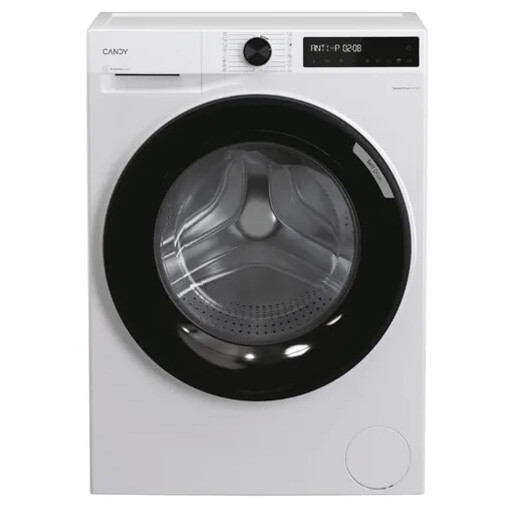 Image unavailable
Candy BR 411BL9-S, 11 kg
If you regularly wash large loads, compare its stated capacity with the size of your actual laundry baskets.
Stated capacity: 11 kg; stated energy class: A.
View on Joybuy
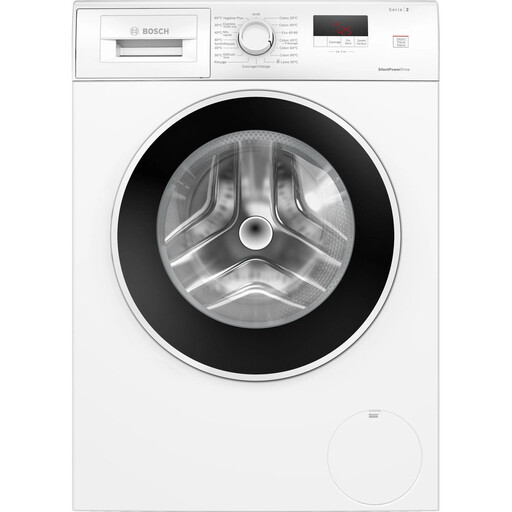 Image unavailable
Bosch WGE02409FR, 7 kg
If your usual loads are close to this stated capacity, compare the weight of your laundry baskets with the programmes you use.
Stated capacity: 7 kg.
View on Joybuy
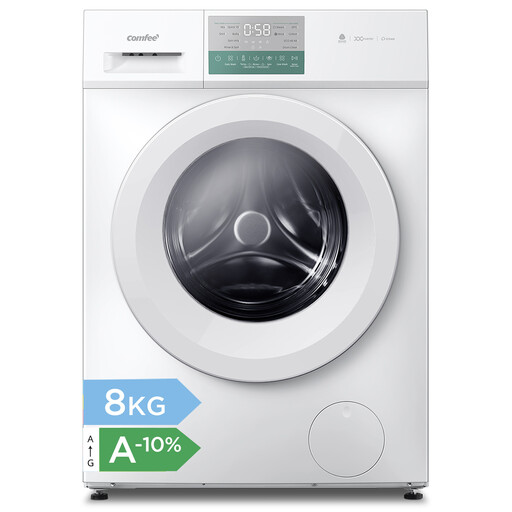 Image unavailable
Comfee CFP03EW80W-HR, 8 kg
Compare this stated capacity with your usual loads and the textiles you wash separately.
Stated capacity: 8 kg; stated energy class: A-10 %.
View on Joybuy
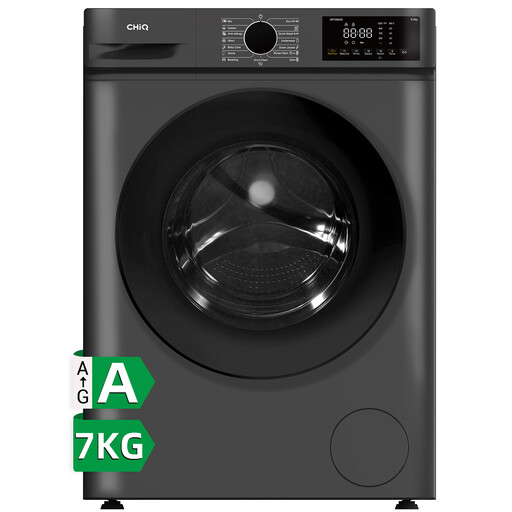 Image unavailable
CHiQ JW75883G
If you’re looking for a front-loading model, check the capacity of the version on offer and compare it with your usual loads.
Model listed: JW75883G.
View on Joybuy
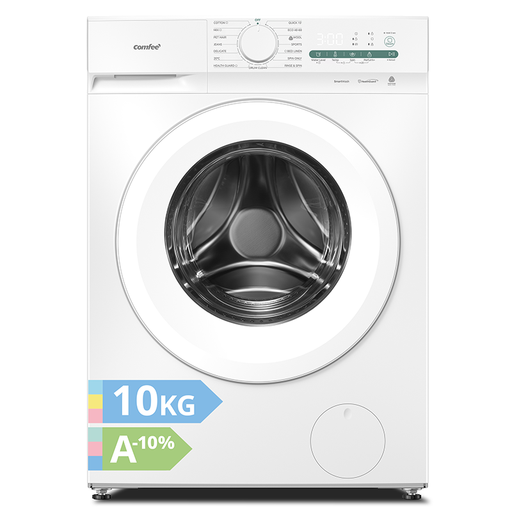 Image unavailable
Comfee CF10EWP05W-HR, 10 kg
If you regularly wash large loads, compare this stated capacity with the amount of laundry you actually combine.
Stated capacity: 10 kg; the product title mentions a pet hair programme and 16 programmes.
View on Joybuy
Frequently asked questions
Will an 8 kg washing machine wash 8 kg on every programme?
No. Maximum load sizes may be lower for programmes such as those for synthetics or wool. Check the manual for the textiles you wash regularly, as the rated capacity may not apply to every programme.
What should you measure before a washing machine is delivered?
Measure the machine, its intended space and the delivery route. Allow room to open the door or lid and access the connections. Electrolux’s pre-installation guide states that its installation service doesn’t include carpentry, plumbing or electrical work, so check what’s covered by the service you choose.
How do you compare the consumption figures on the label?
Compare the kWh per 100 cycles and litres per cycle based on the Eco 40-60 programme. The European Commission lists these reference figures. Your actual consumption will depend, among other things, on the programmes and loads you use.
What consumer rights and regulatory information should you check in France?
When you buy from a professional retailer, the statutory legal guarantee of conformity covers faults within its scope. It’s separate from a commercial extended warranty, as the French Ministry of the Economy explains. The durability index has applied to top-loading and front-loading washing machines since 8 April 2025. For comparing consumption, the current European energy label has used the A to G scale since 1 March 2021.


