Households with regularly full laundry baskets
Your everyday laundry loads are often large enough to fill a big drum. The key is to choose a capacity you’ll actually use from one wash to the next.


If your large loads regularly fill the drum, it’s worth considering a capacity of 10 to 12 kg. This is the range recommended by UFC-Que Choisir when you do laundry frequently. If you usually sort your washing into smaller loads, compare standard-capacity models and how they handle partial loads instead. A very large drum is more worthwhile if you regularly wash bulky items.
Your everyday laundry loads are often large enough to fill a big drum. The key is to choose a capacity you’ll actually use from one wash to the next.
Bedding, throws or duvets regularly feature in your laundry. Check the load limit for the programme designed for these fabrics, rather than relying on the stated capacity alone.
You often sort laundry by fabric or colour, which means running smaller loads. A more modest capacity may be a better fit for the way you usually load your machine.
Start with the size of your usual loads, then check what each programme can handle and compare the consumption figures for the models you’re considering.
| Criteria | What to check | What I need |
|---|---|---|
| Usual load size | Think about how often your loads nearly fill the drum. UFC-Que Choisir lists capacities of 10 to 12 kg as worthwhile options if you do laundry frequently; very large capacities are mainly useful for regularly washing bulky items. | Are my laundry baskets regularly full, or do I only wash large items now and then? In the latter case, I could look at an additional option for occasional washes. |
| Load capacity by programme | Check the maximum load for the programmes you use. UFC-Que Choisir explains that the stated capacity refers to dry laundry on the cotton or Eco 40-60 programme; it doesn’t automatically apply to other cycles. | I often wash sorted or delicate items, so the stated kilogram capacity should match the programmes I actually use. |
| Consumption and cycle length | For capacities that suit your needs, compare energy use per 100 cycles, water per cycle and the Eco 40-60 programme duration shown on the European energy label. Also check the information available on partial loads. | If my loads rarely fill the drum, I want to compare models without assuming that a larger capacity will reduce my consumption. |
| Noise and frequent use | Check the spin noise level on the label. For the specific model, look at programme durations and, where available, independent tests covering washing, rinsing and spinning. | I run several cycles in a row, so programme duration and spin noise matter just as much as drum size. |
| Installation | Check the appliance dimensions and the space needed for installation before making your choice. | I want to be sure I can install the model I choose, rather than relying on its kilogram capacity alone. |
A machine advertised as 10 kg may not be able to take that load on a wool or delicate cycle. You could end up overestimating how many washes you’ll avoid.
Compare the model’s programme-by-programme load table with the items you wash most often.
If you only wash these items occasionally, the machine may often be underfilled for everyday laundry. UFC-Que Choisir recommends reserving very large capacities for regular bulky loads.
Choose a machine to suit most of your loads first, then look at local options for washing large items occasionally.
The energy rating letter doesn’t tell you how much water a cycle uses, how long the Eco 40-60 programme takes or how noisy the spin cycle is.
Check these figures on the European energy label and compare capacities that suit the way you usually load your machine.
These 10 kg models are worth considering if you need a larger capacity for frequent, substantial loads. Before choosing a machine for duvets or sorted loads, check the limits of the programmes you usually use.
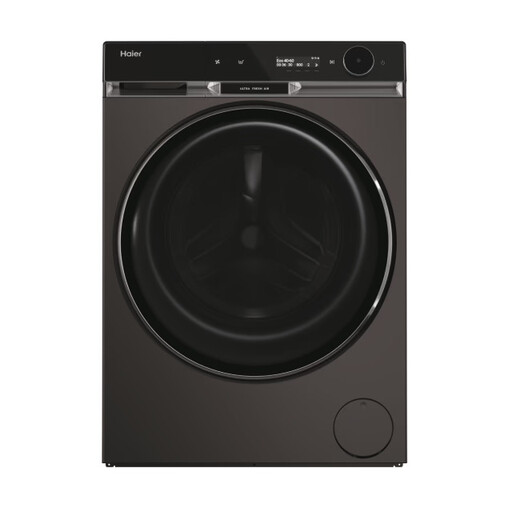 Image unavailable
Worth considering if you regularly wash large loads. The model name indicates 1 400 rpm, an A rating, AutoDose and Wi-Fi. Check the load limits for the programmes you usually use, along with the figures for partial loads.
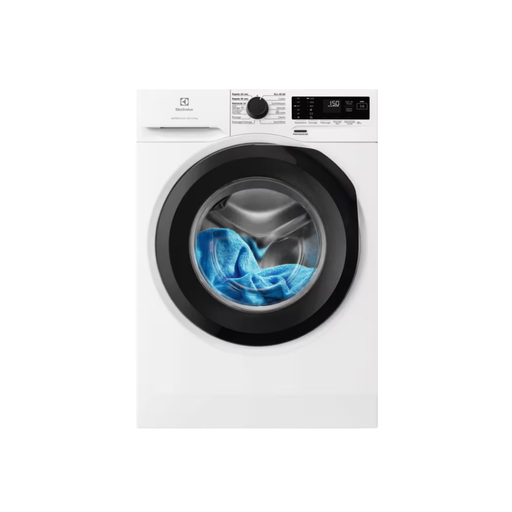 Image unavailable
Its stated capacity makes it worth considering for frequent large loads, and the model name also mentions TimeSave. Compare the load limits for each programme, the Eco 40-60 duration and the consumption figures for the types of laundry you wash.
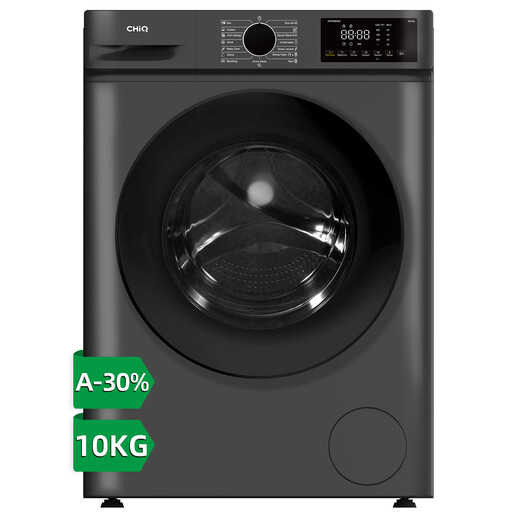 Image unavailable
The model name lists 16 programmes and a 1 400 rpm spin, making it a versatile option for different types of laundry. If you plan to wash duvets, check the load limit for the relevant programme. Also check the dimensions and energy label figures.
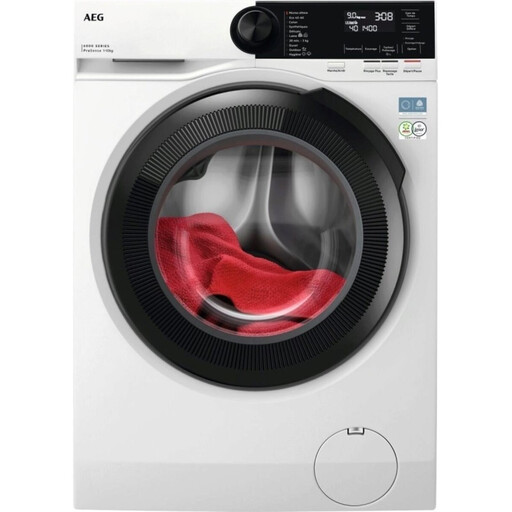 Image unavailable
Its stated capacity may suit households that regularly wash large loads. The model name indicates 1 400 rpm and an A rating. To compare this model with others, check the load limits for each programme, along with energy use, water consumption and the Eco 40-60 duration.
No. According to UFC-Que Choisir, the stated capacity refers to the weight of dry laundry on the cotton or Eco 40-60 programme; other programmes may have a lower load limit. Check the model’s table for the items you usually wash.
Mainly if you regularly wash thick duvets, throws or other bulky items. For the occasional large wash, choose a capacity that suits your everyday laundry first, then consider an additional option for larger items.
Start by working out which capacity suits your usual loads. Then compare energy use per 100 cycles, water per cycle, the Eco 40-60 duration and spin noise. The European Commission says these details appear on washing machine energy labels.
No. UFC-Que Choisir points out that a large drum that’s often underfilled can use more water and electricity than necessary. How often you actually wash large loads matters just as much as the stated capacity.