Who is this choice for?

Households that do load after load

If everyday laundry means you need to run cycles close together, compare the capacity with the loads you usually build up. Que Choisir suggests considering a larger capacity if you regularly wash load after load, without choosing a drum that would often be only partly full.

Households that often wash sheets and throws

If you regularly wash large items at home, check that there is enough room for them to move around and look at the load limit for the programme you plan to use. Que Choisir points out that the stated capacity does not apply equally to all fabrics.

Households with occasional extra-large items

If a duvet is the main reason you are considering a larger drum, weigh up how often you would use it against the option of using a suitable laundry service. You can then choose a household machine sized for the laundry you wash most often.

What should you consider first?

Capacity suited to everyday laundry

Worth considering: you do laundry regularly, but very large items are rare. Que Choisir puts the typical need for a household of three to four people at around 8 to 9 kg.

Limitation: a duvet or a particularly large load may exceed the limit for the relevant programme.

Large capacity

Worth considering: you do load after load and regularly wash large loads; in this case, 10 to 12 kg may be a good fit.

Limitation: a drum that is often half full will not automatically use less energy, as ADEME points out.

Occasional washing away from home

Worth considering: only a few occasional items would justify buying a machine much larger than you need for everyday use.

Drawback: you will need to arrange transport and organise washing them separately.

What matters What to check Who it matters to
Number of cycles Compare the capacity in kg with your usual loads and check that there is room in the drum for the laundry to move around. When everyday laundry builds up quickly, I want to cut down on extra loads without leaving a large drum nearly empty. Around 42% of consumers would put this first.
Regular large loads Check the load limits for the programmes you use for your fabrics, and measure the space available for the machine. If I often wash sheets and throws at home, I need them to fit in the drum without restricting movement. This would be the priority for around 33% of consumers.
Occasional extra-large items Consider how often you really wash them and whether there is a suitable laundry service nearby. If I only wash a duvet occasionally, I would rather look at another option than size all my washing around it. Around 25% of consumers would prioritise this question.

Mistakes to avoid

  • Choosing a large drum without enough regular laundry to fill it

    A higher capacity does not automatically mean lower energy use. ADEME says that a half load can use as much electricity as a full load.

    Keep track of the size of your everyday loads and how often you wash larger items for a few weeks before deciding between 8–9 kg and 10–12 kg.

  • Assuming the stated capacity applies to every programme

    Load limits vary depending on the fabric and programme. For a machine rated at 8 kg, Que Choisir gives lower limits for some synthetic, denim and wool programmes.

    Check the manual for the permitted load on the programmes you plan to use, especially before relying on the machine to wash a large item.

  • Measuring only the space where the machine will go

    Machines with similar capacities can have different depths. The appliance also needs to fit through doors, corridors and lifts on the way to its installation spot.

    Check the dimensions of the model you have chosen, the required clearance and the delivery route, including with the packaging on.

  • Comparing energy ratings alone

    The rating does not tell you everything about the stated consumption for the Eco 40-60 programme, water use per cycle, cycle duration, noise or whether the capacity suits your loads.

    Compare these details on the label and product information sheet for each model, then check the durability index that applies in France.

Brands to consider, model by model

Bosch

Worth considering if you are looking for a 10 kg front-loading model. Compare the specific model rather than the range as a whole.

  • Bosch lists the WAX32LH2FF as having a 10 kg capacity and measuring 848 × 598 × 590 mm.
  • Check the programmes, their load limits and the energy label for the WAX32LH2FF before deciding whether it suits your fabrics.

Samsung

An option to consider if you are comparing 11 kg front-loading machines and need to check the available depth carefully.

  • Samsung lists the WW11BGA046AEEF as having an 11 kg capacity and a depth of 600 mm.
  • These dimensions do not remove the need to check clearances, the delivery route and the permitted loads for each programme.

Electrolux

Worth considering if you are looking at a 10 kg model whose energy use and dimensions can be compared with other models.

  • Electrolux lists the EW6FI5120WA as having a 10 kg capacity, a depth of 658 mm, using 51 kWh per 100 cycles and 52 L per cycle.
  • These figures are for the EW6FI5120WA. Check the programme conditions and available space before comparing it with another model.

Large-capacity washing machines on Joybuy

These 10 or 11 kg models are options to consider if you regularly wash large household loads. For sheets, throws or duvets, always check the load limit for the suitable programme; the stated capacity alone is not enough to make a decision.
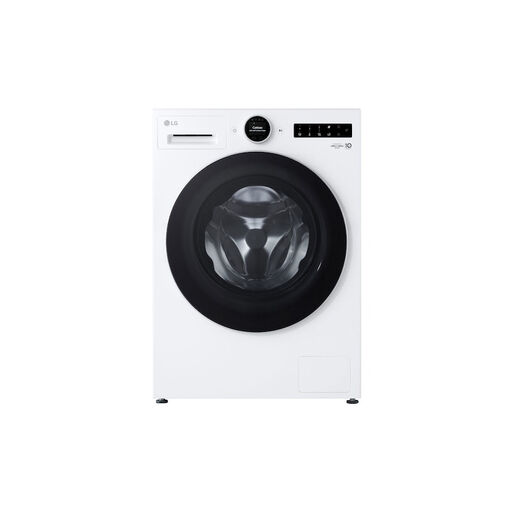
LG F4WX851Y 11 kg front-loading washing machine, white

LG F4WX851Y, 11 kg front-loading washing machine

Its stated 11 kg capacity is worth considering if your everyday laundry loads are regularly large.

This model is listed in energy class A. If you plan to wash a duvet, check the permitted load for the relevant programme; also measure the space and delivery route.

View on Joybuy

Haier X Series 11 HW100-BD14397PGU1 washing machine, 10 kg

Haier X Series 11 HW100-BD14397PGU1, 10 kg

Its stated 10 kg capacity may suit a household that regularly builds up large laundry loads.

The model name indicates 1,400 rpm and energy class A. If you are considering it for duvets, check the programme load limits in the manual and make sure the delivery route is suitable.

View on Joybuy
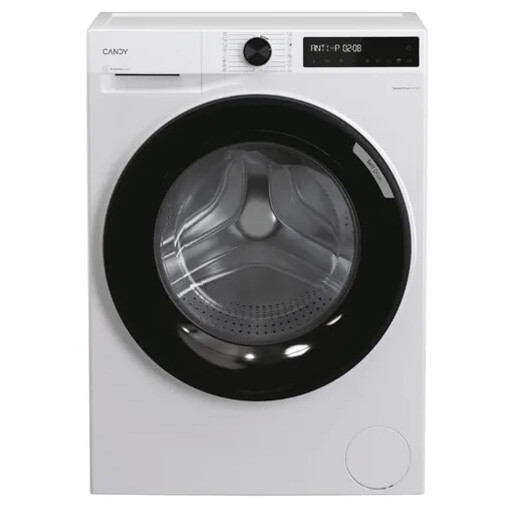
Candy BR 411BL9-S 11 kg front-loading washing machine, white

Candy BR 411BL9-S, 11 kg front-loading washing machine

This 11 kg capacity is worth comparing with the size of the loads your household usually washes.

This model is listed in energy class A. Check the programmes and their load limits before washing a large item, and make sure there is enough space and access for its stated depth of 68.1 cm.

View on Joybuy

Electrolux EWF1410N2 10 kg front-loading washing machine

Electrolux EWF1410N2, 10 kg front-loading washing machine

Its stated 10 kg capacity is worth considering if your household regularly fills a large washing machine.

If you plan to wash duvets, check the manual rather than relying on the stated capacity alone. Its listed depth of 658 mm should also be checked against the available space and delivery route.

View on Joybuy
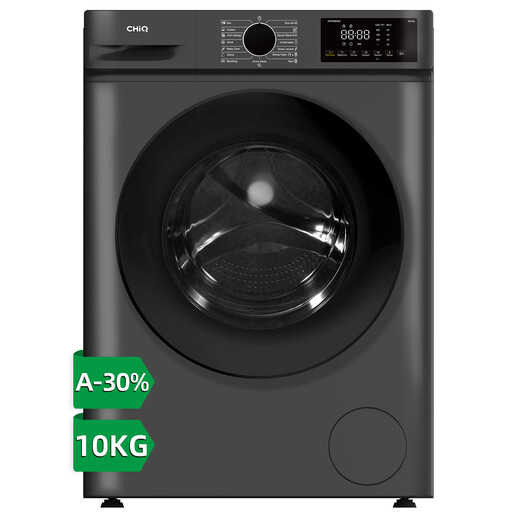
CHiQ JW105883G 10 kg front-loading washing machine, dark grey

CHiQ JW105883G, 10 kg front-loading washing machine

Its stated 10 kg capacity makes it worth considering for large everyday laundry loads.

The model name indicates 1,400 rpm and 16 programmes. Before planning to wash a duvet, check the programme and its load limit; also check the dimensions for installation.

View on Joybuy

Frequently asked questions

Does the stated capacity in kg apply to every programme?

No. It does not automatically apply to synthetic, denim or wool programmes. Que Choisir notes that the load limits for these fabrics are lower than the stated capacity; check the model’s manual and the programme you plan to use.

What should I compare on the labels of two washing machines?

Compare the energy rating, consumption per 100 cycles, water use per cycle, Eco 40-60 programme duration, noise level and capacity. These details are more useful when both machines are suited to the loads you usually wash.

Does the Eco 40-60 programme replace other programmes?

No. Under the European framework described by EUR-Lex, it is for normally soiled cotton declared suitable for washing at 40 °C or 60 °C in the same cycle. Check which programme is suitable for delicate or synthetic fabrics.

What is the purpose of a washing machine’s durability index in France?

It provides another point of comparison alongside the energy label. According to the French Ministry for Ecological Transition, the durability index for washing machines has been gradually replacing the repairability index since 2025. Check the index for the model you are considering, as well as its repair options.

What should I measure before delivery of a 10 or 11 kg washing machine?

Measure the space where the machine will go and the entire delivery route, including doors, corridors and lifts. Check the model’s dimensions, required clearances and the space needed with the packaging on: capacity in kg alone does not tell you how much room it will take up.