Which households are these options suited to ?
The right capacity depends more on the make-up of your usual laundry loads than on the number of people in your household alone.
Households with regularly large loads
If sheets, towels and everyday clothes often fill the drum, compare capacities suited to those loads. UFC-Que Choisir says that 8 to 9 kg is generally enough for a household of three to four people. If you regularly wash large loads one after another, it may be worth looking at 10 to 12 kg models.
Households that sort their laundry often
If you regularly separate synthetics, wool or delicate fabrics, a high kilogram figure doesn’t guarantee that every programme can take the same amount of laundry. Compare the load limits for the programmes you actually use.
Households with installation constraints
Measure the available space and check access to the drum. A top-loading machine may suit you if you’d rather not bend down; a washer-dryer combines washing and drying in one appliance, but it may not be able to dry a full wash load in one go.
What should you check before choosing ?
Front-loading
Consider it if : you have enough clearance for the door to open and your usual loads justify the capacity.
Bear in mind : a large capacity only helps you avoid extra cycles if you regularly have enough laundry to combine into a load.
Top-loading
Consider it if : top access or being able to load the machine without bending down matters more to you than having a very large capacity.
Bear in mind : according to UFC-Que Choisir’s review, top-loading models have a maximum capacity of 8 kg. Check that this is enough for your household laundry loads.
Washer-dryer
Consider it if : you need one appliance to handle both washing and drying.
Bear in mind : UFC-Que Choisir points out that drying capacity is lower than washing capacity. You may need to split a full wash load before drying it.
Once you’ve chosen an appliance type, compare its programmes and usage figures with the loads you wash most often.
| Criteria | What to check | What I need |
|---|
| Usable capacity |
Compare your usual loads with the capacity in kg of dry laundry. Also check the limits for synthetic, wool and delicate programmes: UFC-Que Choisir says the stated capacity usually applies to the cotton programme. |
Are my laundry baskets often full enough to justify a large drum, or does sorting my fabrics mean I mostly run small loads ? |
| Cycles and consumption |
For similar appliances, compare the energy rating, energy use per 100 cycles, water use per cycle and the duration of the programme shown. For a washer-dryer, check washing-only and wash-and-dry figures separately. |
If I do several loads in a row, I want to know the figures for the cycles I’ll use, not just the stated capacity. |
| Installation and access |
Measure the space, the clearance needed to open the door and access to the drum. Check the dimensions of the exact model before choosing between a front- and top-loading machine. |
I need to be able to open and load the appliance without blocking the walkway or getting in the way of nearby furniture. |
| Rinsing, spinning and noise |
Check the available data and test results for rinsing and spinning for the specific model, as well as its noise level during the spin cycle and the duration of the programmes you’re interested in. |
The machine may run near rooms that are in use, so noise and waiting time matter when I’m choosing. |
| Durability |
For a washing machine sold in France, check the durability index for the model in question. According to the French Ministry for Ecological Transition, the durability index has been gradually replacing the repairability index for washing machines since 8 April 2025. |
I also want to compare the durability of appliances I’ll use regularly. |
Which brands should you compare ?
These brand references relate to specific models mentioned by UFC-Que Choisir, not the performance of their entire ranges.
Bosch
In March 2026, UFC-Que Choisir reported adding two Bosch front-loading washing machines, with capacities of 7 to 8 kg and a spin speed of 1 200 rpm, to its assessment.
- These capacities are worth considering if they suit your usual loads.
- The inclusion of these models in an assessment doesn’t tell you how another Bosch washing machine will perform: compare the exact model.
Miele
In March 2026, UFC-Que Choisir reported adding the Miele WCA132WCS and WED385 WCS front-loading washing machines to its assessment.
- These models are worth including in a comparison of front-loading machines if their capacity and programmes suit your laundry needs.
- Their inclusion doesn’t show that another Miele model will suit your loads or outperform a competitor’s appliance.
Washing machines to explore on Joybuy
These options offer three ways to manage your household laundry: front-loading models for regular loads, top-loading models and an appliance that combines washing and drying. Compare each capacity with the programmes and loads you’ll use.
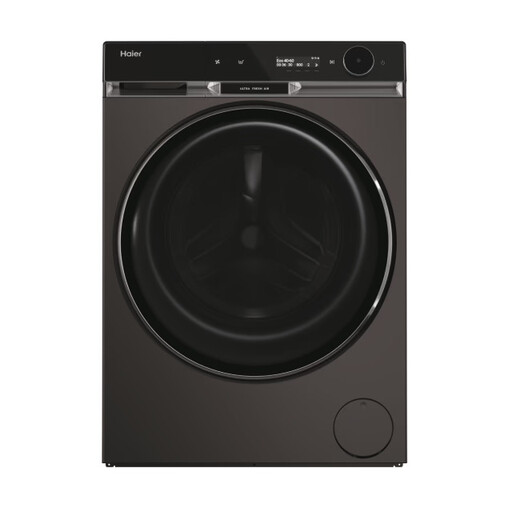 Image unavailable
Haier X Series 11 HW100-BD14397PGU1, 10 kg front-loading
Worth considering if your laundry baskets are regularly full: check that the programmes you use can take the loads you want to combine. The model name lists 1 400 rpm, an A rating, AutoDose and Wi-Fi. Compare the cycle data and durability index for the exact model.
View on Joybuy
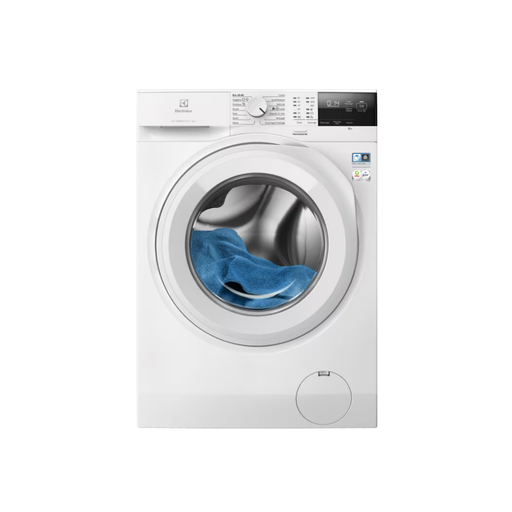 Image unavailable
Electrolux EW6FI4805AW, 8 kg front-loading
A capacity to compare with your regular loads if a larger drum would often be only partly full. The model name lists 1 400 rpm and SensiCare and Steam Hygiene features. Check the load limits for your usual programmes rather than assuming that the 8 kg capacity applies to them all.
View on Joybuy
 Image unavailable
Haier T Series 7 THASN276TM6-S, 7 kg top-loading
Consider this model if you prefer loading laundry from the top and 7 kg suits your usual loads. The model name lists 1 200 rpm, an A rating and Wi-Fi. Check the dimensions for your installation and the load limits for programmes suited to your fabrics.
View on Joybuy
 Image unavailable
Candy TCA464TM4-S ProWash 500, 6 kg top-loading
Worth comparing if your loads are moderate and a top-loading design suits you; if you often have large loads, you may need to run several cycles. The model name lists 1 400 rpm, a B rating and 17 programmes. Check the load limits for the programmes you’ll use.
View on Joybuy
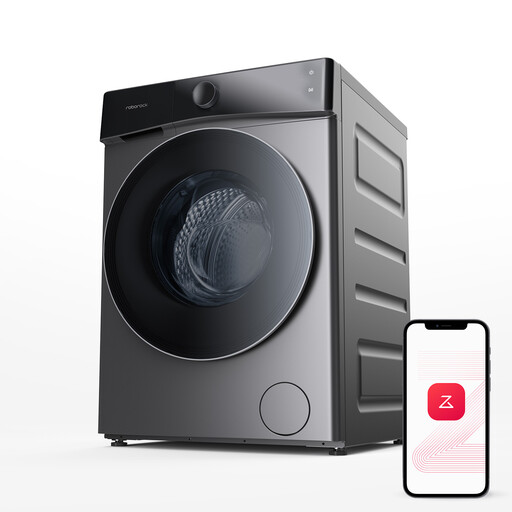 Image unavailable
Grey Roborock Zeo Lite, 10 kg washing and 6 kg drying capacity
Worth considering if you need one appliance to wash and dry your laundry. The stated capacities mean that a 10 kg wash load can’t be dried in one go at the stated 6 kg drying capacity. The model name lists 27 wash programmes. Compare the figures for wash-only and wash-and-dry cycles, as well as the dimensions needed for installation.
View on Joybuy
Frequently asked questions
Does an 8 or 9 kg capacity apply to every programme ?
No: according to UFC-Que Choisir, the stated capacity usually applies to the cotton programme, while other programmes take less laundry. Before relying on the machine’s full stated capacity, check the manual for synthetic, wool and other fabrics you wash often.
What should you compare on the energy label ?
Start by comparing appliances of the same type and with a capacity suited to your household. According to the European Commission, the EU energy label for washing machines and washer-dryers uses a scale from A to G. Also check the energy, water, duration and noise figures for the cycles listed, and compare washing-only and wash-and-dry figures separately for a two-in-one appliance.
How can you use the durability index when choosing in France ?
Check the index shown for each model you’re comparing; don’t try to infer it from the brand or capacity. According to the French Ministry for Ecological Transition, the durability index has been gradually replacing the repairability index for washing machines since 8 April 2025.
Can a washer-dryer dry a full wash load ?
Not necessarily: UFC-Que Choisir points out that drying capacity is lower than washing capacity. If your wash load exceeds the model’s drying limit, plan to remove some laundry and compare the figures for the full cycle before choosing this option.


