What should you look for?
If you do laundry frequently, start with the size of your usual loads rather than the number of people in your household. Que Choisir points out that a large capacity which is rarely used to the full may not be suitable for smaller loads.
| What matters | What to check | Who is it for? |
|---|
| Regularly washing large loads |
Capacity in kg of dry laundry, and the load limit for the programmes you use for bedding or duvets. |
If your laundry baskets are often full, avoiding extra wash cycles becomes a priority; around 46% of consumers put capacity for large loads at the top of their list. |
| Frequent small loads |
Whether the specific model has load detection or automatic water-level adjustment; consumption figures for the programmes you use. |
If sorting laundry regularly leaves me with small loads, I want a machine that can handle these too; around 36% of consumers prioritise this flexibility for both small and large loads. |
| Installation and everyday use |
Depth and door clearance; kWh per 100 cycles, litres per cycle and noise levels shown on the energy label. |
A large capacity won’t help if the appliance blocks access or doesn’t suit my needs; around 18% of consumers give priority to installation and consumption figures. |
10 kg washing machines on Joybuy
These 10 kg front-loading models are suited to households that regularly wash large loads. If you also wash smaller loads, check the features and consumption figures for the specific model you’re interested in.
 Image unavailable
Haier X Series 11 HW100-BD14397PGU1, 10 kg
Worth considering if you regularly wash large loads and are interested in automatic dosing. The product name lists a 10 kg capacity, 1,400 rpm, an A energy rating and AutoDose. Check the consumption figures for the programmes you use and make sure you have enough space for installation.
View on Joybuy
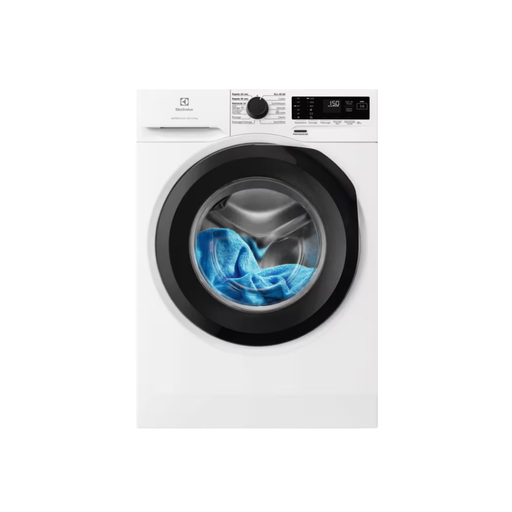 Image unavailable
Electrolux EWF1410N2, 10 kg
One to consider if your laundry baskets are regularly full. The product name lists a front-loading design, a 10 kg capacity, plus Steam and TimeSave features. Check the model’s product page for its dimensions and the features that matter for smaller loads.
View on Joybuy
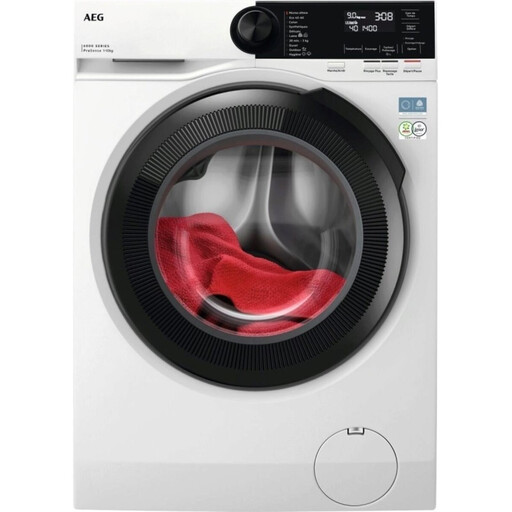 Image unavailable
AEG LFR62E114S, 10 kg
An option to consider if capacity for large loads is your priority. The product name lists a 10 kg freestanding front-loading model, 1,400 rpm and an A energy rating. Check its dimensions and the figures on the energy label before choosing this model.
View on Joybuy
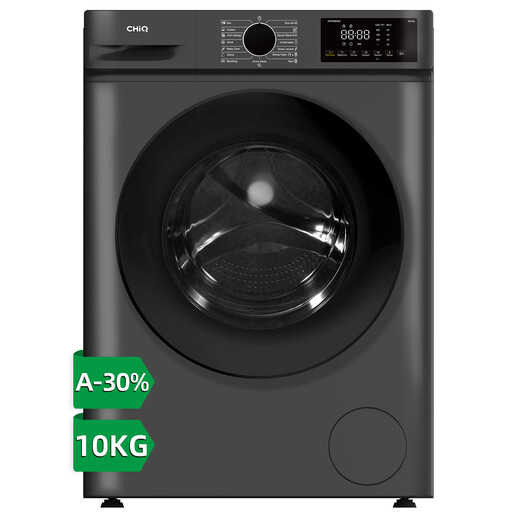 Image unavailable
CHiQ JW105883G, 10 kg
Worth considering if you regularly wash bulky loads. The product name lists a 10 kg capacity, 1,400 rpm, 16 programmes and a steam function. Compare the figures on the energy label rather than assuming the promotional claim linked to its rating means it will save energy.
View on Joybuy
Frequently asked questions
Can a 10 kg washing machine take 10 kg in every programme?
No. The rated capacity is the maximum weight of dry laundry for the specified programme. The permitted load may be lower for wool, synthetics or delicate fabrics. Check the programme table in the model’s manual.
Which figures should you compare if you do laundry frequently?
Compare the kWh per 100 cycles, litres per cycle, Eco 40-60 programme duration, spin performance and noise levels shown on the energy label. ADEME recommends looking at these figures, not just the capacity.
What should you measure before installing a family washing machine?
Measure the available width, height and depth, then check access to the space, the connections and the room needed to open the door. Check the depth on the product page for the specific model.
What is a washing machine’s durability index for in France?
It gives you an additional way to compare repairability and reliability, but doesn’t replace checking the model’s specifications. According to ADEME, displaying the index has been compulsory for the washing machines covered by the rules in France since April 2025. Compare the displayed scores when looking at several appliances.


