Start by choosing a capacity that matches the loads you actually wash, rather than the largest drum available. According to ADEME, 7 kg is enough in most cases, although this isn’t a rule for every household. Then compare electricity, water and cycle duration on the same basis: the Eco 40-60 programme. Check that its load limits and duration suit your routine, too. The figures on the energy label don’t automatically reflect quick or intensive cycles.
Who are these criteria useful for?
Households that often run small loads
If you rarely have enough washing to fill the drum, choose a capacity that matches your usual load sizes and how often you want to do a wash. The load limit also depends on the fabric and programme, as France’s National Consumer Institute points out.
Shoppers comparing water and electricity use
If you want to reduce resource use, the energy label lets you compare figures measured using a reference programme. Check the quick and intensive programmes you plan to use separately.
Households mindful of cycle time, noise and maintenance
A cycle that doesn’t fit your schedule, noise during the spin cycle or how easy it is to access the filter can all affect your choice. In its reader survey, UFC-Que Choisir reports more mixed opinions on these points.
What should you check before buying?
Start with the weight of your dry laundry and the fabrics you wash most often. Then compare energy and water use on the Eco 40-60 programme, while keeping cycle duration and practical considerations in mind.
| Criteria |
What to check |
Who it matters to |
| Usable capacity |
Compare your usual loads with the machine’s capacity in kg, then check the load limits for each programme in the instruction manual. |
When the drum is often half full, I want to avoid waiting longer or splitting larger loads. Around 40% of consumers would make getting the right capacity their top priority. |
| Water and electricity |
Using the same Eco 40-60 basis, check the kWh per 100 cycles and litres per cycle shown on the energy label. |
If I regularly wash cotton that’s suitable for the Eco 40-60 programme, I want to compare water and electricity use without confusing this cycle with a quick programme. This would be a priority for around 40% of consumers. |
| Cycle time, noise and maintenance |
Check the Eco programme duration, spin noise level and instructions for accessing the filter for the specific model. |
When I need to fit washing into a specific time slot, or the machine is close to a living area, I don’t want to overlook cycle time and noise. Around 20% of consumers would put these practical considerations first. |
Mistakes to avoid
-
Choosing the largest capacity without considering your loads
A large drum won’t reduce small loads if you rarely have enough suitable laundry to fill it. According to France’s National Consumer Institute, the stated capacity is based on dry cotton; for synthetics, you should allow for around half that load.
Keep an eye on your loads for a few weeks, then check the limits for each programme in the instruction manual. The 7 kg figure suggested by ADEME is a general guide, not a capacity that every household needs.
-
Assuming Eco programme figures apply to every cycle
The energy label’s consumption figures are based on a defined comparison programme. They don’t predict the use of a quick or intensive wash.
Compare machines using the same reference programme, then check the programmes you’ll actually use, along with their duration and load limits.
-
Assuming a half-load halves all consumption
ADEME says that a half-load may use less water but just as much electricity. Running lots of small cycles therefore won’t necessarily help you meet your goal of reducing electricity use.
Where the fabrics allow, combine enough laundry without exceeding the load limit or preventing it from moving freely. Choose a capacity that makes this practical.
-
Looking only at the energy rating
An Eco cycle may be difficult to use regularly if it doesn’t fit your schedule. In its reader survey, UFC-Que Choisir also reports more mixed opinions on filter access and spin noise.
Before choosing a model, check the Eco programme duration, the stated noise level, the maintenance instructions and the durability index required for washing machines sold in France.
Washing machine brands to consider
Feedback collected from readers by UFC-Que Choisir can help you decide which brands to look at, but it won’t tell you how the water and energy use or capacities of specific models compare.
Miele
Miele is among the brands included in UFC-Que Choisir’s reader survey.
- The feedback provides a point of comparison for respondent satisfaction.
- When choosing a Miele washing machine, check the capacity for each programme, the energy label and the cycle duration of the model you’re considering. Brand feedback is no substitute for these details.
Bosch
UFC-Que Choisir lists Bosch among the top-rated brands in its reader survey.
- This feedback may help you include the brand when comparing models.
- It doesn’t prove that a Bosch washing machine uses less energy or water, or is better suited to your usual loads. Compare the specifications of the specific model.
LG
LG is also listed among the top-rated brands by readers surveyed by UFC-Que Choisir.
- This feedback gives you another starting point when exploring models.
- For each LG washing machine, check the permitted loads, programmes and dimensions before deciding whether it suits your needs.
Washing machines to compare on Joybuy
These 6–10 kg washing machines offer a range of capacities to compare with your usual loads. For each one, check the instruction manual for load limits by programme, and the energy label for figures relating to the cycle you want to compare.
 Image unavailable
Haier T Series 7 THASN276TM6-S, 7 kg
Worth a look if your usual loads match the capacity allowed by the programmes you plan to use.
Top-loading; stated capacity of 7 kg, spin speed of 1 200 tr/min, energy efficiency class A and Wi-Fi. Check the instruction manual for fabric-specific load limits and the Eco 40-60 duration for this model.
View on Joybuy
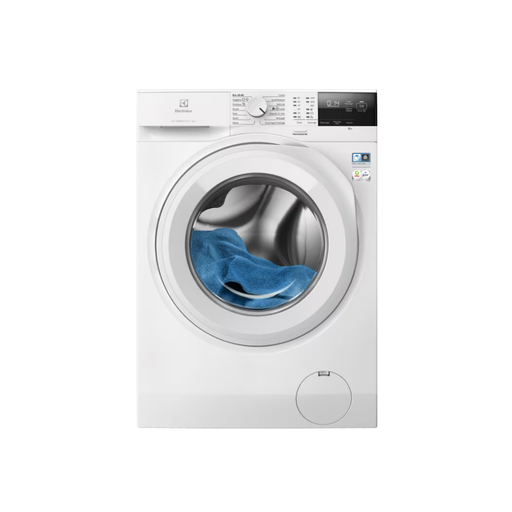 Image unavailable
Electrolux EW6FI4805AW, 8 kg, SensiCare
Worth comparing if your regular laundry justifies a stated capacity of 8 kg without leaving the drum underfilled too often.
Front-loading, spin speed of 1 400 tr/min and Steam Hygiene function. Check the energy label for the exact model’s Eco 40-60 duration and consumption figures.
View on Joybuy
 Image unavailable
Electrolux EW7FI259160V, 9 kg, SmartSelect
Consider this model if you regularly build up loads that are suited to a stated capacity of 9 kg.
Front-loading, spin speed of 1 600 tr/min and SteamCare function. Check programme durations in the documentation for the exact model before making this a deciding factor.
View on Joybuy
 Image unavailable
Candy ProWash 500 TCA464TM4-S, 6 kg
Worth comparing if your loads are usually small, but check that a 6 kg capacity won’t mean running extra cycles.
Top-loading, spin speed of 1 400 tr/min, energy efficiency class B and Wi-Fi. To compare consumption on Eco 40-60, check the programme name and figures on the energy label for the exact model.
View on Joybuy
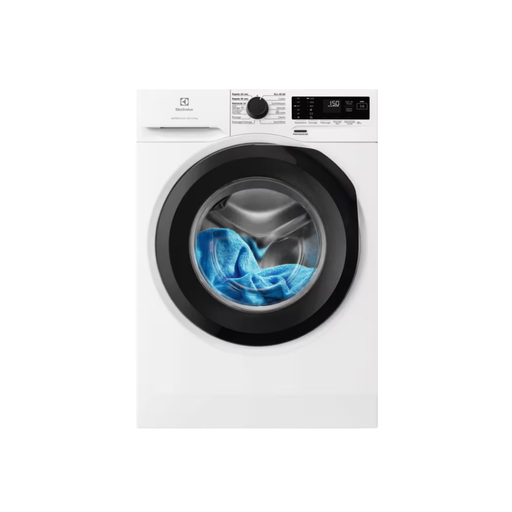 Image unavailable
Electrolux EWF1410N2, 10 kg, TimeSave
Worth considering if your suitable loads are regularly large. The stated capacity alone isn’t a reason to choose a bigger drum.
Front-loading, stated capacity of 10 kg and Inverter motor. Check the load limits for each programme, along with the Eco 40-60 details in the instruction manual and on the energy label for the exact model.
View on Joybuy
Frequently asked questions
What does the stated capacity in kg mean?
It refers to the maximum load under specified conditions, not the permitted load for every programme. According to France’s National Consumer Institute, the stated capacity is based on dry cotton; for synthetics, allow for around half the stated load. Check the instruction manual for other fabrics.
Which figures should I compare for water and electricity use?
Compare the kWh per 100 cycles and litres per cycle on labels based on the same reference programme. The European Commission explains that the label also shows information including the efficiency class, cycle duration and noise level. These figures don’t automatically describe a quick or intensive cycle.
Is the Eco 40-60 programme suitable for all laundry?
No. The Eco 40-60 programme is designed for normally soiled cotton that can be washed at 40 °C or 60 °C. Check the care labels on your fabrics and the programme’s load limits in the instruction manual before using it as your regular cycle.
Should I check a washing machine’s durability index?
Yes. For washing machines covered by the requirement in France, it adds to your comparison of capacities and consumption figures. ADEME says that displaying this index has been compulsory for washing machines since April 2025. Check the index for the exact model rather than judging its durability by its brand or energy efficiency class alone.


