A 10–12 kg washing machine is worth considering if you regularly have large family loads and run several cycles in a row. If you mostly wash smaller loads sorted by fabric type, compare 8–9 kg models instead; an occasional duvet wash alone doesn’t justify a larger drum. In every case, check the maximum load for the programme you’ll use, the dimensions and the energy label figures.
Who is this choice for?
Households with baskets that are often full
Large loads of everyday laundry, sheets and towels come round often enough to make 10–12 kg worth considering. UFC-Que Choisir links the benefits of these capacities to how frequently you need to wash large loads.
Households that wash often but sort their laundry
You may do laundry frequently, but usually separate clothes by fabric, colour or programme. In that case, the size of each load matters more than how often you wash alone.
Households that wash duvets occasionally
A duvet or thick blanket may prompt you to look for a large drum, even if it makes up only a small proportion of your washes. The capacity you choose should also suit the laundry you wash the rest of the time.
What sets the different capacities apart?
UFC-Que Choisir recommends matching capacity to the loads you actually wash. ADEME also advises choosing a capacity that suits your needs and checking the energy label for consumption and noise figures.
10–12 kg front-loading machine
Worth considering: if you regularly wash large family loads and bulky items.
The trade-off: a large drum used mainly for small loads doesn’t guarantee lower energy consumption.
8–9 kg front-loading machine
Worth considering: if you wash frequently, but usually split your laundry into smaller loads by fabric type.
The trade-off: accumulated large loads may need to be washed over several cycles.
A separate solution for bulky items
Worth considering: if an exceptionally bulky duvet is a rare occurrence and a standard capacity suits your everyday laundry.
The trade-off: you’ll need to arrange to wash the item elsewhere when necessary and follow its care instructions.
| Criteria |
What to check |
Who it matters to |
| Large family loads |
Compare capacity in kg of dry laundry and the Eco 40-60 programme duration at full load. |
When the laundry baskets are regularly full, I want to avoid splitting everyday washing over several cycles. Around 36% of consumers would prioritise these recurring large loads. |
| Frequently split loads |
Check the permitted load for your usual programmes and the water and energy figures on the label. |
If I often separate fabrics or colours, my loads stay small despite washing frequently. This ability to handle split loads would be the priority for around 29% of consumers. |
| Regular bulky household laundry |
Check the load allowed by the relevant programme and the care instructions for duvets or blankets. |
I regularly wash thick items and need to know whether the model can handle each one on the appropriate programme. This would come first for around 21% of consumers. |
| Occasional bulky item |
Consider how often you wash it compared with your usual loads before choosing a large drum. |
My bulky duvet only needs washing occasionally, so I’d rather choose an appliance for everyday laundry and have another solution ready if needed. Around 14% of consumers would prioritise this occasional need. |
Mistakes to avoid
-
Assuming the stated capacity applies to every programme
The capacity in kg refers to dry laundry under the conditions of the reference programme. Other programmes, including some for delicate fabrics or wool, may allow a smaller load.
Check the load table in the manual for the programmes you use, as well as the care label on each duvet or blanket.
-
Choosing a large drum for a duvet you rarely wash
According to UFC-Que Choisir, the largest capacities make most sense when you regularly wash bulky loads. An XL model used mainly for small loads doesn’t guarantee lower energy consumption.
Choose based on the majority of your washing first, then consider a separate solution for an exceptionally bulky item.
-
Comparing only the energy rating
The label also shows energy use per 100 cycles, water use per cycle, programme duration and noise. These figures give you several ways to compare appliances with the same rating.
Compare like with like, then check the details of the programmes you’ll actually use.
-
Measuring the space, but not the delivery route
Two 10 kg washing machines can have different depths. The appliance needs to fit its space and make it all the way there.
Measure the recess and the route through doors, hallways or lifts. Before delivery, check the dimensions of your chosen model and its packaged dimensions.
Brands to consider
These model examples can help you identify features to compare; they aren’t representative of every machine from each brand.
Bosch
The WGG254FAFR front-loader is one 10 kg model you could use for comparison.
- Bosch lists a 10 kg capacity, 1,400 rpm spin speed and dimensions of 845 × 598 × 588 mm for this model.
- Bosch advertises motor and appliance warranties subject to conditions. Check the terms for the model you choose.
Miele
The WCK360 WCS is another 10 kg front-loader to consider in light of the programmes you usually use.
- Miele lists an A energy rating, 52 kWh per 100 cycles and 52 L per cycle for this model.
- The advertised 49-minute QuickPowerWash programme has specific conditions; don’t assume it will take that long for every load.
Electrolux
The EWF1410N2 lets you compare a 10 kg capacity with the space you have available.
- Electrolux lists a 69 L drum and 10 kg capacity for the EWF1410N2.
- Its stated depth is 658 mm, so measure the space and access route for this specific model.
Samsung
The WW10FG5U34THEF is a 10 kg front-loader to consider if depth and connected features matter to you.
- Samsung lists a depth of 575 mm for this model.
- Using the advertised connected features requires Wi-Fi access and a Samsung account.
Washing machines to compare on Joybuy
These 9 kg and 10 kg front-loading models cover the two capacities to consider for family laundry. Their stated capacity alone doesn’t confirm that they can handle a particular duvet: check the programme and permitted load before choosing.
 Image unavailable
Haier X Series 11 HW100-BD14397PGU1, 10 kg
Worth considering if you regularly wash large family loads. The model name indicates a 10 kg capacity, a 1,400 rpm spin speed and an A energy rating.
For a duvet, check the load allowed by the relevant programme and make sure you have enough space for installation.
View on Joybuy
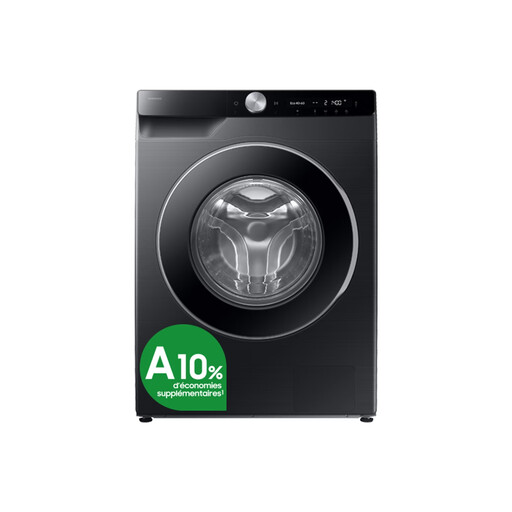 Image unavailable
Samsung WW90DG6U85LBU3 AI Wash 6000 Series, 9 kg
A 9 kg capacity to compare if you often split your frequent washes into smaller loads. The product name includes an A energy rating.
Check the permitted loads for your programmes and make sure you have enough room to open the door.
View on Joybuy
 Image unavailable
Electrolux EWF1410N2, 10 kg
Worth comparing for large, recurring family loads. Electrolux lists a 10 kg capacity and depth of 658 mm for this model.
Measure the space and check the manual before planning to wash a duvet.
View on Joybuy
 Image unavailable
Electrolux EW7FI259160V, 9 kg
A 9 kg option to consider if you often sort fabrics into separate loads. The product name indicates a 1,600 rpm spin speed and SteamCare and SmartSelect features.
Check the load limits for each programme and measure the delivery route.
View on Joybuy
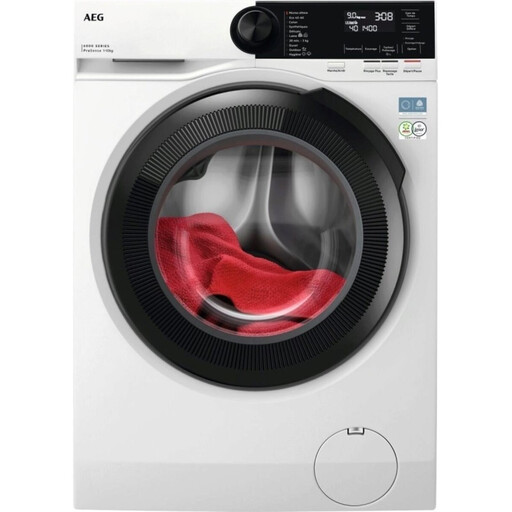 Image unavailable
AEG LFR62E114S, 10 kg
Worth considering if you regularly wash large loads. The product name indicates a 10 kg capacity, a 1,400 rpm spin speed and an A energy rating.
Compare the energy use figures on the model’s energy label and check the manual for the load allowed for the fabric you want to wash.
View on Joybuy
Frequently asked questions
Can a washing machine with a stated capacity of 10 kg take this load on every programme?
No. The stated capacity refers to dry laundry under the conditions of the reference programme; some programmes allow a smaller load. Check the model’s load table and the item’s care instructions before loading a duvet.
How should I compare a 9 kg washing machine with a 10 kg model?
First, compare their capacities with the size of your usual loads. Then check the energy use per 100 cycles, water use per cycle, programme duration and noise figures on their energy labels. ADEME recommends choosing a capacity that suits your needs; the kg figure alone doesn’t tell you how much energy your washes will use.
Does an occasionally washed duvet justify an XL washing machine?
Not on its own. UFC-Que Choisir mainly links larger capacities to large loads that come round regularly. If a more modest capacity suits your everyday laundry, check the duvet’s care instructions and consider a separate solution if it’s too bulky for your appliance.


