Families with regular large loads
Full laundry baskets, sheets, towels, throws or duvets are a regular occurrence. For these households, the question is whether a 10 to 12 kg capacity will genuinely save you from running extra cycles.


Choose your machine’s capacity based on how often you run genuinely full loads, rather than the total amount of laundry you build up over the week. According to UFC-Que Choisir, 8 to 9 kg is generally enough for a household of 3 to 4 people, while 10 to 12 kg is a better fit if you regularly wash large loads and bulky items. Then compare the consumption figures on the energy label, the Eco cycle duration and the noise level. Don’t assume a load-adjustment feature will make up for a drum that is often only partly full.
Full laundry baskets, sheets, towels, throws or duvets are a regular occurrence. For these households, the question is whether a 10 to 12 kg capacity will genuinely save you from running extra cycles.
You have plenty of washing, but sportswear, delicate fabrics and sorted loads don’t always fill the drum. So the stated capacity alone doesn’t tell you what your everyday laundry loads will be like.
When you run cycles frequently, their duration, spin noise and access to the filter all affect how you manage your household. UFC-Que Choisir’s reader survey found more mixed opinions on these aspects of day-to-day use.
To choose between 8 to 9 kg and 10 to 12 kg, start by considering the size of your usual loads and how often you wash bulky items. Then check the usage figures for the specific model.
Worth considering: for a household of 3 to 4 people with regular family-sized loads, but only occasional very bulky items, in line with UFC-Que Choisir’s guidance.
The trade-off: if you regularly have full baskets and bulky items to wash, this capacity could mean running more cycles.
Worth considering: if you regularly wash large loads and bulky items, making good use of the drum, as described by UFC-Que Choisir.
The trade-off: a large drum used mainly for small loads isn’t justified by capacity alone; check the machine’s dimensions before you buy, too.
| What matters | What to check | Who it matters to |
|---|---|---|
| Capacity and number of cycles | Note how often you run full loads, and check the capacity in kg of dry laundry, as well as the space needed for bulky items. | When full baskets and bulky items keep coming round, I want to limit the number of cycles without choosing a capacity I won’t use. Around 31% of consumers would make this a priority. |
| Variable loads and consumption | Compare the kWh per 100 cycles and litres per cycle on the energy label; check the permitted load sizes for the programmes you usually use. | If I alternate between large washes and small, sorted loads, I want the drum size to suit both. Managing variable loads would be a priority for around 31% of consumers. |
| Cycle duration and comfort | Check the Eco programme duration and the spin noise level in dB, especially if the machine is near your living areas. | Repeated cycles need to fit into my schedule without the spin cycle becoming disruptive when the household is busy. This ease of use would come first for around 23% of consumers. |
| Durability and maintenance | Check the model’s durability index and find out how easy it is to access the filter and carry out routine maintenance. | If a machine gets frequent use, I want to be able to keep up with routine maintenance and check its durability before choosing. This would be the main concern for around 15% of consumers. |
Doing a lot of laundry doesn’t mean every load fills a very large drum. A higher capacity is mainly useful for regular large loads and bulky items.
Over a week or two, distinguish between your total number of cycles and how often you run genuinely full loads. Then compare the capacities that suit this pattern.
According to UFC-Que Choisir, the stated capacity applies to dry cotton laundry or the reference Eco 40-60 programme. The permitted load for synthetics or wool may be lower.
Check the programme table for your chosen model if these fabrics make up a large share of your washing.
The rating doesn’t tell you how much water a cycle uses, how long the Eco programme takes or how noisy the spin cycle is. These can all matter when you run the machine frequently.
For every model you’re considering, also check the kWh per 100 cycles, litres per cycle, Eco programme duration and noise figures on the energy label.
A brand’s reputation won’t necessarily tell you how easy it is to access the filter, how noisy the machine is or what the specific model you’re planning to buy has to offer.
Check the model’s durability index, warranty terms and maintenance instructions.
A brand to consider if you’re comparing family-sized front-loaders and durability is important to you.
A brand to include when comparing family-sized front-loaders if cycle duration and noise are important to your decision.
A brand to consider among family-sized front-loaders if large loads aren’t the only type of laundry your household does.
A brand to consider when weighing up capacity, frequent cycles and maintenance for a front-loader.
A brand to compare if you’re looking for a front-loader for frequent loads of different sizes.
These 8 to 10 kg front-loaders give you two options to consider: regular family-sized loads that don’t always call for a large drum, or frequent large washes where 10 kg could be useful. For variable load sizes, compare the model’s specifications rather than relying on the name of a feature alone.
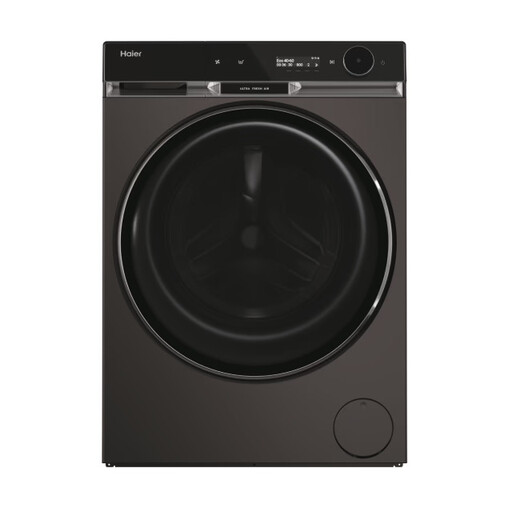 Image unavailable
Worth considering if you regularly wash large loads and your load sizes vary. Check the permitted load for each programme before relying on load detection.
Stated capacity of 10 kg, spin speed of 1,400 rpm and A energy rating.
The presence of a load-adjustment feature isn’t enough to establish how much energy or water it will use for your smaller loads.
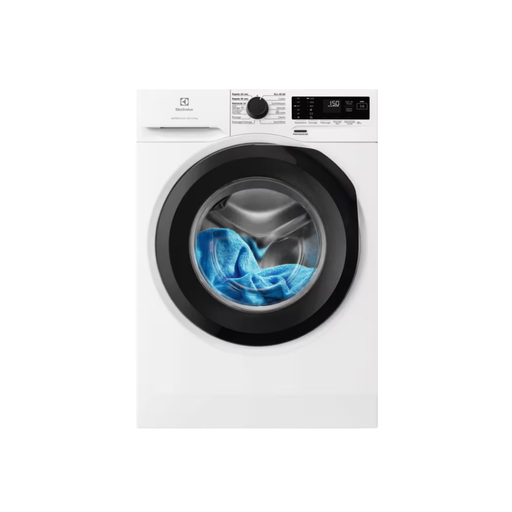 Image unavailable
Worth considering if your family loads often fill a 10 kg drum. Check the Eco programme duration and spin noise level in relation to where you plan to put the machine.
Stated capacity of 10 kg; the model name mentions TimeSave and Inverter Motor, but this doesn’t establish how they will affect your use.
Check the permitted loads for the programmes you need.
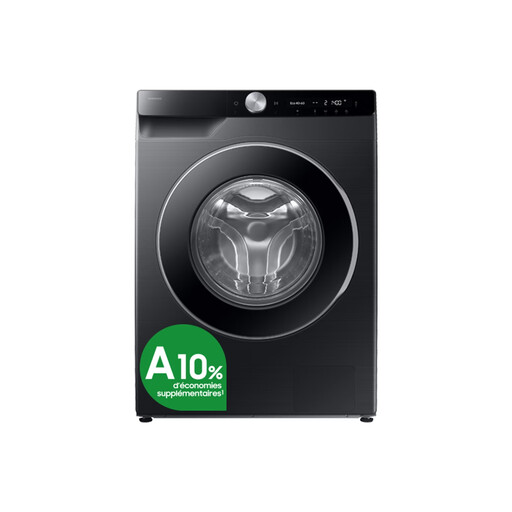 Image unavailable
A capacity worth considering for regular family washing if you don’t often need to wash bulky items or run completely full loads.
Stated capacity of 9 kg and A energy rating.
For bulky items, check the usable dimensions and the permitted load for the programme you plan to use.
 Image unavailable
Worth considering if most of your loads are family-sized and you don’t regularly need to wash bulky items in a single cycle.
Stated capacity of 8 kg and spin speed of 1,400 rpm.
If you often fill the basket with sheets and throws, check that this capacity and the permitted loads for each programme will suit you.
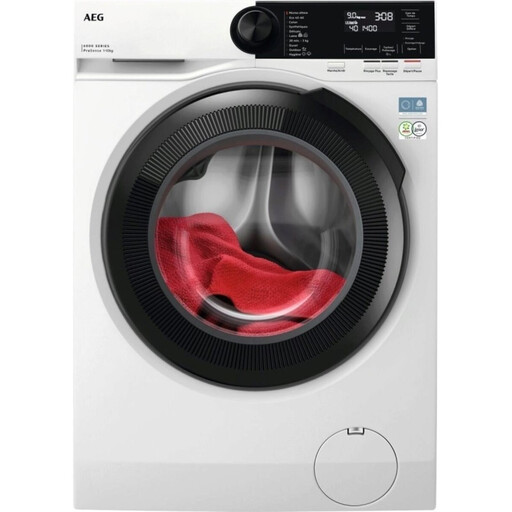 Image unavailable
A capacity worth considering if you regularly wash bulky items. Measure the available space before choosing this model.
Stated capacity of 10 kg, spin speed of 1,400 rpm and A energy rating.
Compare consumption, Eco programme duration and permitted loads for your usual programmes before making your decision.
No. According to UFC-Que Choisir, the stated capacity refers to the weight of dry laundry permitted for cotton or the reference Eco 40-60 programme. Check the manual for the permitted loads for synthetics, wool and any other programmes you use.
Compare their energy-label figures on a like-for-like basis: kWh per 100 cycles, litres per cycle, Eco programme duration and spin noise. The same capacity doesn’t tell you how well each model will suit your usual loads, so check the load limits for the programmes you use, too.
Yes, if its capacity suits the loads you actually wash and its dimensions fit the space available. UFC-Que Choisir says front-loaders are generally around 60 cm wide and 85 cm high. Also measure the depth and the clearance needed in front of the door for the model you choose.
No. In a survey of its readers, UFC-Que Choisir found more mixed opinions on aspects including maintenance and access to the filter. Check these points, the durability index and the warranty terms for the specific model you’re considering.