Choose a capacity that suits your usual loads: ADEME says a 7 kg washing machine is often enough, while a larger capacity makes sense if you regularly combine compatible loads. To compare models, check their consumption figures on the same ‘eco 40-60’ basis, then look at spin noise, the programmes you use and the space needed to load the machine.
Who is this choice for ?
Households with small, regular loads
If your laundry baskets are usually fairly small, compare the capacity with the amount of washing you do rather than simply counting the people in your household. ADEME recommends choosing a suitable capacity to avoid running cycles with an underfilled drum.
Households with large loads
If you want to combine large loads, check that they come up regularly and can be washed together. ADEME and Que Choisir highlight the importance of matching capacity to your actual laundry habits.
Households that value convenience
When comparing suitable capacities, consider the programmes you use, spin noise and how easy the machine is to load. UFC-Que Choisir’s reader survey looks at noise, maintenance and wash duration, among other things.
What to compare
First, identify what most often leads to a half-load or an extra wash, then compare the figures for the programmes you actually run.
| What matters |
What to check before buying |
Who is this important for ? |
| Avoiding half-loads |
Compare the rated capacity with the amount of laundry in your usual loads and the load limits for the programmes you use. ADEME says 7 kg is often enough, but this is not a rule that applies to every household. |
I want the drum to suit my usual laundry baskets, without regularly running a small load. Around 33 % of consumers make avoiding half-loads their priority. |
| Combining large loads |
Separate frequent loads from occasional bulky items, and check the maximum load allowed by the relevant programme. |
When large loads come up often, I want to avoid needing several cycles to wash them. Around 27 % of consumers prioritise combining loads. |
| Comparing consumption |
Compare kWh per 100 cycles, litres per cycle and cycle duration on the same ‘eco 40-60’ basis. Check figures for other programmes separately, where available. |
I want to understand how much the cycles I use consume, rather than rely on a figure that doesn’t reflect my usual programme. Around 20 % of consumers prioritise this factor. |
| Noise and spinning |
Check the spin noise in decibels and the spin efficiency class; the maximum spin speed alone does not tell you how every cycle will perform. |
If noise or how dry my laundry comes out matters in my home, I compare the spin performance figures for the exact model. Around 20 % of consumers prioritise this. |
Pitfalls to avoid
-
Automatically choosing the biggest drum to reduce the number of washes
A large capacity only reduces the number of cycles if you can combine loads and wash them on a suitable programme. If large loads are rare or need to be washed separately, the drum may be underfilled for your everyday laundry.
Before choosing, compare several of your usual washes with the loads you regularly do. ADEME’s 7 kg guide is often a useful reference, but it doesn’t replace assessing your own needs.
-
Assuming the energy label’s consumption figures apply to every programme
The consumption figures on the energy label relate to the ‘eco 40-60’ reference programme; they don’t automatically describe a quick, cotton or intensive cycle.
Compare labels on this common basis, then look for figures for the programmes you use. The European Commission specifies that the associated requirements apply to the ‘eco 40-60’ programme.
-
Assuming the maximum spin speed guarantees dry laundry and quiet operation
Maximum spin speed, spin noise and spin efficiency are different measures. The actual speed can also vary depending on the cycle and how well the load is balanced.
For the model you’re considering, check the decibel rating and spin efficiency class, then see what settings are available for your fabrics.
-
Comparing models using an old repairability rating
In France, the durability index replaced the repairability index for front-loading and top-loading washing machines from 8 April 2025, according to the Ministry of the Economy and Finance.
Before comparing models, check which durability index applies and review its details.
Brands to use as a guide
Bosch
The front-loading WGE02407FR and WGJ24407FR models illustrate capacities of 7 kg and 9 kg respectively.
- Bosch lists a maximum spin speed of 1 400 rpm for both models.
- Bosch says the maximum spin speed may be reduced if the load is unbalanced; check the details for the programme you’re interested in.
Whirlpool
The TDLR7251FR top-loading model is an example of a 7 kg washing machine.
- Whirlpool lists a width of 40 cm, a maximum spin speed of 1 200 rpm and a noise level of 78 dB.
- Whirlpool says its ‘6ème Sens’ sensors adjust certain settings to suit the load; this description doesn’t quantify the savings for every programme or household.
Electrolux
The PerfectCare 600 EW6T4376BZ top-loading model is another example of a mid-range capacity.
- Electrolux lists a capacity of 7 kg, a width of 40 cm, 45 kWh per 100 cycles and 45 litres per cycle, based on energy labelling figures.
- Electrolux says SensiCare adjusts the cycle duration to suit the load; these specifications apply to this model and shouldn’t be assumed to apply to the entire range.
Washing machines available on Joybuy
These models offer mid-range and large capacities, with front-loading or top-loading designs. Compare them with your regular loads and the layout of your space.
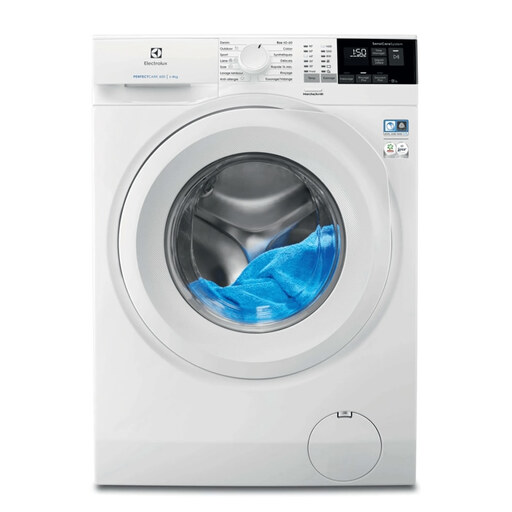 Image unavailable
Electrolux EW6F4109RA, front-loading washing machine, 9 kg
Its stated capacity of 9 kg is worth considering if you regularly have large loads that can be washed together.
Front-loading; 9 kg; 1 400 rpm; class A.
View product
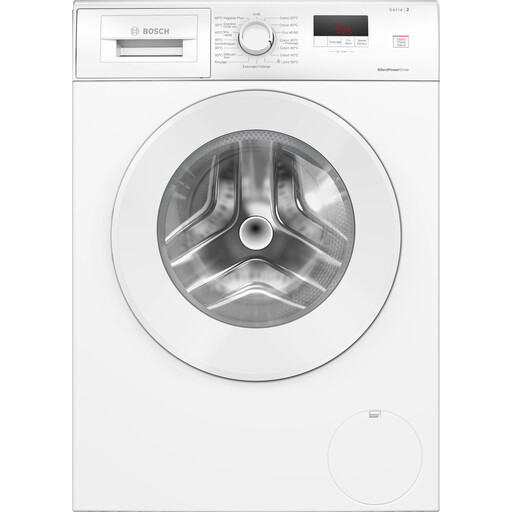 Image unavailable
Bosch WGE02407FR, front-loading washing machine, 7 kg
A stated capacity of 7 kg can be a useful mid-range benchmark to compare with the amount of laundry in your usual washes.
Front-loading; 7 kg; 1 400 rpm; class A.
View product
 Image unavailable
Haier T Series 7 THASN276TM6-S, top-loading washing machine, 7 kg
This 7 kg top-loading model is worth considering if a top-loading design suits your space and its capacity matches your regular loads.
Top-loading; 7 kg; 1 200 rpm; class A.
View product
 Image unavailable
Electrolux EW7FI259160V, front-loading washing machine, 9 kg
Its stated capacity of 9 kg may suit large loads if they come up regularly and can be washed together.
Front-loading; 9 kg; 1 600 rpm; SteamCare; SmartSelect; connected.
View product
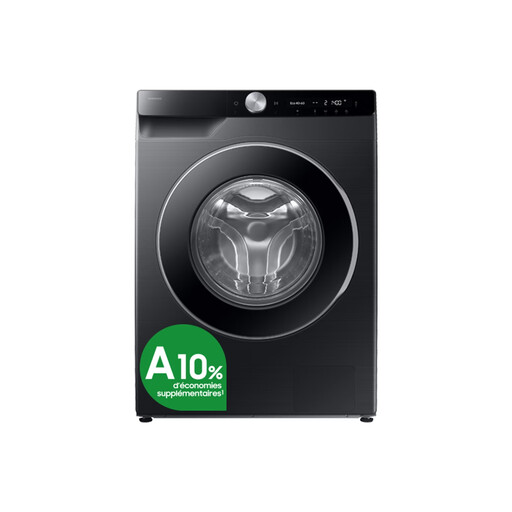 Image unavailable
Samsung WW90DG6U85LBU3 AI Wash 6000 Series, 9 kg
Compare its stated capacity of 9 kg with how often you have large loads and whether they can be washed together.
Front-loading; 9 kg; black; class A.
View product
Frequently asked questions
Can the energy efficiency class predict my consumption on every programme ?
No. The figures on the energy label relate to the ‘eco 40-60’ reference programme. To assess your own usage, identify the programmes you run and look up their specific figures, rather than automatically applying the label’s figures to a quick or intensive cycle.
What should I do if the washing machine vibrates or moves after installation ?
Follow the instructions for the model you’ve bought. For its washing machines, Bosch recommends removing the transit bolts, then adjusting and locking the feet to level the appliance. This manufacturer’s advice isn’t a universal diagnosis for every case of vibration.
What should I check for maintenance and after-sales service ?
Check the model’s instructions for maintenance advice and how to access the filter. The Ministry of the Economy and Finance notes that the legal guarantee of conformity is mandatory for goods sold by a business to an individual. In France, the durability index has applied to front-loading and top-loading washing machines since 8 April 2025.
What information should I check before buying a washing machine online ?
Compare the energy label and product information sheet for the model, then check the relevant durability index and its details. The energy label’s consumption figures are based on the ‘eco 40-60’ programme and don’t predict consumption for every wash.


