Start by choosing a capacity that suits the large loads you wash regularly. An 8–9 kg model may be suitable if they are relatively moderate, while a 10–12 kg front-loader is worth considering if large loads are frequent, as Que Choisir points out. If your loads vary, compare performance on partial loads rather than assuming automatic adjustments will save energy. And if space is tight, check whether a smaller-capacity top-loader will meet your needs.
Who is this choice for?
Households with regular large loads
You often have a lot of washing to do, or regularly wash bedding and bulky items. The capacity you can actually use matters more than the size of your household alone. Que Choisir covers this need for households with back-to-back loads.
Households with varying load sizes
You alternate large washes with smaller loads or laundry sorted by fabric type. You’ll need to weigh up a larger drum against the consumption of partially loaded cycles, an issue covered in Que Choisir’s test protocol.
Households with limited space
Before choosing a capacity, check the delivery route, the available space and whether the appliance door can open properly. Que Choisir and Electrolux offer useful guidance on formats and dimensions.
What should you compare before buying?
Start with the loads you wash regularly and the programmes you use. Then compare the capacity with the space available and consumption figures measured under comparable conditions.
| Criteria |
What to check |
Who it matters to |
| Capacity you can actually use |
Estimate your usual load sizes and check the manual for the maximum load for each programme: it may be lower than the machine’s stated capacity. |
When I regularly wash bedding and bulky items, I want to get them done in fewer cycles without choosing a drum that’s rarely full. Around 36% of consumers prioritise usable capacity and the number of cycles. |
| Consumption with varying loads |
Compare water and electricity use for comparable programmes and load sizes. A load sensor or automatic dosing system doesn’t, on its own, prove that you’ll save energy. |
If I alternate between full drums and smaller loads, I want to check how much they use without giving up the option of washing bulky items. Around 29% of consumers prioritise handling varying load sizes. |
| Dimensions and access |
Measure the route to the appliance, the available space, the connections and the clearance needed to open a front-loader door or top-loader lid. |
When space is limited, I want to be able to get the machine into place and use it without giving up the option of washing large loads. Around 21% of consumers prioritise dimensions and access. |
| Cost and lifespan |
Check the energy label, the durability index that applies to new washing machines and the services included in the seller’s offer. |
If I want to keep costs under control over time, I compare consumption and durability information, as well as the services on offer. Around 14% of consumers put running costs and repairability first. |
Que Choisir points out that the stated capacity refers to dry laundry, and maximum load sizes vary between programmes. ADEME recommends taking the energy label into account. To compare performance on smaller loads, look for figures measured using the same programme and a comparable load size.
Mistakes to avoid
-
Assuming a larger drum will automatically save energy
The benefits of a large capacity depend on how often you wash large loads. Que Choisir warns that an XL model may use more energy when half full.
Think about the loads you wash regularly and compare test results for partial loads before choosing a larger capacity.
A drum that’s rarely full may use more energy when half full, according to Que Choisir’s warning.
-
Confusing stated capacity with the maximum load for every programme
The permitted load for synthetics, wool or delicates may be lower than the capacity stated for another programme.
Check the manual for the model you’re considering and the maximum load sizes for the cycles you actually use.
If you have to split your laundry across several programmes, some loads may need more cycles.
-
Choosing a top-loader solely because it’s narrow
A narrower width doesn’t guarantee that the available depth and height will be suitable. You’ll also need enough room to open the lid.
Measure the whole space and compare the model’s capacity with your largest regular loads.
-
Treating automatic adjustment as proof of energy savings
Manufacturers describe different features, and results depend on the model, programme and load size.
Distinguish between the features being advertised and measurements of water use, electricity use and washing performance taken under comparable conditions.
Brands and models to know
LG
The F24V92BSTA front-loader is an example of a model with a stated capacity of 12 kg, a duvet programme and ezDispense automatic dosing.
- LG gives the chassis dimensions as 60 × 85 × 61,5 cm, with an overall depth of 65,5 cm and a depth of 114,5 cm with the door open at 90°.
- The product listing checked was marked “Discontinued”; check whether this model is still available. Automatic dosing doesn’t prove that it will save energy on a half load.
Bosch
The Series 8 WGB254A2FR front-loader is an example of a model with a stated capacity of 10 kg, suitable for regular large loads.
- Bosch gives the dimensions as 84,5 × 59,8 × 59 cm and lists AquaStop for this model.
- The product dimensions alone don’t tell you how much space you’ll need for connections, or how much energy the machine uses on a half load.
Whirlpool
The FFBS 9479 WV FR front-loader is an example of a 9 kg model featuring the 6th Sense technology advertised by the manufacturer.
- Whirlpool gives the dimensions as 59,5 × 85 × 63 cm and describes how the settings adjust according to the load and fabric type.
- This description isn’t independent evidence of energy savings. Installation is listed separately as a paid service; check the terms with the seller.
Electrolux
The PerfectCare 700 YW7T3713DA top-loader is a slimline option to consider if there isn’t enough room for a front-loader.
- Electrolux gives the capacity as 7 kg and the dimensions as 89 × 40 × 60 cm. According to the manufacturer’s product information, the SensiCare function adjusts the cycle duration according to the load’s weight.
- Its capacity is lower than that of the family-sized front-loaders mentioned here. The feature alone doesn’t demonstrate energy savings on a half load.
Samsung
The WW11DG6B85LEU3 front-loader is an example of a model with a stated capacity of 11 kg and automatic dosing.
- Samsung gives the dimensions for this model as 60 × 85 × 60 cm.
- The energy savings claimed for AI Energy Mode depend on conditions specified by Samsung, including in-house tests carried out on a different model. They aren’t an independent measure of this model’s performance with every load size.
Large-capacity washing machines on Joybuy
These Joybuy products are aimed at households looking for a large-capacity front-loader for bulky or frequent loads.
 No image available
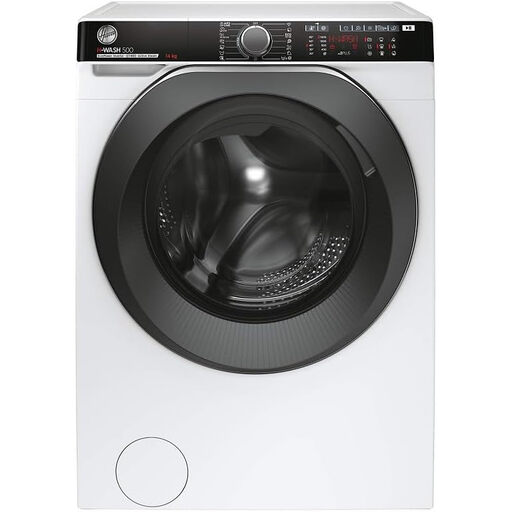
HOOVER HWPD 414AMBC/1-S, front-loading washing machine, 14 kg
Its stated capacity of 14 kg may be worth considering if you regularly have large loads to wash.
The title gives a maximum spin speed of 1,400 rpm and a B energy rating.
Joybuy
 No image available
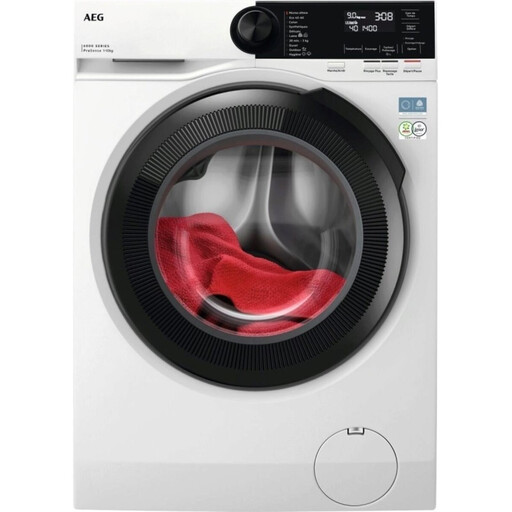
AEG LFR62E114S, front-loading washing machine, 10 kg
A stated capacity of 10 kg may suit households with frequent large loads.
The title gives a maximum spin speed of 1,400 rpm and an A energy rating.
Joybuy
 No image available
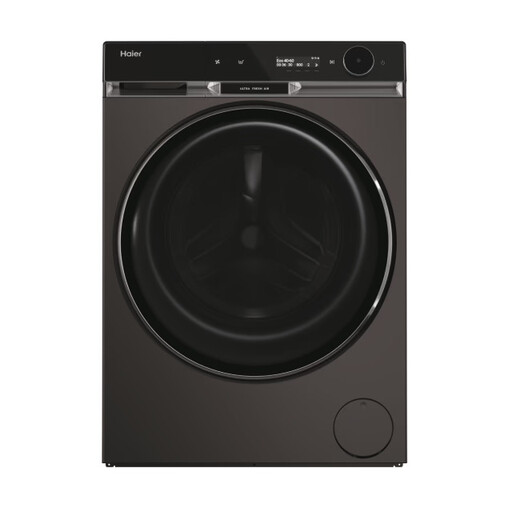
Haier X Series 11 HW100-BD14397PGU1, 10 kg
Compare its stated capacity of 10 kg with the loads you wash regularly.
The title lists 1,400 rpm, an A energy rating, AutoDose, Steam and Wi-Fi.
Joybuy
 No image available
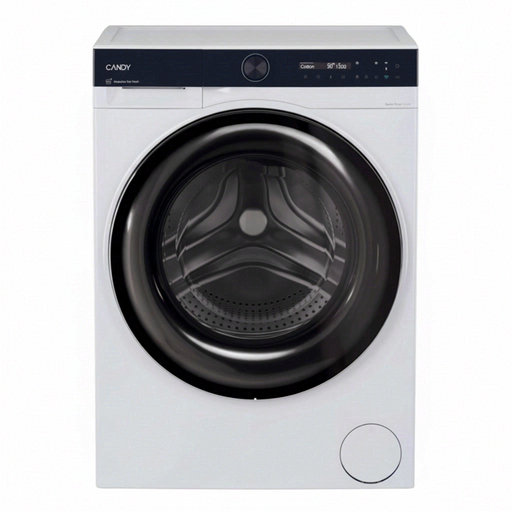
ProWash 700, front-loading washing machine, 10 kg
A stated capacity of 10 kg may suit regular large loads, depending on the programmes you use.
The title lists 16 programmes, a maximum spin speed of 1,400 rpm and an A energy rating. Stated dimensions: 595 × 681 × 850 mm.
Joybuy
 No image available
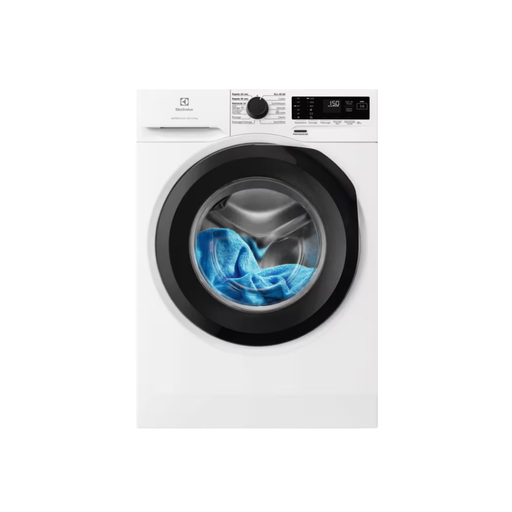
Electrolux EWF1410N2, front-loading washing machine, 10 kg
Its stated capacity of 10 kg may suit regular bulky loads.
The title lists a maximum spin speed of 1,351 rpm, along with Steam, TimeSave and Inverter Motor.
Joybuy
Frequently asked questions
Can a 10 or 12 kg washing machine handle that load on every programme?
No. The stated capacity refers to the weight of dry laundry for a specific programme. The permitted loads for synthetics, wool and other cycles may be smaller. Check the manual for the model before planning to wash everything in one cycle.
What does a washing machine’s energy label measure?
The European energy label uses a scale from A to G and includes information such as energy consumption per 100 cycles under the Eco 40–60 programme. It doesn’t directly predict the consumption of every programme or of a particular half load. The European Commission explains the information shown on the label.
What should you check before delivery and installation?
Measure the route to the installation space, the dimensions of the recess and the clearance needed to open the appliance. Also check with the seller what the installation service includes.
How can you prevent build-up when doing several loads in a row?
Avoid using too much detergent: ADEME says this won’t improve the wash and may cause build-up in the machine. Follow the appliance manual for suitable care and maintenance.
What warranty and durability information applies in France?
For a purchase from a professional seller, the seller is responsible for the statutory legal guarantee of conformity, and claims must be brought within two years of delivery, according to the DGCCRF. The durability index replaced the repairability index for the washing machines concerned from 8 April 2025. A commercial or “motor” warranty doesn’t replace the statutory guarantee.


