Households with frequent large wash loads
If laundry piles up between washes, a larger capacity could help you avoid splitting loads. Que Choisir says 10 to 12 kg is worth considering for households that regularly wash large loads.


Choose a capacity based on the loads you wash regularly, rather than the largest duvet in your home. According to Que Choisir, 8 to 9 kg is generally enough for a household of 3 to 4 people, while 10 to 12 kg is a better fit when you regularly wash large loads. If you also run lots of small loads, check which programmes include load adjustment, compare the Eco 40-60 data and make sure you have space before choosing a large drum.
How often you wash large loads matters just as much as whether your household has bulky items.
If laundry piles up between washes, a larger capacity could help you avoid splitting loads. Que Choisir says 10 to 12 kg is worth considering for households that regularly wash large loads.
It’s worth checking the volume of these items separately from the machine’s stated capacity. Check the programme and care instructions for each item. An item you wash only occasionally isn’t, on its own, a good reason to choose a large drum.
A larger capacity is useful for big loads, but you should also check how the model handles smaller ones. Find out which programmes include the stated load adjustment, and don’t assume you’ll save the same amount on every cycle.
Start with the size of your usual loads, then check the programmes, wash results and space available.
Consider it if: you mostly wash everyday loads and only occasionally machine-wash large throws or duvets.
The trade-off: depending on their care instructions, some bulky items may need to be split into smaller loads or washed elsewhere.
Consider it if: you regularly wash large loads and bulky items.
The trade-off: a drum that is rarely full could needlessly increase consumption, according to Que Choisir. Check that the machine will fit through your access points and can be installed.
| Feature | What to check | My needs |
|---|---|---|
| Capacity | Count your large loads over several weeks. According to Que Choisir, 8 to 9 kg is generally enough for 3 or 4 people; 10 to 12 kg is a better fit if you regularly wash large loads. Check the programme and manual for duvets. | Do I often wash large loads, or only an occasional bulky item? |
| Small loads | Check which programmes include load adjustment. Compare the kWh per 100 cycles, litres of water per cycle and published cycle times on the same Eco 40-60 basis. | I also run partly filled loads between big washes, so they matter when I’m choosing a machine. |
| Washing and spinning | Look for comparable tests of the exact model. Que Choisir assesses washing, rinsing and spinning, among other things. Don’t judge the results solely by the capacity or maximum spin speed in rpm. | When I’m doing frequent loads, I want to assess rinsing and spinning performance, not just the kilograms listed. |
| Cycle time and noise | Compare the Eco 40-60 cycle time and noise levels during spinning. Also check the manual to see how to access the filter. | Frequent cycles need to fit into my daily routine, especially if the machine is near a living area. |
| Installation | Measure the appliance, its intended location and the delivery route. Make sure there’s access to the connections and enough space to open the door. | I need to be able to get the washing machine into my home and install it, even if its capacity suits my loads. |
According to Que Choisir, a very large capacity is mainly justified if you regularly machine-wash thick throws and duvets. A drum that is rarely full could needlessly increase consumption.
Track how often you actually wash large loads over several weeks, and check the duvet’s care instructions before deciding on a capacity.
Capacity and energy rating alone aren’t enough to distinguish between two similar machines. Que Choisir also assesses washing, rinsing, spinning, cycle time and noise in its tests.
Compare label data on the same basis, and look for tests of the exact model to assess the features that matter to you.
A feature advertised by AEG or Bosch applies to specific models and conditions. It doesn’t prove that every programme and load will deliver the same results.
Check the model number, which programmes are covered and the conditions set out by the manufacturer. Then compare the label data for the models you’re considering.
The right capacity won’t help if the appliance won’t fit through the door or can’t be installed in the space you have. For example, Samsung’s product page for the WW11DG6B85LEU3 lists the appliance dimensions as 600 × 850 × 600 mm.
Measure the delivery route, the space for the machine and the room needed to open the door. Check the model’s manual for connections, transit bolts and levelling instructions.
These examples highlight features to check on specific models; they don’t describe every machine from each brand.
The LFR62E114S has a stated capacity of 10 kg and includes ProSense, a feature worth looking at if you alternate between large and small loads.
If you often wash small loads, it’s worth looking at Active Water Plus on Bosch models that include the feature.
The WW11DG6B85LEU3 is an 11 kg front-loading model worth considering if you regularly wash large loads.
The WCK360 WCS is another 10 kg model. Its Eco 40-60 data can be used for a like-for-like comparison.
This selection includes 10 kg front-loading models for frequent large loads, plus an 8 kg model to consider if you mostly wash everyday loads. For each one, check that the programmes suit your fabrics and that you have enough space for installation.
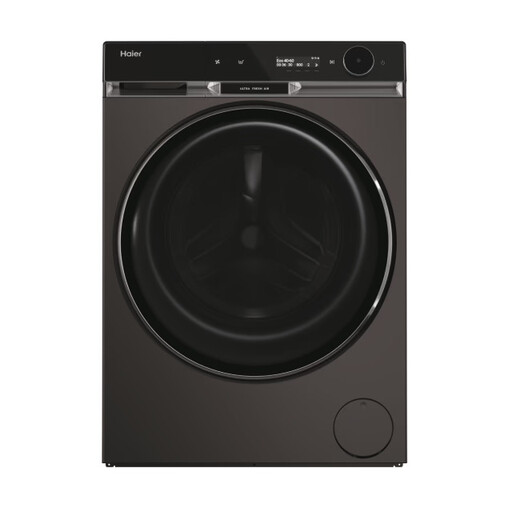 Image unavailable
Its 10 kg capacity is suited to regular large loads. The product name lists 1,400 rpm, an A rating, AutoDose and Wi-Fi connectivity. Check the programmes and load-detection conditions before relying on it to adjust for smaller loads.
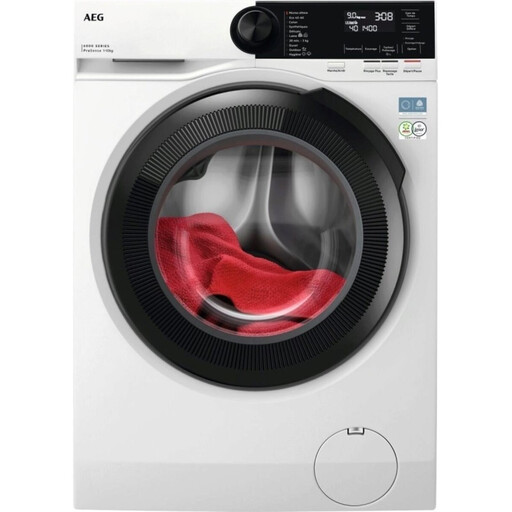 Image unavailable
This 10 kg model is worth considering if your household alternates between large and small loads. It has an A rating and a 1,400 rpm spin speed. According to AEG France, ProSense adjusts the cycle time, water and energy to the amount of laundry. Check the manual to see which programmes are covered and which are designed for your bulky items.
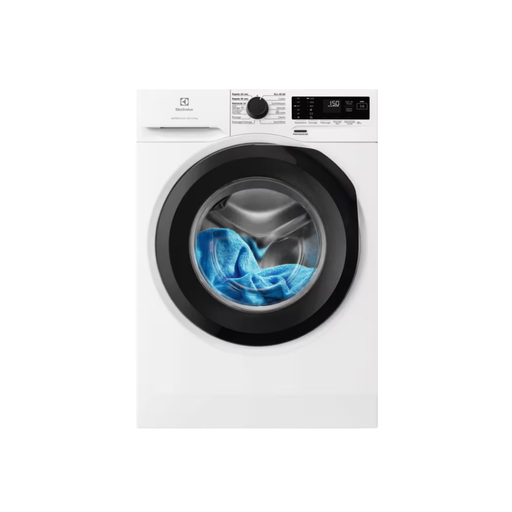 Image unavailable
Its stated 10 kg capacity is worth considering if you regularly wash large loads. The product name mentions Steam Anti-Allergy and TimeSave. Check the manual to see what these programmes do, particularly for bulky items, rather than assuming anything about washing or rinsing performance from their names.
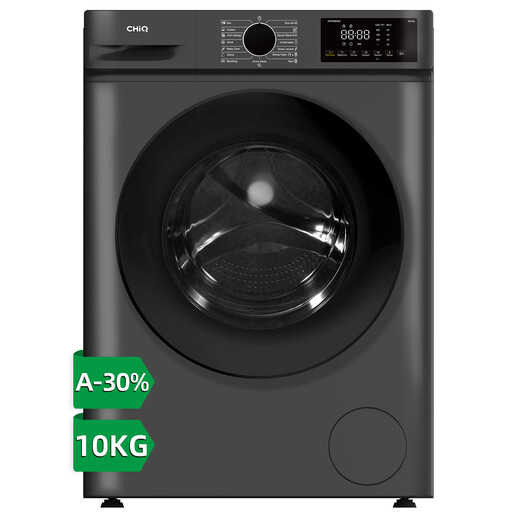 Image unavailable
Compare this 10 kg capacity with the loads you actually wash. The product name lists a 1,400 rpm spin speed and 16 programmes; check the manual to find the ones suited to duvets. The “A-30%” claim in the name should be verified against the energy label for the exact model.
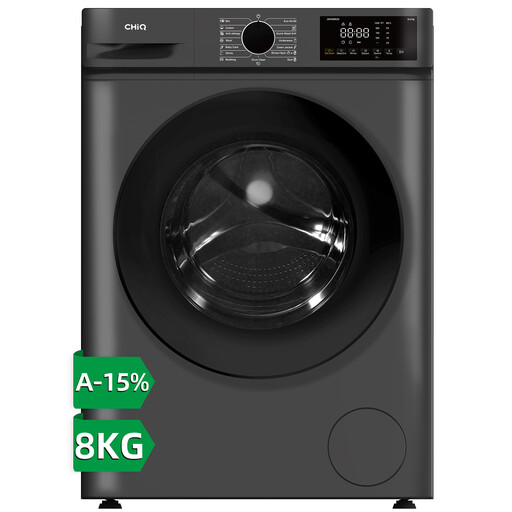 Image unavailable
This 8 kg model is worth considering if you mostly wash everyday loads. Check separately that your bulkiest items are suitable for its capacity and programmes. The product name lists a 1,400 rpm spin speed and 16 programmes. Check the “A-15%” claim against the energy label for the exact model.
No. According to the European Commission’s definition, rated capacity is the maximum mass of dry textiles declared for a cycle used in accordance with the supplier’s instructions. Check the washing machine programme, as well as your duvet’s size, material and care label.
Compare their Eco 40-60 data on the same basis, including kWh per 100 cycles and litres of water per cycle, as well as cycle time and the spin and noise figures. The European Commission links regulatory data to this programme, so the figures may not describe a quick or specialist cycle.
Don’t assume it does for every wash. AEG France says ProSense adjusts cycle time, water and energy on the LFR62E114S, but the effect of an advertised feature depends on the model and the programmes covered. Check these conditions before comparing two appliances.
Measure the space, doorways and access routes, then check the manual for your chosen model for connection and levelling instructions. For the AEG LFR62E114S, the instructions shown by Joybuy mention removing the transit bolts, using a threaded 3/4 cold-water inlet and securing the drain hose.