What should you consider before choosing?
Standard capacity: 8 to 9 kg
Consider this if: your usual loads are moderate and you only wash bulky items occasionally. UFC-Que Choisir says this capacity is generally enough for a household of 3 to 4 people.
Bear in mind: you’ll have less room to combine several large loads in one cycle, and a bulky duvet may need another solution.
Large capacity: 10 to 12 kg
Consider this if: you regularly have full laundry baskets and bulky items that are suitable for machine-washing. UFC-Que Choisir considers these capacities more useful when large loads are a regular occurrence.
Bear in mind: a capacity you rarely use does not guarantee savings. Compare the model’s energy and water consumption, as well as its dimensions.
An alternative for the occasional duvet
Consider this if: the only reason you’re looking at a larger drum is one exceptionally bulky item. UFC-Que Choisir advises checking the care label and notes that some duvets need to be taken to a laundrette or specialist cleaner.
Bear in mind: this option won’t reduce the number of household wash cycles if you often have large loads.
| What matters to you |
What to check before buying |
Who it matters most to |
| Cut down on cycles for large loads |
How often you wash your usual loads and their dry weight; the stated capacity and the load allowed by the programme you use. |
When my laundry baskets are often full, I want to wash more clothes without running extra cycles. Around 36% of consumers prioritise reducing the number of cycles for regularly large loads. |
| Wash suitable duvets or throws |
The item’s care label, the instruction manual and the load limit for the duvet programme; the space it needs in the drum. |
If I regularly wash bulky items at home, I check that they’re suitable for the appliance and programme. Around 29% of consumers prioritise washing bulky textiles frequently. |
| Handle small loads between larger washes |
Programmes for small loads and, for the exact model, load adjustment or detection features. |
When I often run small loads between two full baskets, I look for a model that suits these varying loads. Around 21% of consumers prioritise managing small loads. |
| Fit the appliance into the available space |
Width, height, overall depth, door clearance and the route to the installation spot. |
If access or the space in front of the machine is limited, I want to check the dimensions before choosing. Around 14% of consumers put suitability for the available space first. |
To compare energy consumption, the European Commission says washing machine energy labels show information including the energy-efficiency class and consumption per 100 cycles. These figures are based on a standard reference and don’t directly predict the consumption of your usual wash cycles.
Washing machines available on Joybuy
This selection includes front-loading washing machines listed with capacities of 10 to 12 kg, designed for larger loads. Compare the capacity, features and dimensions listed for each model with your usual laundry needs.
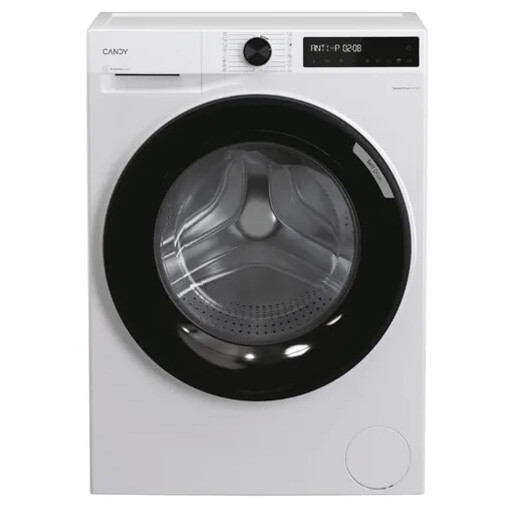 Image unavailable
Candy BR 411BL9-S — 11 kg
For frequent, large loads, its stated 11 kg capacity is a key feature to compare with the limits of the programmes you plan to use.
Energy rating A; white finish.
View on Joybuy
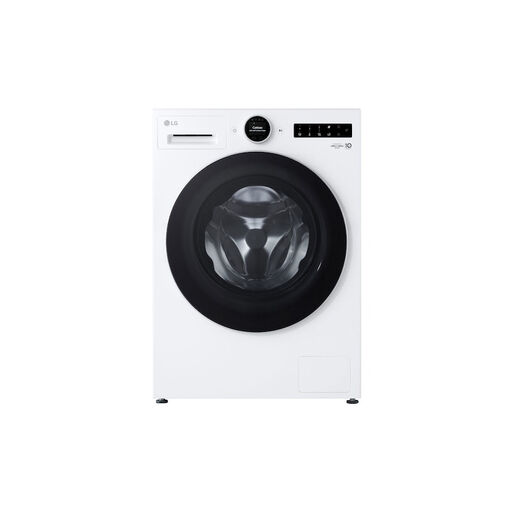 Image unavailable
LG F4WX851Y — 11 kg
Its stated 11 kg capacity suits recurring large loads. Check the load limits for the programmes you intend to use.
Energy rating A; white finish.
View on Joybuy
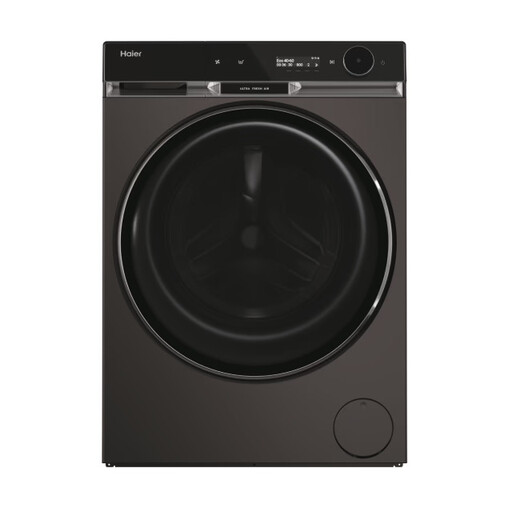 Image unavailable
Haier X Series 11 HW100-BD14397PGU1 — 10 kg
For larger loads, its stated 10 kg capacity can be compared with the load limits of the programmes you need.
1 400 rpm; energy rating A; AutoDose, steam and Wi-Fi listed in the product name.
View on Joybuy
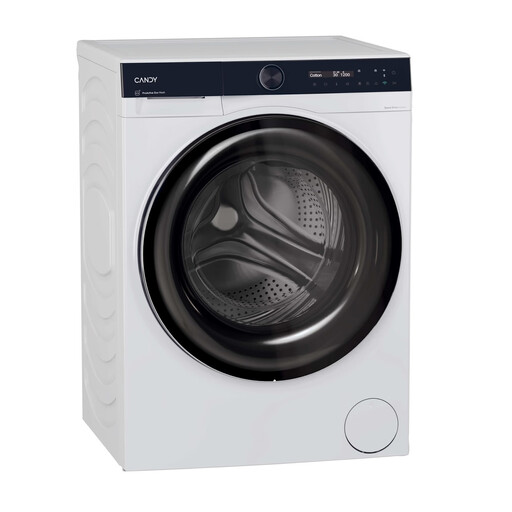 Image unavailable
Candy ProWash 700 BS 412B8-S — 12 kg
Its stated 12 kg capacity is worth considering if you regularly wash large loads, rather than for just one occasional bulky item.
1 400 rpm; energy rating A; Wi-Fi, Bluetooth and steam function listed in the product name.
View on Joybuy
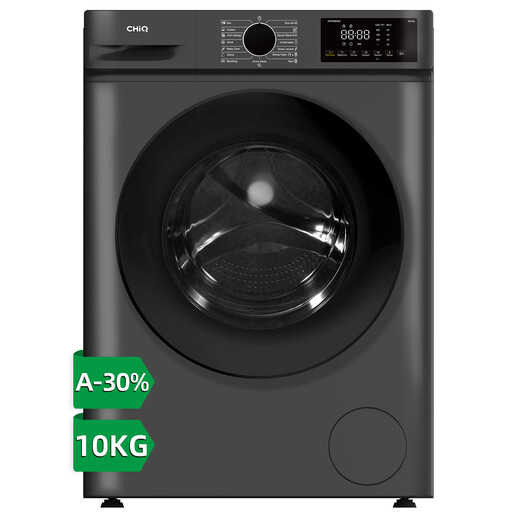 Image unavailable
CHiQ JW105883G — 10 kg
With a stated capacity of 10 kg, this model is worth comparing with your needs for larger loads. Check the load limit for each programme.
1 400 rpm; energy rating A-30%; 16 programmes; stated 530 mm drum; steam function and one-touch smart wash listed in the product name.
View on Joybuy
Frequently asked questions about washing machine capacity
Does the stated 10 kg capacity apply to every programme?
No. The stated capacity refers to dry laundry for the reference programme; load limits for synthetics, wool or duvets may be lower. Check the instruction manual for the model you’re considering.
What should you compare to estimate the consumption of two models?
Compare the kWh/100 cycles, litres per cycle and capacity shown on labels based on the eco 40-60 programme. This common reference doesn’t directly measure your usual cycles or prove that a larger drum will cost you less to run.
What should you check before installing a washing machine?
Measure the space, the route to the machine and the clearance needed to open the door. Then follow the model’s instructions for removing the transit bolts and levelling the appliance; these steps vary by model.
Which label must be displayed on a new washing machine in France?
France’s Ministry for Ecological Transition says that the durability index replaced the repairability index for washing machines on 8 April 2025. The label applies to products covered by the relevant legislation; the requirement does not apply to second-hand, refurbished or rented appliances, among others.
What rights and costs should you check when buying in France?
The DGCCRF states that you have two years from delivery of the goods, whether new or second-hand, to bring a claim under the statutory guarantee of conformity. Check delivery and installation arrangements separately. The DGCCRF also explains the free ‘one-for-one’ take-back of equivalent used equipment when you buy a new appliance.


