People who run consecutive washes without regularly having large loads
Check how much laundry you build up before choosing a large drum. ADEME recommends avoiding multiple cycles with drums that are not sufficiently full.


Start by choosing a capacity suited to the amount of laundry you actually build up: ADEME says that a 7 kg washing machine is usually sufficient and recommends choosing a larger capacity only when it meets a genuine need. Then, for the exact model, compare kWh/100 cycles, litres per Eco 40-60 cycle, noise and spin efficiency class, programme duration and overall dimensions.
Check how much laundry you build up before choosing a large drum. ADEME recommends avoiding multiple cycles with drums that are not sufficiently full.
An 11 kg capacity may be worthwhile for duvets, large amounts of laundry or other substantial loads, provided you also check the machine’s dimensions and stated consumption figures.
If the machine is installed near occupied rooms or your laundry often dries indoors, compare the acoustic class, the dB level during spinning and the spin efficiency class.
For frequent washing, start with your usual loads, then compare standardised figures and installation requirements before choosing between models.
| Priority | What to check | Your needs |
|---|---|---|
| Usable capacity | Compare the rated capacity in kg with the amount of laundry you actually build up. Also check the depth, door opening and available clearance. | I want to avoid cycles with a barely filled drum without running out of room for everyday or bulky loads. |
| Water and electricity | Compare kWh/100 cycles and litres per Eco 40-60 cycle on the same basis. Also look at the duration of the Eco programme if it affects your routine. | Frequent washing means I want to compare the stated consumption figures rather than relying on a single energy class letter. |
| Noise and spinning | Compare the dB level during spinning with the A to D acoustic class. Check the spin efficiency class alongside the spin speed in rpm. | I want to minimise noise disruption and choose a spin setting that suits the drying time available at home. |
| Maintenance and durability | Check the durability index, maintenance instructions, filter access and information about spare parts. Since April 2025, the durability index has also applied to washing machines sold in France, according to ADEME. | I want an appliance that remains practical to maintain over repeated washes and provides clear repairability information. |
| Washing performance | Check that the programmes suit the fabrics you wash most often, along with the drum care instructions. Independent tests can provide useful additional information alongside the label data. | I do not want to judge washing performance solely by capacity or energy class. |
An excessive capacity may lead to running machines that are not sufficiently full. ADEME says that 7 kg is usually enough and recommends checking that larger capacities meet a genuine need.
Look at your usual laundry volume before starting a wash. Move up to 9, 10 or 11 kg when your loads justify it, then compare the water use, energy consumption, duration, noise and dimensions of the specific model.
Spin speed alone does not fully describe the spin result, while the energy class on its own does not tell you how much water is used, how long the programme takes or how noisy the machine is.
For every shortlisted model, compare kWh/100 cycles, litres per Eco 40-60 cycle, duration, dB and the acoustic class during spinning, as well as the spin efficiency class.
Two washing machines with similar capacities may have different depths. For example, the 9 kg Electrolux EW6F4943AP has a stated depth of 658 mm, while the 11 kg LG F14R31WHSA is listed at 565 mm excluding protruding parts.
Measure the recess, access routes, door clearance and access to the water inlets and drains. Compare dimensions according to the method specified on each product page.
In its survey of 4,350 respondents, carried out in May 2025, UFC-Que Choisir identified wash duration, filter access and noise during spinning among the areas needing improvement.
Check the durability index, maintenance instructions, filter access and warranty terms. A promise of a quick programme or automatic dosing does not replace these checks.
Worth considering for a 9 kg front-loading washing machine when detailed specifications, dimensions and dosing features are important to your comparison.
An option to explore for a 9 kg front-loading machine with declared cycle adjustment based on the load.
Worth considering when genuinely large loads make an 11 kg capacity appropriate.
A premium brand worth exploring for a 9 kg front-loading machine with a quick programme, steam or dosing, depending on the model.
These Joybuy options cover front-loading washing machines from 7 to 11 kg, allowing you to compare a standard capacity with a larger one when your laundry volume requires it.
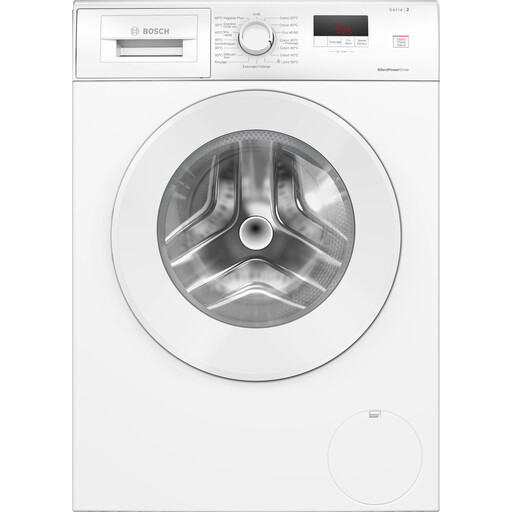 Image unavailable
A 7 kg option for regular household loads without over-sizing the drum.
Energy class A, 40 kWh/100 cycles, 44 L/cycle, 175-minute Eco programme, 72 dB and acoustic class A stated; spin efficiency class B.
The total depth including the door is listed as 63.2 cm: check the recess, door opening and connections.
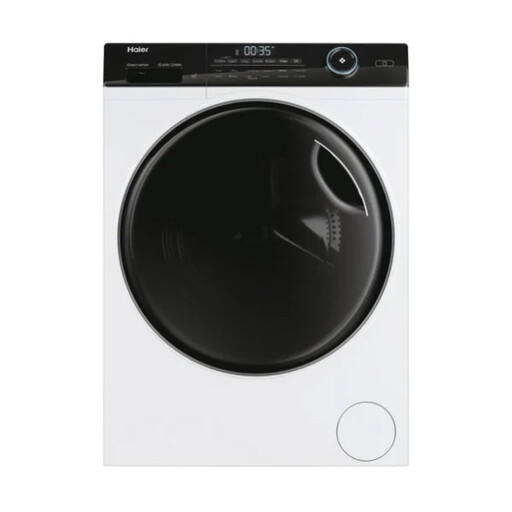 Image unavailable
A 9 kg front-loading machine for everyday to fairly bulky loads, with stated automatic load detection.
1,400 rpm, energy class A, 49 kWh/100 cycles, 48 L/cycle, 3 h 48 Eco programme, 70 dB and acoustic class A stated; spin efficiency class B.
Check that the stated depth of 583 mm, connections and door clearance suit your installation space.
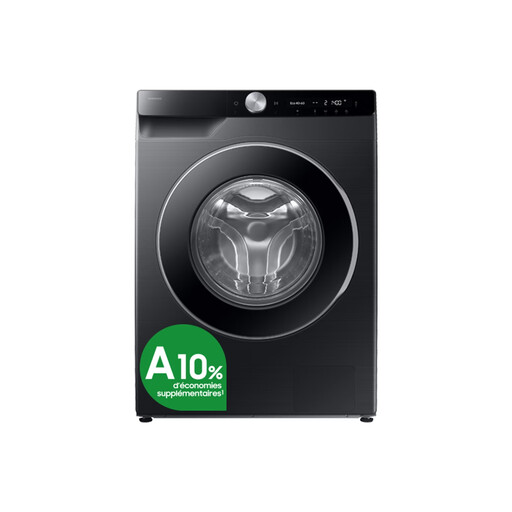 Image unavailable
This 9 kg front-loading machine suits a regular routine when the amount of laundry you build up justifies this capacity.
1,400 rpm, energy class A, 44 kWh/100 cycles, 50 L/cycle, 3 h 48 Eco 40-60 programme, 72 dB and acoustic class A stated; spin efficiency class B.
The depth including the door is listed as 63 cm: check the recess, door opening and connections before installation.
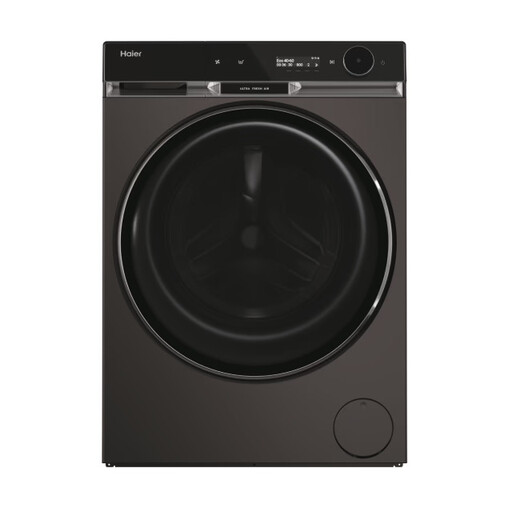 Image unavailable
A 10 kg capacity best reserved for regularly large loads rather than simply frequent washing.
1,400 rpm, energy class A, 41 kWh/100 cycles, 48 L/cycle, 3 h 58 Eco 40-60 programme, 68 dB and acoustic class A stated; spin efficiency class B.
Its stated depth of 611 mm means you should check the recess, clearance, door and connections.
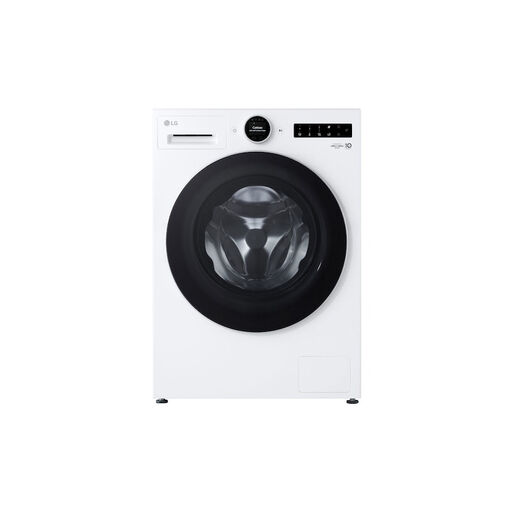 Image unavailable
This 11 kg front-loading machine is designed for very bulky loads that genuinely fill the drum.
1,360 rpm, energy class A, 37 kWh/100 cycles, 50 L/cycle, 4-hour Eco 40-60 programme and 71 dB during spinning stated; spin efficiency class B.
Check the dimensions, acoustic class, installation space and whether the capacity suits your planned indoor drying arrangements.
Compare appliances on the same basis: energy class, kWh/100 cycles, litres per Eco 40-60 cycle, programme duration, spin efficiency class, dB during spinning and acoustic class. The European Commission’s EPREL database publishes these figures for each model, among other information.
No, frequency alone is not enough to justify a large drum. ADEME says that 7 kg is usually sufficient; consider 11 kg when the loads themselves are regularly bulky, after checking the model’s dimensions and Eco figures.
No: also check the A to G spin efficiency class. ADEME recommends choosing an A spin efficiency class when the aim is to speed up drying indoors or in a tumble dryer; the speed may also be reduced if the load is unbalanced.
The energy label required under European Regulation 2019/2014 shows the noise level during spinning in dB and an acoustic emission class. Compare both figures for the exact models; ADEME notes that a 3 dB difference corresponds to an almost twofold increase in noise.
Yes. According to ADEME, washing machines sold in France since April 2025 must display a durability index. This rating combines reliability and repairability criteria in equal measure, alongside capacity, noise and consumption figures.