Which households would benefit from a large capacity?
How often you wash large loads matters more than the size of your household alone. A large drum is less useful if it’s only partly filled for most cycles.
Households with regularly full laundry baskets
If your everyday clothes and household linens regularly fill the machine, a capacity of 10 to 12 kg could mean fewer cycles. Que Choisir considers this range more suitable when you’re doing load after load.
Households that often wash bulky items
If you regularly wash thick duvets and throws, check how they fit in the drum, which programme is designed for them and its load limit. The stated capacity alone doesn’t confirm that a particular duvet can be washed.
Households that alternate between small and large loads
If you often separate your washing by fabric type but sometimes have a large load, compare the capacity you usually need with the load-adjustment functions listed for each model. Check its stated consumption too: having this feature doesn’t, by itself, tell you how much your cycles will use.
What should you compare before choosing?
Start with the size of your usual loads, then check the programmes you’ll actually use and the space available. You can then use the energy label to compare stated consumption on a like-for-like basis.
| What to consider | What to check | Think about your needs |
|---|
| Usual load size |
Compare the stated capacity in kilograms with your most frequent loads, not just the occasional duvet. Que Choisir says that 8 to 9 kg is generally enough for a household of 3 to 4 people, while 10 to 12 kg is more suitable when you’re doing load after load. |
Are my laundry baskets regularly full enough to make use of a 10 to 12 kg capacity, or would I only need it occasionally? |
| Load limits for each programme |
Check the manual for the limits for cotton, synthetics, wool and any programme designed for bulky items. The European Commission defines rated capacity as the maximum weight of dry laundry for a given programme. |
I often wash duvets or throws, so I need to know the load limit and instructions for the programme I’ll actually use. |
| Water and energy use |
Compare the energy rating, kWh per 100 cycles, litres per cycle and cycle duration shown on the label. According to the European Commission, these figures relate to the reference programme; they don’t describe every small load or delicate cycle in exactly the same way. |
If I run lots of cycles, I want to compare the models’ stated figures rather than assume a large drum or automatic function will use less. |
| Variable loads |
Look for a clearly described load-detection or load-adjustment function, then check which programmes it applies to. Manufacturers’ descriptions don’t provide a comparable measure of savings across brands. |
I often separate my washing by fabric type: some loads fill the drum, while others are small. |
| Installation and use |
Measure the width, height and depth, how far the door opens, and the space needed for delivery. Also check the spin noise on the label, particularly if the machine will be near living areas. |
I need to be able to get the machine into place, open the door and access it for maintenance once it’s installed. |
Which brands should you consider?
These examples show capacities and features worth comparing on specific models; they don’t represent every washing machine from each brand.
Bosch
Worth considering if you alternate between large and small loads and want a model that describes how it adjusts water use.
- According to Bosch Electroménager France, ActiveWater Plus adjusts the amount of water to the detected load and the programme settings.
- Check that this feature is available on your chosen model, then compare its capacity, dimensions and energy label. Bosch’s description doesn’t measure the performance of other brands.
LG
The French product page for the LG F14R31WHSA provides an example of a front-loading model listed at 11 kg.
- LG France lists this model’s dimensions as 600 × 850 × 565 mm.
- Its product page also lists a depth of 1 100 mm with the door open. Check that you have enough space, and don’t assume these dimensions apply to another LG model.
Samsung
The Samsung WF20DG8650BWU3 is an example of a capacity well above the 10 to 12 kg range.
- Samsung France lists this model at 20 kg.
- Samsung lists its dimensions as 686 × 984 × 875 mm. Compare its size and capacity with your usual loads and available space, rather than an occasional need.
Miele
Worth considering if you want to compare models with automatic load adjustment.
- According to Miele France, its washing machines analyse the load to adjust their water and electricity use.
- This manufacturer’s claim doesn’t tell you how much your own cycles will use. Compare the energy label and capacity of the specific model.
Washing machines to explore on Joybuy
This selection includes capacities from 8 to 11 kg. Compare the 10 to 11 kg models if you regularly wash large loads, and the 8 to 9 kg models if your usual loads are smaller. For duvets, check the instructions for the relevant programme separately.
 Image unavailable
Haier X Series 11 HW100-BD14397PGU1 — 10 kg
Its stated 10 kg capacity is worth considering if you regularly wash large loads. The model name indicates a 1 400 rpm spin speed, an A rating and AutoDose. Check the manual for load limits by programme and the space needed for installation.
View on Joybuy
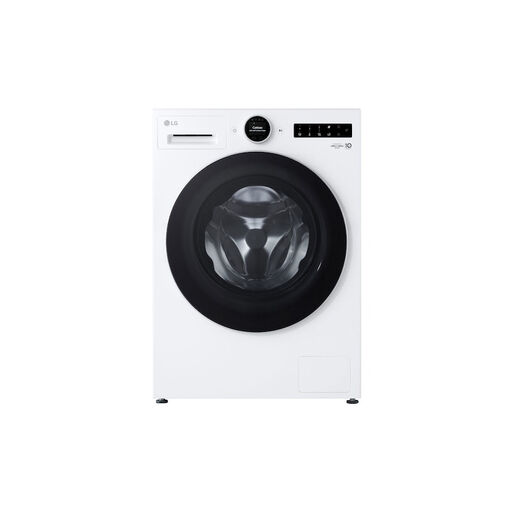 Image unavailable
LG F4WX851Y — 11 kg front-loading washing machine, A rated
Its stated 11 kg capacity makes this model worth considering if your laundry baskets are often full. If you plan to wash duvets, check the load limit for the relevant programme. Also check the dimensions and connection requirements before buying.
View on Joybuy
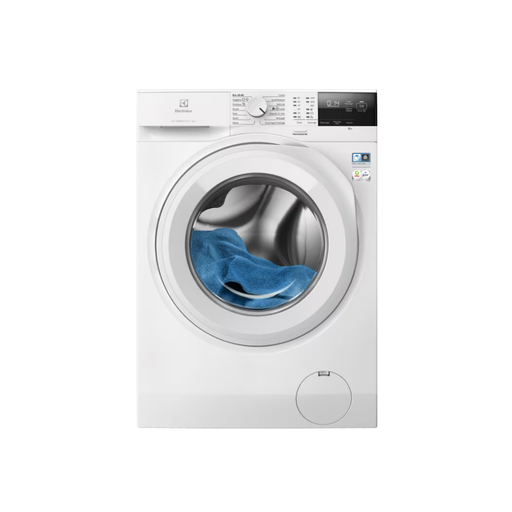 Image unavailable
Electrolux EW6FI4805AW — 8 kg, SensiCare
This 8 kg capacity is worth comparing if your usual loads are moderate, even though you wash frequently. The model name mentions SensiCare and a 1 400 rpm spin speed. For a duvet, check the load limit for the intended programme rather than relying on the rated capacity alone.
View on Joybuy
 Image unavailable
Electrolux EWF1410N2 — 10 kg front-loading washing machine
Its stated 10 kg capacity is worth considering if you regularly wash large loads. The model name mentions TimeSave and an Inverter motor. Check the manual for the load limits of your usual programmes, and measure the space needed with the door open.
View on Joybuy
 Image unavailable
Electrolux EW7FI259160V — 9 kg, 1 600 rpm
Its stated 9 kg capacity is worth comparing if small and medium loads make up most of your washing. The model name mentions SteamCare, SmartSelect and connectivity. If you often wash bulky items, check the load limits for each programme before choosing this capacity.
View on Joybuy
Frequently asked questions
Does the stated capacity in kilograms apply to every programme?
No. The European Commission defines rated capacity as the maximum weight of dry laundry stated for a given programme. Check the manual for the limits for synthetics, wool and the programme you’d use for a duvet.
Do you need a very large washing machine for the occasional duvet wash?
Not necessarily. Start by choosing a capacity that suits your usual loads. If you only wash a duvet occasionally, check whether the model you’re considering has a programme and load limit that allow you to wash it, rather than choosing a machine around this one-off need.
How can you compare the water and electricity use of two washing machines?
Compare the kWh per 100 cycles and litres per cycle shown on their energy labels, along with the energy rating and stated cycle duration. The European Commission explains that these figures are based on the reference programme, so they won’t predict the exact consumption of every delicate or partially loaded cycle.
Does load detection guarantee savings on every wash?
No. Manufacturers describe features that adjust certain settings to the load, but their presence doesn’t tell you how every programme will perform or allow you to compare brands directly. If your household alternates between small and large loads, check which programmes the feature applies to and the figures on the chosen model’s energy label.
Does the durability index replace the energy label?
No. In France, the ministry responsible for ecology says that the durability index has been gradually replacing the repairability index for washing machines since 8 April 2025. Treat it as separate information from the energy label, which includes stated consumption figures and noise levels.


