According to UFC-Que Choisir, 8 to 9 kg is generally enough for a household of 3 to 4 people, while 10 to 12 kg is a better fit if you regularly do large loads or wash bulky items. If your load sizes vary considerably, also check how the model adjusts to the load: a large drum that is rarely full won’t, on its own, solve the question of energy use. Finally, check the limits of the duvet programme and the space needed in front of the door.
Who is this type of washing machine for?
Families whose laundry baskets fill up quickly
If you regularly have large loads to wash, a higher capacity can save you from having to split the laundry across several cycles. UFC-Que Choisir considers 10 to 12 kg a suitable option in this situation; how often you actually have full loads remains a key factor.
Households that often wash bulky bedding
Duvets, thick throws and other large items mean you need to consider both the capacity and the instructions for the programme you use. The kilogram figure alone won’t tell you whether a particular duvet can be washed in the machine.
Families that alternate between large and small loads
If you switch between bedding and smaller, sorted loads, compare the capacity you need for larger loads with the weight-sensing features specified for the exact model. Also check the consumption figures on its energy label.
What should you compare before choosing?
Start with the loads you wash regularly, then check the programmes, stated energy and water use, and the dimensions of the model you’re considering.
| Factor |
What to check |
Your household |
| Capacity |
Think about the large loads you actually wash regularly. According to UFC-Que Choisir, 8 to 9 kg is generally enough for 3 or 4 people; 10 to 12 kg is a better fit if you regularly have large loads. |
Are my laundry baskets often full, or are very large loads only occasional? |
| Duvets and throws |
Check the listed programmes, their maximum load and the manufacturer’s instructions for the item in question. According to the European Commission’s definition, the nominal capacity refers to the weight of dry laundry under the conditions of the relevant programme. |
I regularly wash large items at home and need to know whether my duvets are within the limits of the suitable programme. |
| Variable loads |
Find out exactly what the weight-sensing function adjusts on the specific model. Also compare the stated kWh per 100 cycles and litres per cycle: ADEME notes that these figures are based on reference cycles. |
Some weeks I wash bedding; others, just smaller sorted loads. I don’t want to choose a drum based only on the days when it’s full. |
| Installation |
Measure the width, height and depth, then check the space needed to open the door and access the connections. Compare your measurements with the model’s installation diagram. |
I need to be able to load a duvet without the open door blocking the space in front of the machine. |
| Durability |
In France, the durability index replaced the repairability index for front-loading and top-loading washing machines from 8 April 2025, according to the ministry responsible for the ecological transition. Compare the index shown for the models concerned and check their repair information. |
I want to look into how easy it is to maintain the specific model, rather than relying on the brand’s general reputation. |
What mistakes should you avoid?
-
Choosing the largest drum just in case
UFC-Que Choisir points out that a high-capacity model can use more energy if it’s often run at half load.
Think back to your laundry over the past few weeks. Choose a 10 to 12 kg capacity for large loads you regularly wash, rather than for exceptional occasions alone.
-
Assuming the nominal capacity applies to every programme
Load limits can vary between programmes. So the capacity stated for the machine doesn’t, by itself, confirm that you can wash a duvet or a load of delicate items.
Check the load table and the manual’s instructions for every programme you plan to use.
-
Looking only at the energy rating
The energy rating letter doesn’t replace the energy and water consumption figures. Nor does a load-sensing function guarantee the same results across different models.
Compare the kWh per 100 cycles and litres per reference cycle, then check exactly what the automatic function adjusts.
-
Measuring the width only
Even if the machine fits the available space, that doesn’t guarantee the door will open far enough to make it easy to load bulky items.
Measure all the available space, including in front of the machine, and check the installation dimensions for the exact model.
Which brands and models should you consider?
These models are examples of configurations worth comparing; their features don’t apply to every washing machine from the same brand.
Bosch
The WGB256A2FR is an example of a 10 kg front-loading washing machine. Bosch Electroménager France lists its dimensions as 845 × 598 × 590 mm.
- This capacity is worth considering if you regularly wash large loads.
- Compare the stated depth with your available space, and separately check the limits of the programmes for your bulky items.
Electrolux
The SensiCare 600 EW6FI5120WA combines a stated capacity of 10 kg with a function that, according to Electrolux France, adjusts the cycle time, water and energy use to the load weight.
- The stated function is worth considering if you alternate between bedding and smaller loads.
- The manufacturer’s description doesn’t prove that it uses less energy than other models; also measure the space needed for installation.
LG
The F14R31WHSA is an example of an 11 kg, 68 L configuration listed by LG France. Its specifications give a depth of 1,100 mm with the door open at 90°.
- The measurement with the door open helps you assess how much space you’ll need in front of the appliance for loading.
- The French product listing shows this model as “Discontinued”. Don’t assume it’s available, and check any other model reference separately.
Washing machines to consider on Joybuy
These 9 to 11 kg washing machines let you compare capacities for everyday family laundry or regularly repeated large loads. For a particular duvet, always check the programme and its load limit, whatever the model.
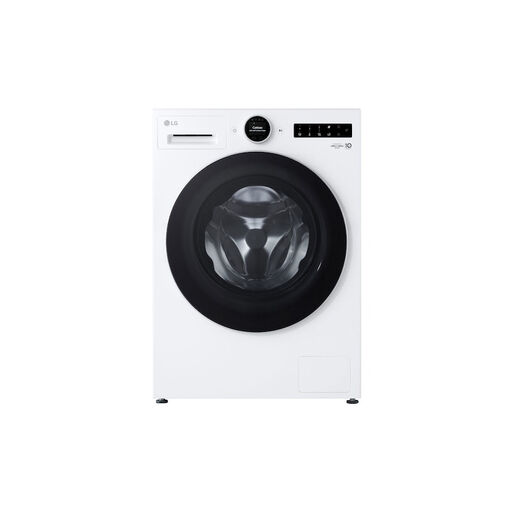 Image unavailable
LG F4WX851Y, 11 kg, white
The 11 kg capacity is worth considering if you regularly wash large loads. To wash a duvet, check the load limit for the relevant programme as well as the space needed for installation.
View on Joybuy
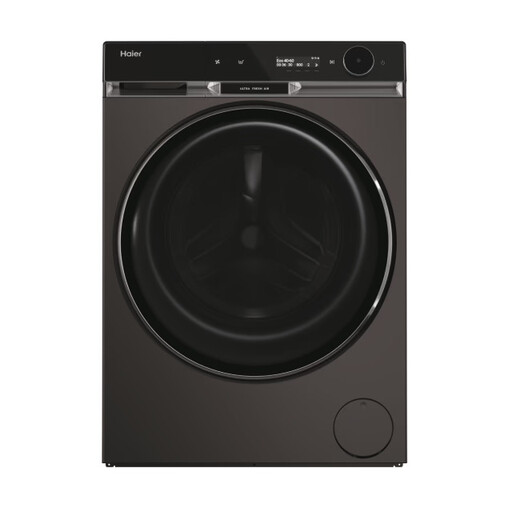 Image unavailable
Haier X Series 11 HW100-BD14397PGU1, 10 kg
This capacity is worth considering if your laundry baskets are often full; the model name indicates a spin speed of 1,400 rpm. Check the programmes and their load limits for your bulky items, as well as the clearance in front of the door.
View on Joybuy
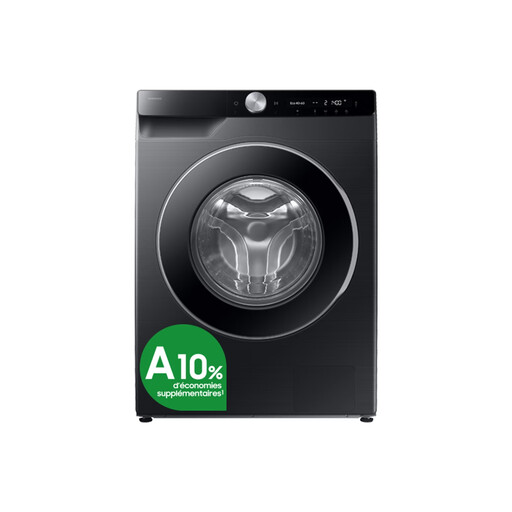 Image unavailable
Samsung WW90DG6U85LBU3 AI Wash 6000 Series, 9 kg, black
The 9 kg capacity is worth considering for everyday family laundry if you wash very bulky items less often. Check the instructions for your duvets and what the AI Wash function adjusts on this model.
View on Joybuy
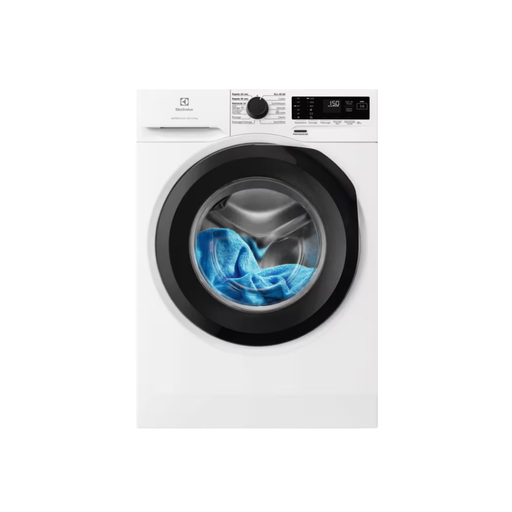 Image unavailable
Electrolux EWF1410N2, 10 kg
The 10 kg capacity is worth considering if you regularly do large family loads. Before choosing this model for duvets, check the programmes and their maximum loads; also measure the available depth and door clearance.
View on Joybuy
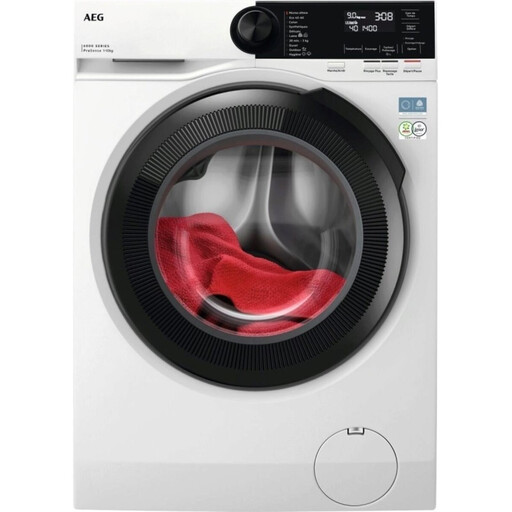 Image unavailable
AEG LFR62E114S, 10 kg, white
This capacity is worth considering if you often wash large loads; the model name indicates a spin speed of 1,400 rpm. For bulky items, check the suitable programme, its load limit and the installation dimensions.
View on Joybuy
Frequently asked questions
What does the kilogram figure on a washing machine mean?
It refers to the maximum weight of dry textiles under the conditions of the relevant programme and in accordance with the supplier’s instructions, based on the European Commission’s definition. Check the manual before applying this figure to a duvet or a delicate laundry programme.
Can a 10 or 11 kg machine wash any duvet?
No. The stated capacity alone doesn’t confirm that a particular duvet is suitable. Check its care label, the programme recommended by the manufacturer and the maximum load allowed for that programme.
Which figures should I compare on the energy label?
Compare the rating, as well as energy consumption in kWh per 100 cycles and water consumption in litres per cycle. ADEME notes that these figures are based on reference cycles, so they don’t directly describe every load of laundry you’ll wash.
How much space should I leave in front of a front-loading washing machine?
Leave enough room to open the door and load your largest items. Check the measurement with the door open for the exact model: for example, LG France gives a depth of 1,100 mm with the door open at 90° for the F14R31WHSA, compared with a stated cabinet depth of 565 mm.
Which rating should I check for a new washing machine in France?
Check the durability index shown for the model in question. According to the ministry responsible for the ecological transition, it replaced the repairability index for front-loading and top-loading washing machines from 8 April 2025.


