If you often have large loads to wash and one load follows another, it’s worth considering a 10 to 12 kg front-loading washing machine: UFC-Que Choisir lists this capacity as a suitable option for this kind of use. If you mainly wash smaller loads separately, check the load limits for each programme instead. Either way, compare the Eco 40-60 programme duration, the space needed with the door open and the durability rating displayed in France.
Who is this option for?
Households with laundry baskets that are often full
If sheets, towels and clothes regularly fill the drum, your priority is to handle these large loads without running unnecessary extra cycles. UFC-Que Choisir lists 10 to 12 kg capacities as suitable options when you do several loads in a row, provided you make actual use of that capacity.
Families who alternate between large and small loads
You wash a lot of laundry overall, but often separate items by fabric or colour. UFC-Que Choisir points out that programmes for synthetics, delicates or wool have lower load limits than the machine’s rated capacity. The programme table matters just as much as the drum size.
People who care about durability
If you use your appliance regularly, you’ll want to look at reliability and repairability rather than choosing based on capacity alone. According to ADEME, new washing machines sold in France must display a durability rating from April 2025. This adds to the information you can use to compare how each model performs in everyday use.
Which criteria should you prioritise?
Start with the loads you wash most often, then compare the programmes you can use with your laundry routine and the model’s durability information.
| Criterion |
What to check |
Who it matters to |
| Capacity you’ll use |
Capacity in kg of dry laundry and how often you have loads that nearly fill the drum; also measure the depth and the clearance needed with the door open. |
When my laundry baskets are often overflowing, I want to combine large loads rather than run extra cycles. Around 42% of consumers would put the capacity they can actually use at the top of their list. |
| Programme flexibility |
Maximum load for each programme and the duration of the Eco 40-60 cycle; check the load limit for any quick programme too. |
If I regularly separate cotton, wool and delicate fabrics, a large drum alone won’t help me organise my laundry. Around 33% of consumers would prioritise programme flexibility. |
| Durability and everyday use |
The durability rating displayed in France, energy label data and rinsing test results for the model in question. |
For an appliance that gets frequent use, I want to be able to check its repairability and everyday-use features before deciding. Around 25% of consumers would make this their main concern. |
Mistakes to avoid
-
Choosing the biggest drum for one bulky item you wash occasionally
A large drum is most useful if you regularly wash bulky loads. If you mainly run the machine with only a small amount of laundry, it may increase energy use without reducing the number of cycles, as UFC-Que Choisir points out.
Base your choice on your usual laundry loads, then check separately what capacity you need for the bulky items you actually wash.
-
Assuming every programme can take the machine’s full rated capacity
The stated capacity applies to dry laundry under the conditions of the reference programme. UFC-Que Choisir notes that some other programmes have lower limits, particularly those for synthetics and wool.
Check the permitted loads in the instructions for the programmes your household uses often.
-
Judging rinsing performance by the energy rating alone
The energy label helps you compare information about how an appliance is used, but it isn’t enough to assess rinsing performance. UFC-Que Choisir tests washing, rinsing and spinning separately when it evaluates models.
If rinsing performance is particularly important to you, look for test results for the exact model as well as the information on its label.
-
Measuring only the available width
Even if the width is suitable, the overall depth and the door opening may make installation or loading a laundry basket more difficult.
Measure the space, the clearance in front of the machine and the room needed with the door open before you order.
Brands to consider
These model examples can help you compare specific features, but they don’t indicate how an entire brand performs.
Bosch
The Series 8 WGB256A2FR front-loader is worth considering if you’re looking for a 10 kg capacity.
- Bosch Electroménager France lists a 10 kg capacity and a maximum spin speed of 1 600 tr/min for this model.
- These specifications alone don’t tell you about rinsing performance or programme duration. Compare the model’s details with your needs.
Miele
The WWD380 WCS PWash&Steam&9kg is an example to consider if your usual loads don’t call for a 10 to 12 kg drum.
- Miele France lists a 9 kg capacity and a 49-minute QuickPowerWash programme for this model.
- Check the load limit and conditions for this quick programme separately from those for the Eco 40-60 cycle. Its duration doesn’t reflect the time needed for every family wash.
LG
The F14R76BSTA is an example of an 11 kg front-loader to consider if you regularly wash large loads.
- LG France lists dimensions of 600 × 850 × 565 mm and an 11 kg capacity for this model.
- The appliance’s depth alone doesn’t tell you how much space you’ll need to open the door. Check the overall clearance too.
Front-loading washing machines for frequent large loads
These 10 to 11 kg front-loading washing machines are suited to households that often have large loads. For each one, compare the stated capacity with the programmes you usually use and the space available.
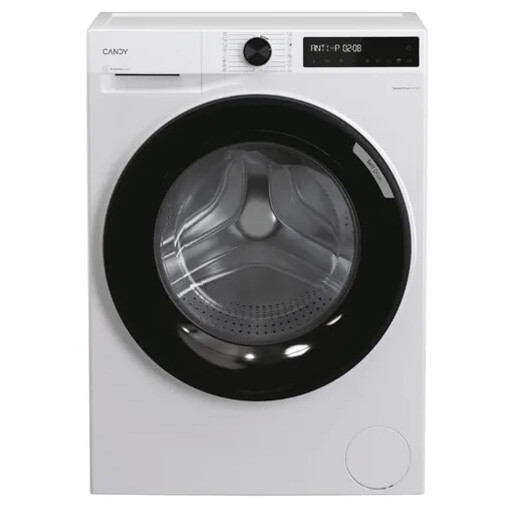 Image unavailable
Candy BR 411BL9-S — 11 kg, white
Its 11 kg capacity is worth considering if family laundry baskets regularly fill the drum.
- Front-loading washing machine; energy rating A stated in the product name.
- Check the load limits for each programme and the clearance needed with the door open.
View on Joybuy
 Image unavailable
Haier X Series 11 HW100-BD14397PGU1 — 10 kg
Its 10 kg capacity suits frequent family use if large loads are the norm in your household.
- Stated spin speed of 1 400 tr/min; energy rating A.
- Features include AutoDose, Steam and Wi-Fi. Check the load limits for each programme and the space needed to open the door.
View on Joybuy
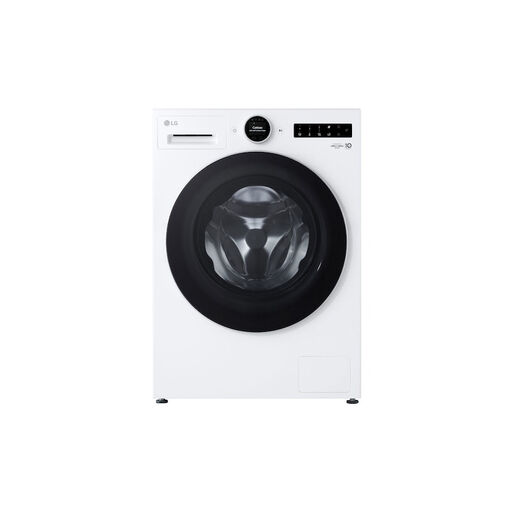 Image unavailable
LG F4WX851Y — 11 kg, white
This 11 kg front-loader is worth considering if your laundry baskets are often full, rather than if you mainly wash small loads.
- Energy rating A stated in the product name.
- Check the dimensions, door clearance and permitted load for each programme.
View on Joybuy
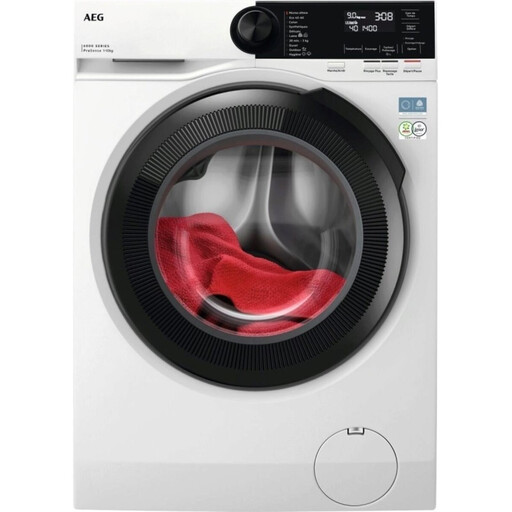 Image unavailable
AEG LFR62E114S — 10 kg, white
Its 10 kg capacity is worth considering if you want to combine regularly large family loads.
- Freestanding front-loading washing machine; stated spin speed of 1 400 tr/min and energy rating A.
- Check the model’s dimensions, then look at the load limits for each programme and the duration of the cycles you use.
View on Joybuy
 Image unavailable
Electrolux EWF1410N2 — 10 kg
This capacity is worth considering if you regularly wash large loads and often fill the drum.
- Front-loading washing machine; features include Steam Anti-Allergy and TimeSave.
- Check the load limits for each programme, cycle durations and the space needed with the door open.
View on Joybuy
Frequently asked questions
What capacity should you choose if you do several family loads in a row?
According to UFC-Que Choisir, a 10 to 12 kg capacity is a suitable option if you often wash large loads. If the drum is often only partly filled, choose a capacity that better suits the amount of laundry you usually wash.
Can a 10 kg washing machine take 10 kg on every programme?
No. Load limits vary by programme. UFC-Que Choisir notes that programmes for synthetics and wool, in particular, have lower limits. Check the model’s instructions before planning your wash cycles.
What should you look for on the energy label if you wash frequently?
Compare the energy, water, duration and noise information shown for washing machines, bearing in mind the conditions under which it was measured. ADEME recommends using the energy label to compare these features. Look separately at the programmes you’ll use day to day.
What is a washing machine’s durability rating for in France?
It provides information to help you compare reliability and repairability, but doesn’t tell you which capacity or programme will suit your household. According to ADEME, new washing machines sold in France must display a durability rating from April 2025.


