For large loads that need washing frequently, or duvets that are washed regularly, a large-capacity drum can save you splitting loads. For smaller, everyday loads, a standard-capacity model may be a better fit. In its article of 17 December 2025, UFC-Que Choisir links frequent washing to capacities of 10 to 12 kg. However, the stated capacity does not guarantee that a duvet will fit, or that washing a partial load will use less energy.
Who is this guide for?
Households with frequent large loads
If you regularly have one load after another, look for a capacity that lets you combine your everyday washing without choosing a drum you’ll rarely fill. UFC-Que Choisir links frequent washing to choosing a suitable capacity, while ADEME recommends checking that a large-capacity model meets your household’s needs.
Households that wash duvets often
If you regularly wash bulky items, check that they fit in the drum and that their weight is within the limit for the programme you plan to use. UFC-Que Choisir also points out that the capacity for the selected programme matters.
Households with very varied loads
If you alternate between large loads and smaller loads sorted by fabric type, look at features that adapt to the load. Don’t assume they will reduce energy or water use by a specific amount.
What to check before you buy
Standard capacity
Choose this if: your usual loads fill the drum well and you only wash bulky items occasionally.
Keep in mind: bulky loads may need more than one cycle. Also check the capacity of the programme you’ll use to wash them.
Large capacity
Choose this if: you regularly wash large loads or bulky items. UFC-Que Choisir refers to capacities of 10 to 12 kg for frequent washing.
Keep in mind: a drum that’s rarely full may not suit your usual washing. Its capacity alone doesn’t prove that it will use less energy for a half load.
| Consideration |
What to check before you buy |
Who it matters most to |
| Number of usual cycles |
Estimate the weight of dry laundry in a typical load and compare it with the capacities stated for the machine and the programmes you’ll use. |
When I have one load after another, I want to combine my usual loads without choosing a drum I’ll rarely fill. Around 31% of consumers prioritise reducing the number of everyday cycles. |
| Duvets and bulky fabrics |
Check the care label and the maximum load for the programme you intend to use. The cotton capacity alone isn’t enough to confirm compatibility. |
If I regularly wash duvets or other bulky items, I check that they can be washed in the drum and on the relevant programme. Around 25% of consumers prioritise washing these fabrics. |
| Partial loads |
Distinguish between the figures on the energy label and the consumption data for a full and partial load, for the same model and programme. |
When I often sort laundry and alternate between small and large loads, I want to know how the machine adapts to partial loads. Around 25% of consumers put this consideration first. |
| Moisture after spinning |
Compare the spin-drying efficiency class and, where stated, the remaining moisture level. Also check the conditions for the stated maximum spin speed. |
If I need to dry my washing after every load, I look at what could make that easier, rather than relying on the stated speed alone. Around 19% of consumers prioritise making drying easier afterwards. |
Mistakes to avoid
-
Choosing the biggest drum for every load
The benefit of a large capacity depends on the loads you actually combine. A drum that’s often only partly full may not suit your usual washing.
Start with your everyday loads, and consider a larger capacity if you regularly wash large loads or bulky items.
-
Assuming the energy-label figure applies to every half load
For the eco programme, the label shows consumption calculated using a combination of load sizes. It doesn’t give the consumption for a particular half load on its own.
Compare models using the same programme, and look for data measured at the same load sizes before drawing conclusions about partial-load consumption.
-
Assuming every programme can take the full cotton capacity
According to UFC-Que Choisir’s test protocol, the maximum load for the synthetics programme is limited to half the cotton capacity, or even less.
Check the manual for the right programme for your fabrics, especially before planning a large load on a quick or special cycle.
If the suitable programme takes less laundry than the cotton programme, a bulky load may need to be split across several cycles.
Brands to consider
Bosch
The WAN2827FFR is an 8 kg model worth considering if your usual loads don’t call for a large drum.
- Bosch states that this model has an 8 kg capacity and a maximum spin speed of 1 400 tr/min.
- The manufacturer says that the spin speed may be reduced if the load is unbalanced. Check whether bulky items are within the capacity of the programme you plan to use.
Hisense
The WF3S1045BW3 is a 10.5 kg model with an advertised automatic programme, worth considering if your load sizes vary.
- Hisense says the automatic programme weighs the laundry and adjusts the cycle.
- The manufacturer’s description doesn’t quantify the model’s energy savings for partial loads.
LG
The F14X56WHST is an 11 kg model worth considering if you regularly wash large loads.
- LG states that this model has an 11 kg capacity, along with AI DirectDrive and TurboWash features.
- These features don’t prove that every duvet will fit, or that the machine uses less energy for a half load than a smaller model.
Miele
The WWG880 WCS PWash&TDos&Steam is a 9 kg model with advertised automatic dosing, rather than an XL option.
- Miele lists TwinDos and QuickPowerWash for this model.
- The manufacturer’s information isn’t an independent comparison of the cost or efficiency of cycles that suit your laundry habits.
Washing machines available on Joybuy
This selection features large-capacity washing machines, with models ranging from 10 to 12 kg and one model whose description mentions load adaptation. Compare the capacity with the loads you combine, and check separately which programmes are designed for bulky fabrics.
 No image available
Haier X Series 11 HW100-BD14397PGU1, 10 kg
Worth considering for regular large loads and washing loads of varying sizes.
- Capacity: 10 kg
- Spin speed: 1 400 tr/min
- Energy class stated: A
- The product description mentions load detection, the Smart AI cycle, AutoDose, Steam and Wi-Fi.
View on Joybuy
 No image available
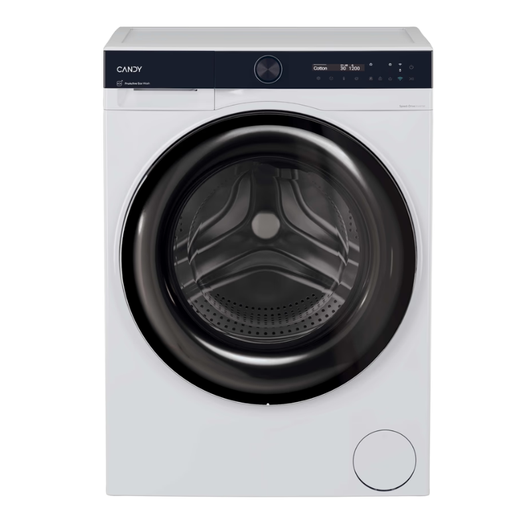
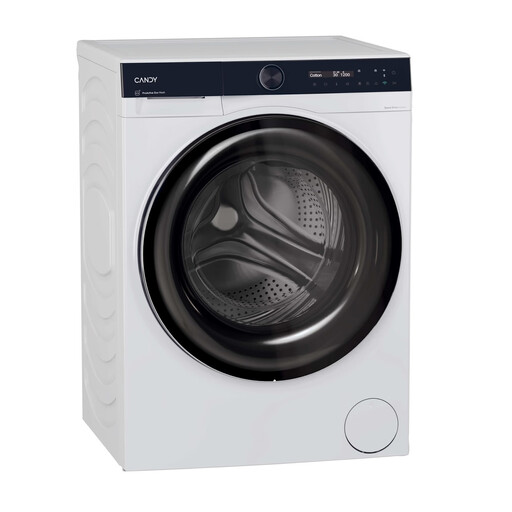
Candy ProWash 700 BS 410B10-S, 10 kg
Worth considering if you’re looking for a 10 kg capacity for frequent large loads.
- Capacity: 10 kg
- Spin speed: 1 400 tr/min
- Energy class stated: A
- Colour stated: white
- The product description mentions 16 programmes and a 78-litre drum.
View on Joybuy
 No image available
Candy ProWash 700 BS 412B8-S, 12 kg
Worth considering if you regularly combine large loads and need a 12 kg capacity.
- Capacity: 12 kg
- Spin speed: 1 400 tr/min
- Energy class stated: A
- The title mentions Wi-Fi, Bluetooth and steam.
View on Joybuy
 No image available
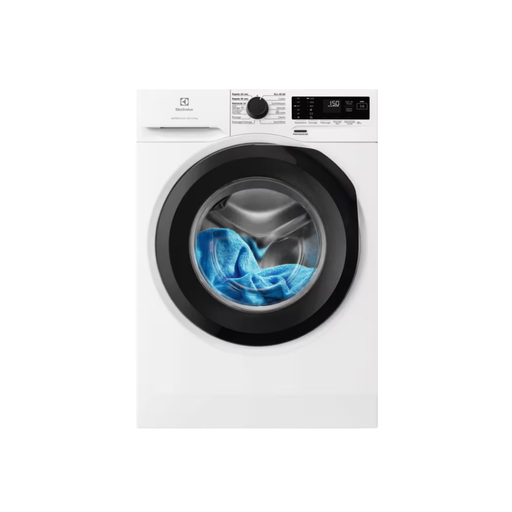
Electrolux EWF1410N2, 10 kg
Worth considering for regular washing that calls for a 10 kg capacity.
- Capacity: 10 kg
- Maximum speed stated: up to 1 351 tr/min
- The product description mentions cotton, delicate, wool, sports and eco programmes.
View on Joybuy
 No image available
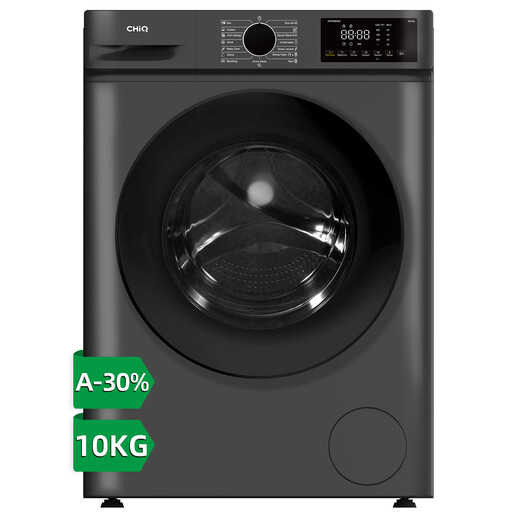
CHiQ JW105883G, 10 kg
Worth considering for large loads. The product description advertises a programme for king-size duvets, but check that it’s suitable for the item you want to wash.
- Capacity: 10 kg
- Spin speed: 1 400 tr/min
- Energy class stated: A
- Colour stated: dark grey
- The product description mentions a 530 mm drum, 16 programmes, steam and one-touch intelligent washing.
View on Joybuy
Frequently asked questions
Does an 11 kg washing machine use less energy than an 8 kg model if it saves you a cycle?
Not necessarily. The result depends on the loads you actually combine, the programmes and the models being compared. A weighted figure for the eco programme doesn’t, on its own, tell you how much energy a small load will use.
What should you check before installing a washing machine?
Measure the space and check that you can access the door. Then follow the manual for your chosen model to remove the transit bolts, connect the machine and make sure it’s level. The relevant manual sets out these steps.
How should you account for small loads and detergent use?
Choose a capacity that suits your loads, stick to the programme’s limit and adjust the detergent dose to the load. UFC-Que Choisir notes that a quick programme may take less laundry than the stated capacity.
What labelling and consumer rights apply when buying a washing machine in France?
European energy labelling applies to household washing machines covered by the regulations. In France, the durability index is gradually replacing the repairability index for the washing machines concerned, from 8 April 2025. When a private individual buys from a professional seller, the legal guarantee of conformity is compulsory. According to the DGCCRF, a claim must be made within two years of delivery, regardless of any optional commercial warranty.


