Choose a capacity based on the loads you wash regularly, rather than your bulkiest duvet. According to UFC-Que Choisir, 8 to 9 kg is generally enough for a household of 3 to 4 people; consider 10 to 12 kg if you regularly wash large loads. If small loads are still common, also check the specific model’s consumption figures and how it handles different load sizes.
Which households is it for?
Households with regular large loads
If your laundry basket is often full of sheets, thick towels, throws or duvets, a capacity of 10 to 12 kg is worth considering. UFC-Que Choisir recommends even larger capacities only for households that regularly wash bulky items.
Households with mixed load sizes
If large loads alternate with smaller washes or loads separated by fabric type, choose the capacity you’ll use most often. ADEME recommends matching the drum size to your actual needs rather than running lots of underfilled cycles.
Households focused on drying
If you often dry clothes indoors or use a tumble dryer, compare spin efficiency too. The amount of moisture left in your laundry matters when choosing a machine, as well as the drum capacity.
How do you choose between capacities?
First, look at the loads you typically wash over several weeks. Then compare the capacities that suit your routine, using the energy label, spin information and guidance for bulky items.
| What matters |
What to check |
Who it matters to |
| Frequent large loads |
How often you genuinely need a 10 to 12 kg capacity; the model’s guidance on washing duvets. |
When sheets and other bulky items pile up every week, I want to avoid splitting my washing into several loads regularly. Around 36% of consumers would make this capacity their priority. |
| Smaller, everyday loads |
Whether an 8 to 9 kg capacity suits your usual loads; how the specific model adjusts to the load size. |
If my usual loads are still fairly small, despite the occasional bulky item, I’d rather not choose a drum size based on a rare load. Nearly 29% of consumers would prioritise this versatility. |
| Water, energy and spinning |
For similar capacities, compare kWh per 100 cycles, litres per Eco 40-60 cycle and the spin-drying efficiency class on the label. |
If I often dry clothes indoors or use a tumble dryer, energy and water use, as well as the moisture left in my laundry, influence my decision. This would be the main consideration for around 21% of consumers. |
| Loads that are hard to balance |
The loading and spinning instructions in the manual, particularly for a very small load on its own. |
When some loads are small or contain just one heavy item, I want to know how to avoid an unbalanced load disrupting the spin cycle. Nearly 14% of consumers would put this use case first. |
What to avoid before buying
-
Choosing a drum size for an occasional duvet wash
According to UFC-Que Choisir, a capacity of 12 to 15 kg is mainly worthwhile if you regularly wash very bulky items. A large drum that’s rarely full may use more water and electricity.
Keep a note of your usual load sizes for several weeks, and separate these from seasonal washes.
-
Assuming load detection guarantees lower energy use
A feature advertised by a manufacturer doesn’t, on its own, prove that a machine uses less energy when half full. UFC-Que Choisir points out that how effectively machines adjust their settings varies.
Check the feature on the exact model you’re considering, then compare the consumption figures for machines with similar capacities.
-
Looking only at the energy rating letter
The letter doesn’t tell you how much water a machine uses, how long the Eco 40-60 cycle takes, or how well it spins or how noisy it is. These factors can affect your choice between two capacities that suit your household.
Check the kWh per 100 cycles, litres per cycle, cycle duration, spin-drying efficiency class and noise level shown on the labels.
-
Assuming a large drum always spins a small load better
Electrolux says a very small load can become unbalanced during the spin cycle; Bosch explains that some machines then automatically reduce the maximum spin speed.
Follow the model’s loading and installation instructions before blaming its capacity for an incomplete spin.
Brands worth considering
Bosch
Bosch offers front-loading washing machines in a range of capacities and recommends considering 9 kg or more if you do a lot of washing.
- Bosch says the ActiveWater Plus feature on some models adjusts water use to the size of the load.
- Check that the feature is included and review the consumption figures for the model you’re considering: this claim doesn’t apply to the entire range.
Electrolux
The 10 kg EW6FI4210AB combines a generous capacity with a duvet programme, making it worth considering if you wash these items often.
- Electrolux says its SensiCare system adjusts the cycle duration, water and energy use to the load weight on this model.
- This claim applies to the EW6FI4210AB; it doesn’t prove what results you’ll get with other models or a particular duvet.
LG
The F14R78WSTA is an 11 kg front-loading model to consider if you regularly wash large loads.
- LG lists a duvet programme and load detection for this model.
- Check the manual for the types of duvet it accepts and the loading instructions. Load detection alone doesn’t tell you how much energy it saves.
Washing machines available on Joybuy
These 9 to 11 kg models let you compare an in-between capacity for mixed loads with larger capacities for frequent, bulky washes. If you have a particular duvet in mind, always check the model’s instructions before choosing.
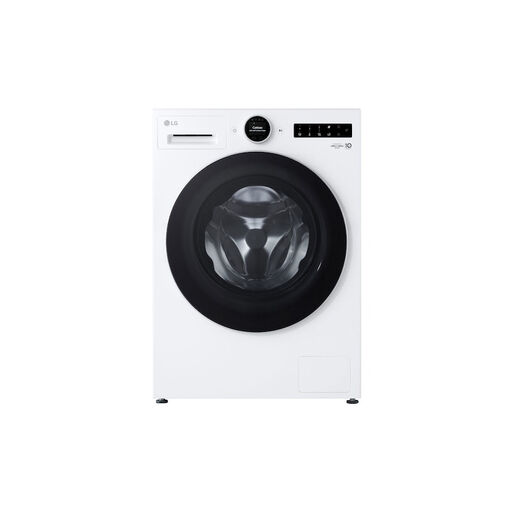 Image unavailable
LG F4WX851Y, 11 kg, white
Worth considering if large loads come around often enough for you to make use of an 11 kg capacity.
Energy class A is stated in the model title. For smaller loads and duvets, check the F4WX851Y documentation for its features and loading limits.
View on Joybuy
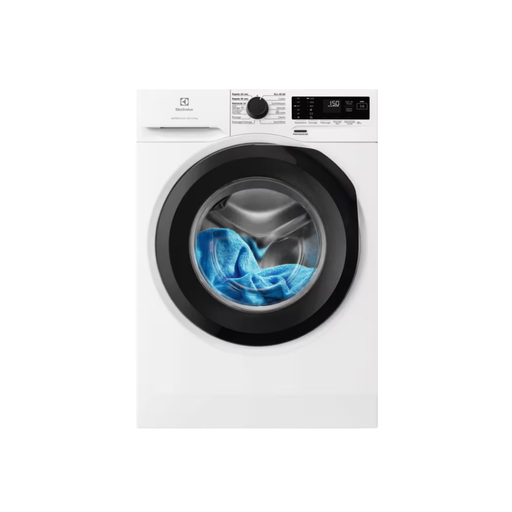 Image unavailable
Electrolux EWF1410N2, 10 kg, TimeSave
Its 10 kg capacity is worth comparing with the loads your household washes regularly.
If you alternate between smaller loads and duvets, check the EWF1410N2 manual for load-management features and the types of laundry it can handle.
View on Joybuy
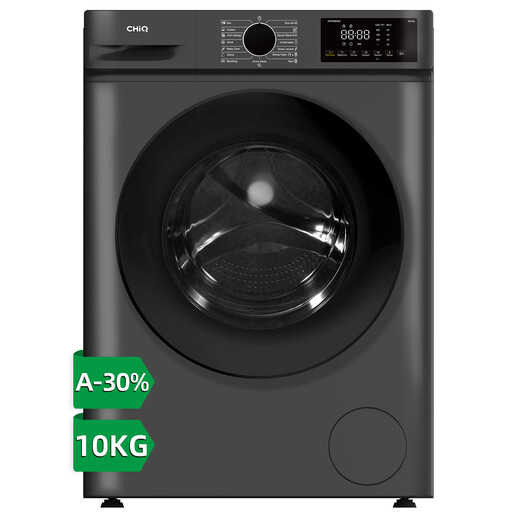 Image unavailable
CHiQ JW105883G, 10 kg, dark grey
This 10 kg model is suited to households that often wash large loads, provided you follow the instructions for each type of fabric.
The model title lists a maximum spin speed of 1 400 tr/min and 16 programmes. Also compare its energy label and the instructions for washing duvets.
View on Joybuy
 Image unavailable
Electrolux EW7FI259160V, 9 kg, SteamCare SmartSelect
A 9 kg capacity is worth considering if your usual loads vary and very large loads aren’t the norm.
The model title lists a maximum spin speed of 1 600 tr/min. If duvets are part of your decision, check the limits in the EW7FI259160V manual.
View on Joybuy
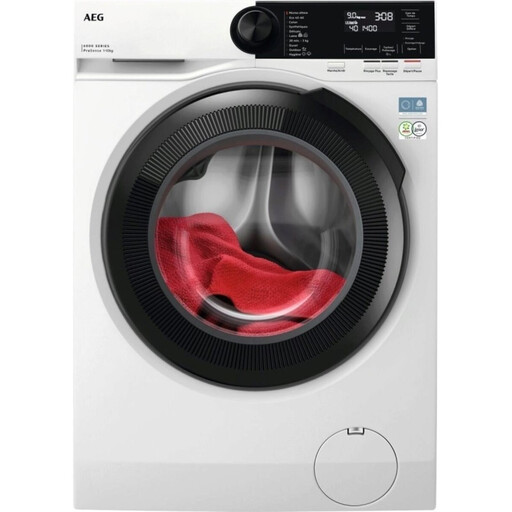 Image unavailable
AEG LFR62E114S, 10 kg, white
Its 10 kg capacity is worth considering if you wash large loads frequently rather than occasionally.
The model title lists energy class A and a maximum spin speed of 1 400 tr/min. To compare how it’ll work for everyday use, check the LFR62E114S energy label and loading instructions.
View on Joybuy
Frequently asked questions
How do you compare two washing machines with different capacities?
First, compare the capacity with the size of your usual loads, then check the energy label for the models you’ve shortlisted. For the Eco 40-60 programme, look in particular at kWh per 100 cycles, litres per cycle and cycle duration. Also consider the spin-drying efficiency class if drying your laundry quickly matters to you.
Does load detection guarantee lower energy use when the machine is half full?
No: having this feature doesn’t guarantee a particular result when the machine is half full. UFC-Que Choisir points out that how effectively machines adjust their settings varies. Check the feature on the exact model and compare the available consumption figures, without assuming that every load will save the same amount.
What should I do if a small load doesn’t spin properly or causes vibrations?
Start by following the loading and installation instructions in the manual: a small load on its own can become unbalanced during the spin cycle. Electrolux highlights this risk with very small loads. Also check that the laundry is evenly distributed and the machine is stable.


