Choose a capacity based on the loads you wash regularly, not just the largest duvet in your household. According to UFC-Que Choisir, 8–9 kg is generally enough for a household of 3–4 people, while 10–12 kg makes more sense when large loads are a regular occurrence. If you rarely wash bulky items, consider whether an off-site laundry option would work for you before choosing a large drum that you’ll mostly use for small loads.
Who is each capacity best suited to?
How often you wash large loads matters more than the exceptional size of a single item.
Families with baskets that are often full
If sheets, towels and clothes regularly fill the drum and you find yourself running back-to-back cycles, a 10–12 kg capacity is worth considering. UFC-Que Choisir considers this more suitable for households that regularly wash large loads; just make sure it also works for your everyday loads.
Households that often wash duvets and throws at home
The weight in kg alone doesn’t tell you whether a particular model can wash a duvet. Check the space in the drum, the permitted load for the relevant programme and the textile’s care label.
Households that mostly wash small loads
If you mostly wash small loads and only wash a duvet occasionally, a standard-capacity model may be a better fit for your everyday laundry. UFC-Que Choisir says that 8–9 kg is generally enough for a household of 3–4 people; consider separately how you’ll handle items that are too bulky.
What should you check before choosing?
Start with the size of your usual loads, then check the programmes and consumption figures for models that fit your needs.
Standard capacity
Worth considering: if most of your laundry consists of small and medium loads; UFC-Que Choisir generally puts the needs of a 3–4 person household at around 8–9 kg.
Keep in mind: a thick duvet may take up too much room, even if its weight seems suitable.
Large capacity
Worth considering: if you regularly wash large loads and bulky textiles; UFC-Que Choisir puts suitable capacities at around 10–12 kg in this case.
Keep in mind: a drum that’s rarely full doesn’t guarantee lower consumption and may need more room when installed.
Occasional off-site washing
Worth considering: if only a few bulky items a year exceed the capacity of your usual washing machine, provided their care instructions allow it.
Plan for: the travel and arrangements needed for each wash away from home.
| Criteria | What to check | Think about your needs |
|---|
| Capacity and drum volume |
Compare the permitted kg of dry laundry for the programme in question. For a bulky item, also check the drum volume and the maximum load stated in the manual. |
Are my laundry baskets often full, or do I mainly need room for the occasional duvet? |
| Partial loads |
Check the kWh/100 cycles, litres/cycle and Eco 40-60 programme duration for the exact models you’re considering. Look at figures for different load sizes where available; a load-sensing feature alone doesn’t prove that a machine uses less energy or water. |
Most of my loads are small: I want to compare machines in conditions close to how I use them, rather than relying only on the kg figure. |
| Duvets and delicate textiles |
Check the programme, its maximum load and the care label instructions for the textile. UFC-Que Choisir notes that the permitted load may be lower than the rated capacity on other programmes. |
I often wash duvets or throws at home: I need enough room and a cycle that’s suitable for each textile. |
| Installation |
Check the dimensions of the exact model, the connections and the clearance needed to open the door. Don’t assume the depth of a machine based on its capacity alone. |
I need to be able to load a bulky item and open the door fully in the space available. |
Mistakes to avoid
-
Assuming the stated kg capacity applies to every programme
Capacity refers to a mass of dry laundry under specific programme conditions. UFC-Que Choisir points out that the permitted load may be lower for other textiles; a duvet may also be too bulky even if it’s within the weight limit.
Check the maximum load for each programme in the model’s manual and read the duvet’s care label. Don’t force the textile into the drum.
-
Choosing 10–12 kg for one occasional duvet
UFC-Que Choisir links the benefits of large-capacity machines to frequent large loads, and notes that an oversized machine may use more energy than necessary when running a partial load.
Count your usual loads before you choose. For a bulky item you only wash occasionally, also consider arranging an occasional off-site wash.
-
Comparing only the advertised features
A load-sensing feature or a named programme on a product page doesn’t tell you everything about consumption or washing results. UFC-Que Choisir’s test protocol looks at washing, rinsing, spin performance, programme duration, consumption and noise, among other things.
Compare the energy labels and specifications for the exact models; if you look at test results, make sure they were obtained using comparable methods.
-
Forgetting about the door and clearance
Dimensions vary between models, including large-capacity machines. You’ll need more space than the stated depth of the machine with its door closed.
Measure the space, connections and clearance in front of the door using the specifications for the model you’re considering.
A closer look at some branded models
These models illustrate specific capacities and features; their specifications don’t apply to every machine from the same brand.
LG
The F14R31WHSA is an example of an 11 kg model to consider if you regularly wash bulky items.
- According to LG France, the F14R31WHSA has a Duvet programme and load sensing.
- Check the permitted load for the duvet you want to wash and the space needed to install the machine.
Haier
The HW100-B14939 is an example of a 10 kg model to consider for regular large loads.
- Haier France says this model automatically detects the load weight and adjusts the water and cycle duration.
- Its stated depth is 672 mm; this feature alone isn’t enough to compare its consumption with another machine.
Electrolux
The EW6F5814BA is an 8 kg option to consider when you mostly wash small or medium loads.
- Electrolux France says this model features SensiCare, which adjusts the duration, water and energy use to the load.
- Before planning to wash a duvet, check the programmes and load limits for the specific model you’ve chosen.
Bosch
The WGB256A2FR is another 10 kg model to consider if you’re comparing large loads and spin performance.
- Bosch France states that this model has a maximum spin speed of 1,600 rpm.
- Bosch notes that this maximum speed may be reduced automatically if the load is unbalanced; also check which programmes are suitable for your textiles.
Washing machines available on Joybuy
These 8, 10 and 11 kg models let you compare options for everyday laundry and larger family loads. If you’re washing a duvet, always check the model’s manual and the textile’s care label before choosing a capacity.
 Image unavailable
Haier X Series 11 HW100-BD14397PGU1, 10 kg
A 10 kg capacity to consider if you regularly wash large loads. The model designation indicates 1,400 rpm, an A rating, AutoDose and Wi-Fi; check the manual to see which programme and load are permitted for your duvet.
View on Joybuy
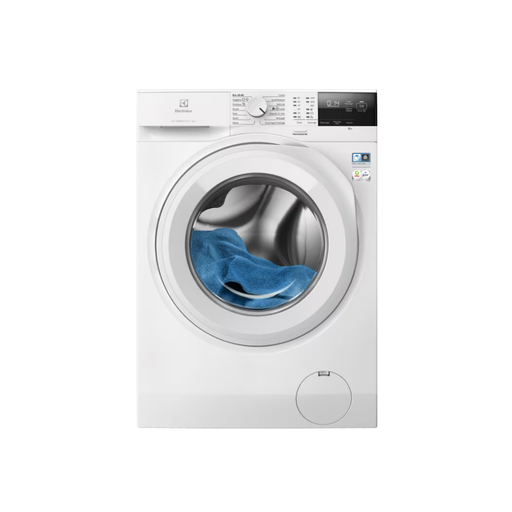 Image unavailable
Electrolux EW6FI4805AW, 8 kg, SensiCare
An 8 kg capacity to consider if you mostly wash small and medium loads. The model designation mentions SensiCare and 1,400 rpm; for a bulky item, check the relevant programme and its load limit in the manual.
View on Joybuy
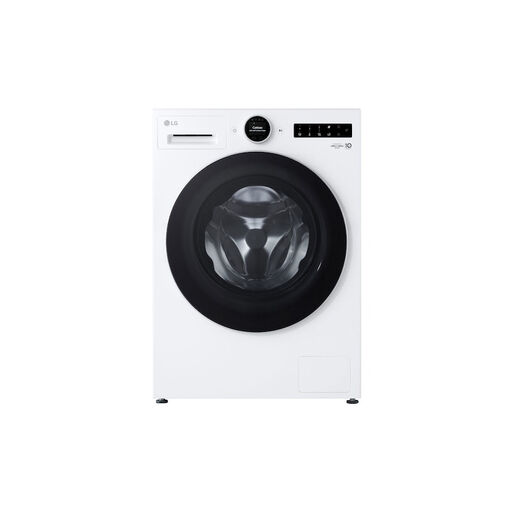 Image unavailable
LG F4WX851Y, 11 kg, A-rated
An 11 kg capacity to consider for frequent, large family loads. Before planning to wash a duvet, check the manual for the programme, permitted load and space needed for installation.
View on Joybuy
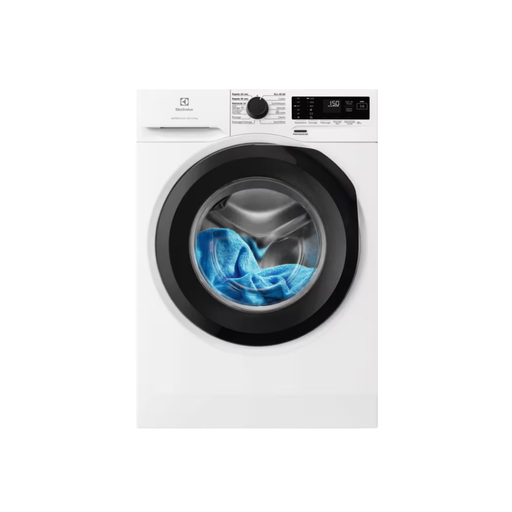 Image unavailable
Electrolux EWF1410N2, 10 kg
Its 10 kg capacity suits a household that regularly washes large loads. The model designation mentions TimeSave and an Inverter motor; check separately which programme and load are permitted for duvets.
View on Joybuy
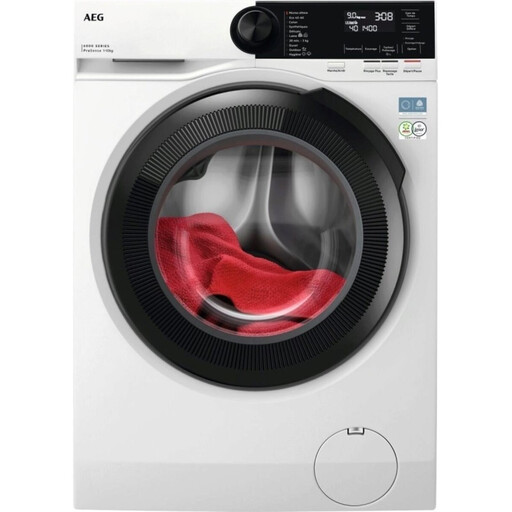 Image unavailable
AEG LFR62E114S, 10 kg, 1,400 rpm
This 10 kg freestanding washing machine is worth considering for frequent large loads. Its model designation indicates an A rating; check the manual for a programme suitable for bulky textiles and its maximum load.
View on Joybuy
Frequently asked questions
What does an 8, 10 or 11 kg capacity mean on a washing machine?
It refers to the stated maximum mass of dry laundry for a specific programme and loading conditions, not a limit that applies to every cycle. UFC-Que Choisir points out that programmes for synthetics, wool or delicate textiles may take a smaller load, so check the model’s manual.
How can I compare machines if I often wash half-loads?
Compare the figures for the exact models rather than looking only at their capacity or energy rating. Check the kWh/100 cycles and litres/cycle on the energy label, then look at the Eco 40-60 programme information for different load sizes in the European EPREL product database, where available. A manufacturer’s claim that a machine detects the load isn’t enough to tell you which of two models will use less in real-world conditions.
Is a Duvet programme suitable for every duvet?
No: the programme name doesn’t replace the duvet’s care label or the washing machine’s load limit and instructions. Check the filling, permitted cycle and available space in the drum before washing it at home.


