Households of 3 to 4 people
If everyday clothes, bedding and towels regularly fill your laundry basket, 8 to 9 kg is a good starting point, according to UFC-Que Choisir. Compare this guide with the size of your actual loads.


Choose a capacity based on the loads you usually wash, not just the number of people in your household. According to UFC-Que Choisir, 8 to 9 kg is generally enough for 3 to 4 people; 10 to 12 kg is a better fit when you regularly wash large loads. Front-loading models offer a wider range of capacities, while a top-loading machine may suit you better if you want to avoid bending down, provided its capacity meets your needs.
If everyday clothes, bedding and towels regularly fill your laundry basket, 8 to 9 kg is a good starting point, according to UFC-Que Choisir. Compare this guide with the size of your actual loads.
A capacity of 10 to 12 kg may make sense if you often have large loads and usually fill the drum sufficiently. Household size alone isn’t enough to justify this capacity.
If you often sort laundry by fabric or colour, you may still need to run several small loads, even with a large drum. Check the manual for the load limits on the programmes you use.
Start with the size of your usual loads, then check programme limits and the features of the cycles you’ll use most often.
| Criteria | What to check | What you need |
|---|---|---|
| Drum capacity | Compare the capacity in kg of dry laundry with the size of your usual loads. UFC-Que Choisir gives 8 to 9 kg as a general guide for 3 to 4 people, and suggests considering 10 to 12 kg when you regularly wash large loads. | I want to wash my usual loads without running lots of cycles, but I don’t need a large drum if my loads are often small. |
| Loads per programme | Check the manual for the maximum load for programmes such as synthetics, jeans and wool: the stated capacity may not apply to every programme. | If I regularly sort my laundry, I need to be able to split it into loads that meet each programme’s limits. |
| Water and electricity | For models with a similar capacity, the European energy label shows, among other things, energy use per 100 cycles and water use per cycle on the Eco 40-60 programme, according to the European Commission. Check the programme duration too. | When I do several loads a week, I want to compare figures based on the same programme and allow enough time for each cycle. |
| Loading and spin cycle | Check that front or top loading suits your daily routine and the capacity you need. Compare the spin noise and spin performance separately for each model. | A top-loading machine appeals to me if I’d rather not bend down; if I often wash large loads, I also need to make sure the capacity is sufficient. |
A capacity of 10 to 12 kg is mainly suited to people who regularly wash large loads. If most of your loads are small, a larger drum won’t solve the problem of running underfilled cycles.
Before choosing this capacity, think about the size of your usual loads and how often you wash bedding, towels or bulky items.
The kg figure doesn’t necessarily match the permitted load for synthetics, jeans or wool.
Check the load table in the model’s manual for the programmes your household will actually use.
The rating alone doesn’t tell you how much water the Eco 40-60 cycle uses, how long it takes or how noisy the spin cycle is. The European Commission requires this information on the label for applicable washing machines.
Compare these figures across machines with a similar capacity, taking into account when you usually run your laundry.
Front-loading and top-loading machines suit different routines and capacity needs; their format alone doesn’t tell you how well they wash or spin.
First choose a suitable capacity and loading style, then check the specifications or test results for the specific model.
For each brand you’re considering, compare models whose capacity and loading style match your laundry needs.
Look at Miele models with a capacity suited to the size of your usual loads.
Compare Bosch models based on the amount of laundry you wash and the programmes you use most often.
Choose Siemens models with a capacity that matches the size of your regular loads.
Assess Samsung models using the same capacity and usage criteria as the other machines you’re considering.
These models illustrate three capacities to compare with your laundry needs: 9 kg front-loaders for everyday family loads, a 10 kg front-loader for regular large loads, and a 7 kg top-loader.
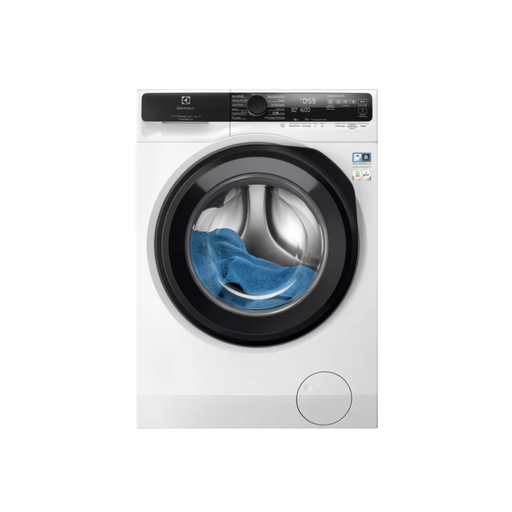 Image unavailable
Its 9 kg capacity matches the guide from UFC-Que Choisir for a household of 3 to 4 people, but you should compare it with the size of your loads.
Maximum spin speed listed: 1 600 tr/min. The product details list 44 kWh per 100 cycles and 48 L per cycle. Check the Eco 40-60 duration and the load limits for the programmes you use most often before comparing.
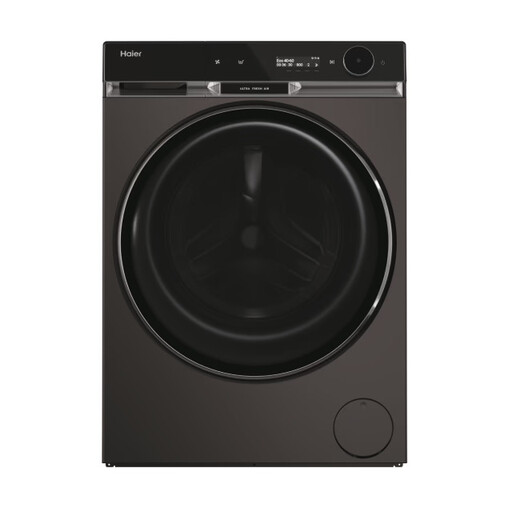 Image unavailable
Consider its 10 kg capacity if you really do regularly wash large loads; if your loads are usually small, compare it with a lower-capacity model too.
The product details list 1 400 tr/min, 41 kWh per 100 cycles, 48 L per cycle, 68 dB(A) during the spin cycle and an Eco 40-60 duration of 3 h 58. Check the manual for the load limits of other programmes.
 Image unavailable
A top-loader may suit you if you’d rather not bend down, as long as 7 kg is enough for your usual loads.
The product details list 1 200 tr/min, 40 kWh per 100 cycles, 42 L per cycle, 77 dB(A) during the spin cycle and an Eco 40-60 duration of 3 h 28. Check the manual for the load limits of other programmes.
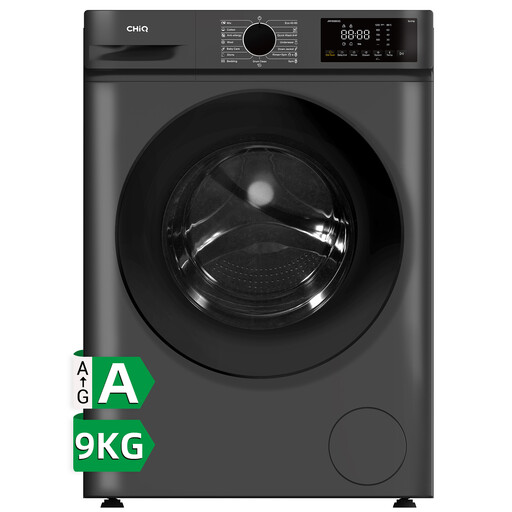 Image unavailable
Compare its 9 kg capacity with your usual family loads, especially if you often split your laundry into several loads by fabric type.
The product name lists 1 400 tr/min and a 15-minute quick cycle. To compare the cycles you use most often with those of other models, also check the energy label and the Eco 40-60 programme duration.
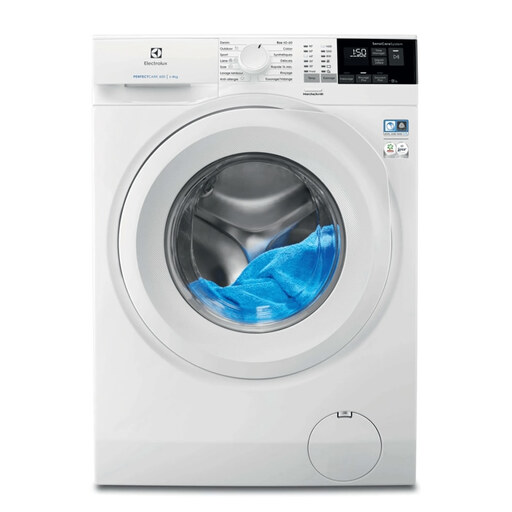 Image unavailable
This 9 kg capacity falls within the UFC-Que Choisir guide for 3 to 4 people; check that it suits the size of your regular loads.
The product details list 1 400 tr/min and 78 dB during the spin cycle. Check the model’s energy label before comparing its rating, as the information associated with this product is contradictory on this point. Also check the maximum load for the programmes you usually use.
No. The stated capacity is a reference for dry laundry on the relevant programme, particularly Eco 40-60; permitted loads may be lower for synthetics, jeans or wool. Check the model’s manual for the programmes you use most often.
Not necessarily: according to UFC-Que Choisir, 8 to 9 kg is generally enough for a household of 3 to 4 people. A capacity of 10 to 12 kg is a better fit if you really do regularly wash large loads that usually fill the drum.
Compare models with a similar capacity by looking at their energy rating, energy use per 100 cycles and water use per Eco 40-60 cycle. The European energy label also shows the duration of the reference programme and the spin noise level, which can help you plan regular laundry.
Factor its duration into your laundry routine: it’s the reference programme used for the energy label information, not simply a cycle to compare by speed. Check its duration for each model and choose programmes to suit the fabrics you’re washing.