
Livraison le jour même ou le lendemain

Qualité garantie

Débloquez vos offres de bienvenue: Livraison GRATUITE | Jusqu'à -80 % | 30 jours d'essai gratuits à JoyPlus
Téléchargez l'application
Buying a washing machine isn’t just about comparing a price or a capacity. Between steam programmes, inverter motors, connected apps and promises of savings, some features are sometimes overrated, while far more practical considerations get overlooked.
Here are the criteria you need to examine to choose an appliance that suits your home, your washing routine and your budget.
A 10 kg washing machine is suitable for households that regularly accumulate laundry, wash large towels or often use a duvet. However, this capacity isn’t always relevant for a single person or a couple.
A drum that’s too large risks running with partial loads. Conversely, overloading a 7 or 8 kg machine can reduce wash quality and increase vibrations. The stated capacity refers to the maximum weight of dry laundry accepted for certain programmes, not the ideal amount for each wash.
Class A is a useful benchmark on the European energy label, but you should also look at the consumption stated in kWh per 100 cycles and the water consumption per cycle. Two appliances rated A can show noticeably different figures.
The duration of the Eco 40-60 programme also deserves your attention. On some models, it can exceed three hours. This mode is designed to reduce consumption, but it won’t suit those who always prefer quick cycles.
A connected washing machine lets you monitor a cycle, receive notifications or access additional programmes via an app. These features can be handy if you actually plan to use them, but they don’t replace the essential criteria: dimensions, capacity, consumption, noise level and after-sales service quality.
A washing machine with steam can freshen certain garments or reduce creases, depending on the programme selected. It doesn’t turn every wash into a universal hygiene treatment, and it certainly doesn’t replace following care labels.
A large-capacity appliance also needs to fit in its designated space. Check its depth, especially with the door open, as well as the space needed for hoses and the available width. A front-loading model can be installed under a worktop if its dimensions allow. A top-loading washing machine, which opens from the top, is often more practical in a narrow room, but it usually can’t be installed under a worktop.
A 1400 rpm washing machine extracts more water than a slower model. This means laundry dries faster on the line or in the tumble dryer. However, that doesn’t mean all fabrics should be spun at this speed: woollens, delicates and fragile items often need a gentler setting.
The spin efficiency class and residual moisture level complement the maximum speed. In daily use, the noise level during the spin cycle also matters, especially in a flat or when the appliance runs at night.
A quiet washing machine stands out thanks to its noise level in decibels and its acoustic emission class. The figures given usually relate to the spin cycle, which is noisier than the wash.
An inverter motor or direct-drive motor can help manage consumption and reduce vibrations, depending on the appliance’s design and how well it’s installed. Even a quiet model must be placed on a stable floor, perfectly levelled and have its transit bolts removed.
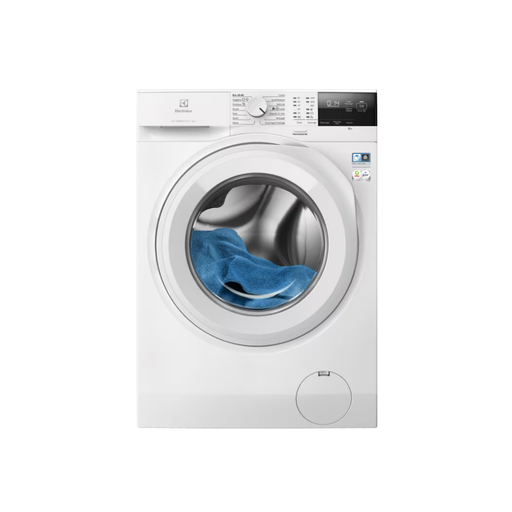
Why this choice suits this profile: its 8 kg format works for many households. Its settings let you adjust temperature, spin speed and duration for each wash.
The SensiCare load detection adjusts cycle duration and water volume based on the laundry load. The class A rating and stated consumption of 47 kWh per 100 cycles also make comparison easier.
8 kg capacity, 1400 rpm spin, 14-minute quick programme and Eco Inverter motor.
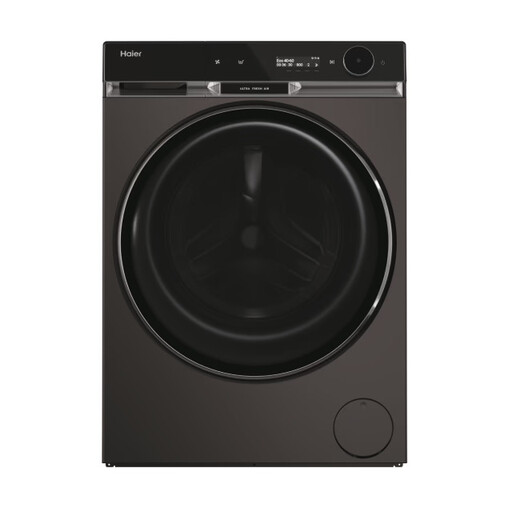
Why this choice suits this profile: this model is aimed at households that want to combine large capacity, automatic dosing and remote control.
The available data clearly separates the connected features, the 10 kg capacity and the stated consumption of 41 kWh per 100 cycles. So the choice isn’t based solely on the mobile app.
AutoDose, Wi-Fi and Bluetooth, 1400 rpm, class A and stated noise level of 68 dB(A) during spin.
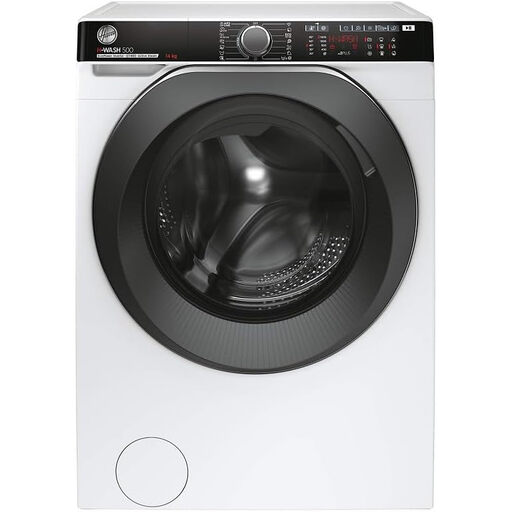
Why this choice suits this profile: its 14 kg capacity is designed for families who wash large volumes of laundry or particularly bulky items.
The product sheet clearly states dimensions of 67 × 85 × 60 cm and a noise level of 80 dB. That lets you check the available space and your tolerance for noise before buying.
Very large capacity, stainless steel drum, 16 programmes and compatibility with a connected home environment.
We’ve put together a comprehensive, real-time selection of products that meet these demanding criteria and European safety standards.
Before the first cycle, remove the transit bolts, connect the water supply and check the drainage. The appliance must be placed on a stable, perfectly level floor. Plug it into an earthed socket, without using a multi-socket adapter or extension lead.
To look after your washing machine:
An 8 kg washing machine can suit an average-sized household. For a large family, less frequent washes or bulky laundry, a 9 or 10 kg capacity offers more leeway. However, you’ll need enough depth in your space and should avoid running the drum half-empty all the time.
The maximum spin speed alone doesn’t determine electricity consumption. Instead, check the value in kWh per 100 cycles and the duration of the Eco 40-60 programme. A faster spin can reduce laundry moisture, but it must still be suitable for the fabrics.
The lifespan depends on frequency of use, installation, maintenance and respecting the maximum load. Proper levelling, cleaning the filter and seal, and descaling according to water quality can help prevent everyday issues. Before buying, also check the warranty terms and the availability of spare parts.