
Livraison le jour même ou le lendemain

Qualité garantie

Débloquez vos offres de bienvenue: Livraison GRATUITE | Jusqu'à -80 % | 30 jours d'essai gratuits à JoyPlus
Téléchargez l'application
A washing machine should suit your actual habits: the amount of laundry you do, the space available, how often you run cycles, whether you have children or pets, noise levels and running costs. Yet some product descriptions simply list features without always explaining which criteria will genuinely make a difference to your daily life.
Before choosing a front-loading washing machine or a top-loading model, take the time to avoid three common pitfalls.
A 10 or 11 kg washing machine may seem ideal for a family. However, the appliance’s external dimensions and drum capacity are just as important. A large capacity does not guarantee that the appliance will fit in a narrow utility room or beneath a worktop.
Measure carefully:
In a flat, a compact model such as the 47 cm-deep Hisense can make installation easier. By contrast, an appliance of 10 kg or more will generally require more space.
A washing machine spinning at 1,400 rpm already removes a large amount of water. Models reaching 1,600 rpm can reduce residual moisture further, but that does not mean your laundry will come out dry or that the machine will be quiet. Noise also depends on the appliance’s design, the motor, floor stability and its spin noise emission class.
To choose a quiet washing machine, check the spin noise level, expressed in dB(A). In this selection, the stated figures range from 68 to 79 dB. The lower the number, the less likely the spin cycle is to disturb people in a room near a bedroom.
Steam, Wi-Fi, AutoDose and programmes controlled via an app can be useful, provided they suit the way you organise your laundry. Depending on the programme, steam can freshen certain garments and reduce creasing; it does not replace a full wash cycle.
Connectivity will not compensate for choosing the wrong capacity, an appliance that is too deep or excessive energy consumption either. Start by checking the essential specifications, then look at the convenience features.
Do not exceed the maximum load specified by the manufacturer. An overfilled drum circulates laundry less effectively and may increase vibrations.
The European energy label indicates, among other things, the efficiency class, consumption in kWh per 100 cycles, the amount of water used per cycle, the duration of the Eco 40-60 programme and the spin noise level. An A-rated washing machine can show very different consumption figures: in this selection, the stated values range from 33 to 51 kWh per 100 cycles.
To estimate running costs, use the following formula:
consumption in kWh per 100 cycles ÷ 100 × price per kWh × number of cycles.
Add water consumption and the cost of detergent for a more realistic estimate. Eco programmes often last several hours; this is not necessarily a drawback if consumption remains under control.
Depending on the model’s design, an inverter, BLDC or direct-drive motor can help provide smoother operation and better noise control. However, it does not remove the need for the appliance to be installed perfectly level.
Also check for features that could genuinely be useful to you:
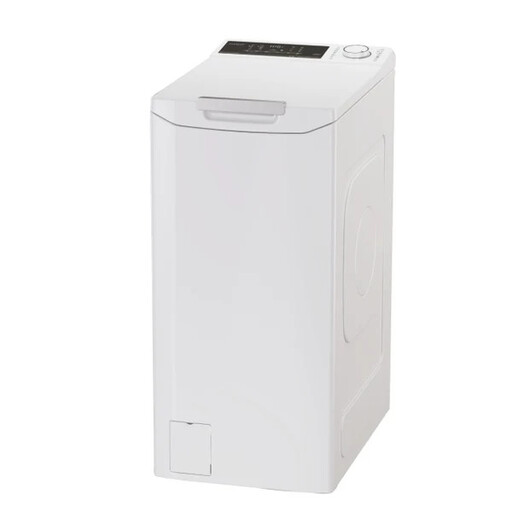
Why this choice suits this profile : This 6 kg top-loading washing machine is 40.5 cm wide, making it suitable for small rooms or as a first appliance.
Its dimensions and capacity are clearly stated. This means you can check the space it will occupy before buying, rather than relying on a simple promise of compactness.
17 programmes, quick cycles from 14 to 59 minutes, inverter motor and Wi-Fi with the hOn app. The stated energy class is B.
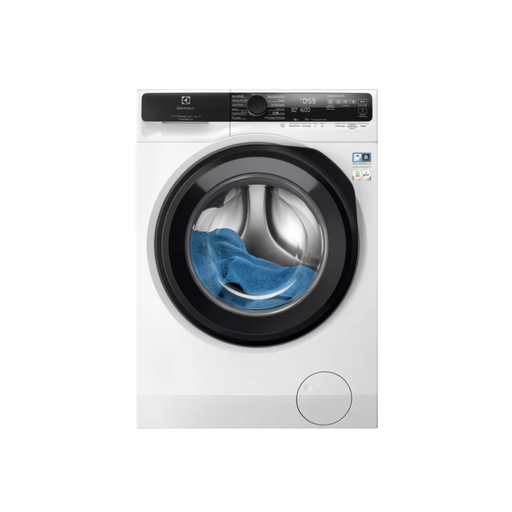
Why this choice suits this profile : Its 9 kg drum, spin speed of up to 1,600 rpm and connected features are designed for households that like to customise their cycles.
The product details specify the stated consumption of 44 kWh per 100 cycles, as well as the 72 dB spin noise level, rather than focusing solely on connectivity.
Class A, steam, quick programme, Eco Inverter motor and My Electrolux Care app. Stated dimensions : 84.7 × 59.7 × 66 cm.
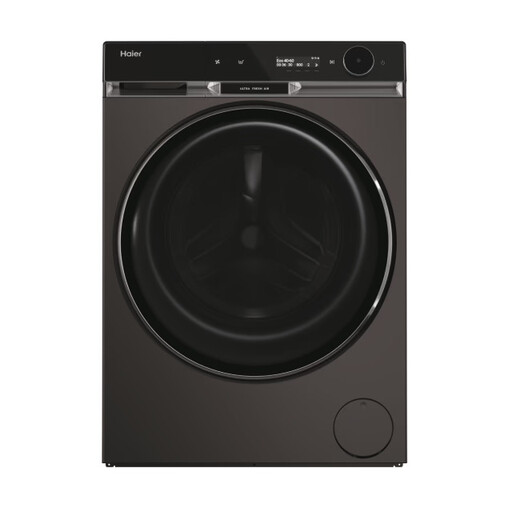
Why this choice suits this profile : With its 10 kg capacity, it is aimed at families who do frequent loads, wash bulky items or want to reduce the number of cycles.
The capacity, 63 L drum volume and 61.1 cm depth are listed separately, helping you check the available space.
Class A, 41 kWh per 100 cycles, AutoDose, steam, Wi-Fi, direct-drive motor and a stated spin noise level of 68 dB(A).
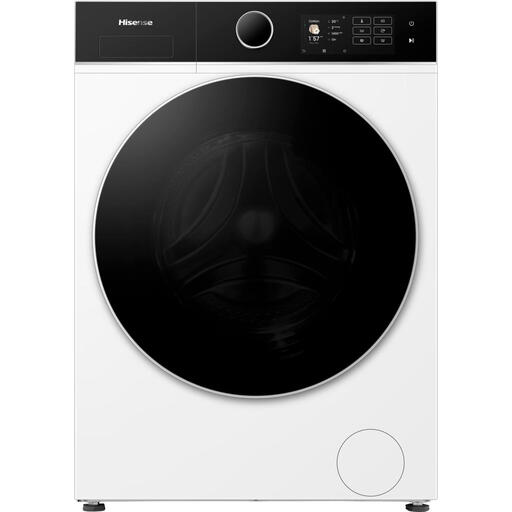
Why this choice suits this profile : Its 47 cm depth, pet programme and steam cycles make it an interesting option for flats and households looking to remove pet hair from textiles.
The product details distinguish its reduced depth from its 8 kg capacity and specify the stated consumption: 33 kWh per 100 cycles and 38 L per cycle.
Class A, 1,400 rpm, inverter motor, stated noise level of 72 dB(A), Pet programme, steam, Wi-Fi and a 15-minute quick cycle.
We have put together a complete, real-time selection of products that meet these demanding criteria as well as European safety standards.
Remove the transit bolts before running the first cycle, plug the appliance into an earthed socket and check that the drain hose is securely fixed. Adjust the feet on a stable, perfectly level floor to minimise vibrations.
To extend your washing machine’s lifespan, clean the following regularly:
Leave the door ajar after each cycle to improve ventilation. Follow the care labels and maximum load recommendations, especially when washing duvets and thick fabrics.
An 8 or 9 kg washing machine will generally suit the everyday laundry needs of an average-sized household. For frequent washing, bulky bed linen or several pets, a 10 kg capacity can reduce the number of cycles, provided the available space and running budget are suitable.
Not necessarily. A washing machine spinning at 1,400 rpm already provides effective water extraction for most households. A 1,600 rpm model may be useful if you often air-dry your laundry or want to reduce residual moisture. However, compare this figure with the noise level and spin efficiency class.
It depends on the electricity and water consumption shown on the label, local energy prices, the number of cycles and the programme used. Quick cycles can sometimes save time, but they do not always replace an eco programme for a full load of laundry. Before comparing two models, check their consumption per 100 cycles.